Duchesne Louis, D'Orangeville Loïc, Ouimet Rock, Houle Daniel, Kneeshaw Daniel
Direction de la Recherche Forestière, Ministère des Forêts, de la Faune et des Parcs du Québec, Einstein, Quebec City, Quebec, Canada.
Centre d'Étude de la Forêt, Université du Québec à Montréal, Case Postale, Succursale Centre-Ville, Montreal, Quebec, Canada.
PLoS One. 2017 Dec 27;12(12):e0189444. doi: 10.1371/journal.pone.0189444. eCollection 2017.
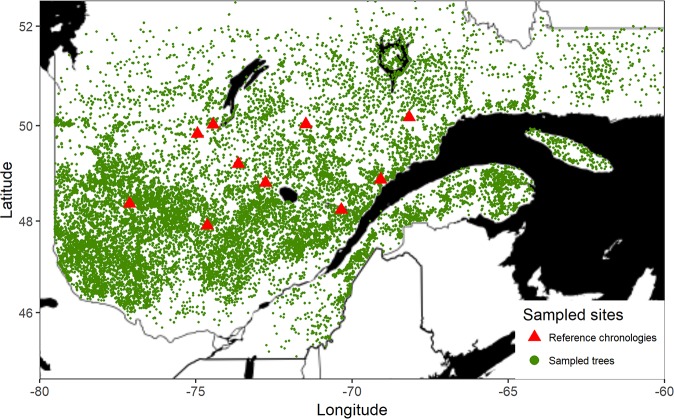
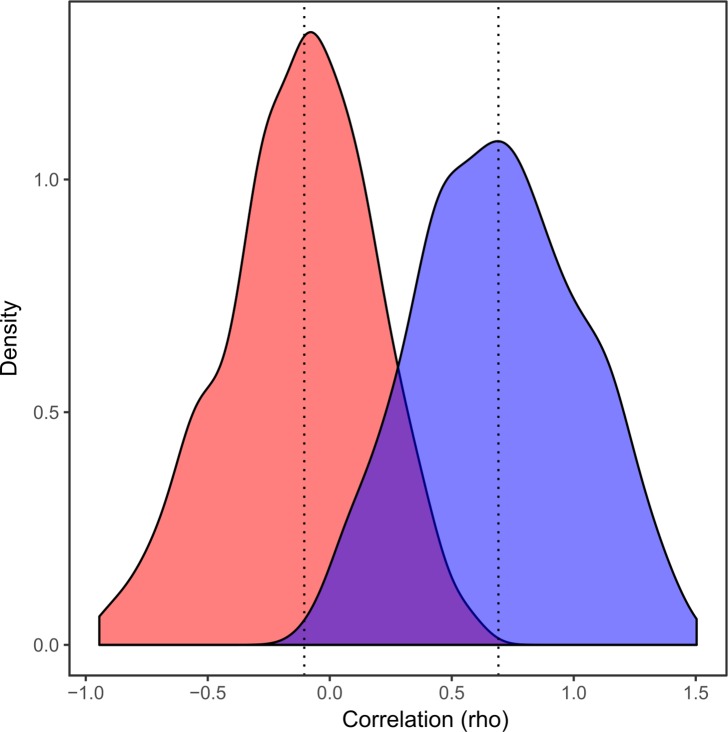
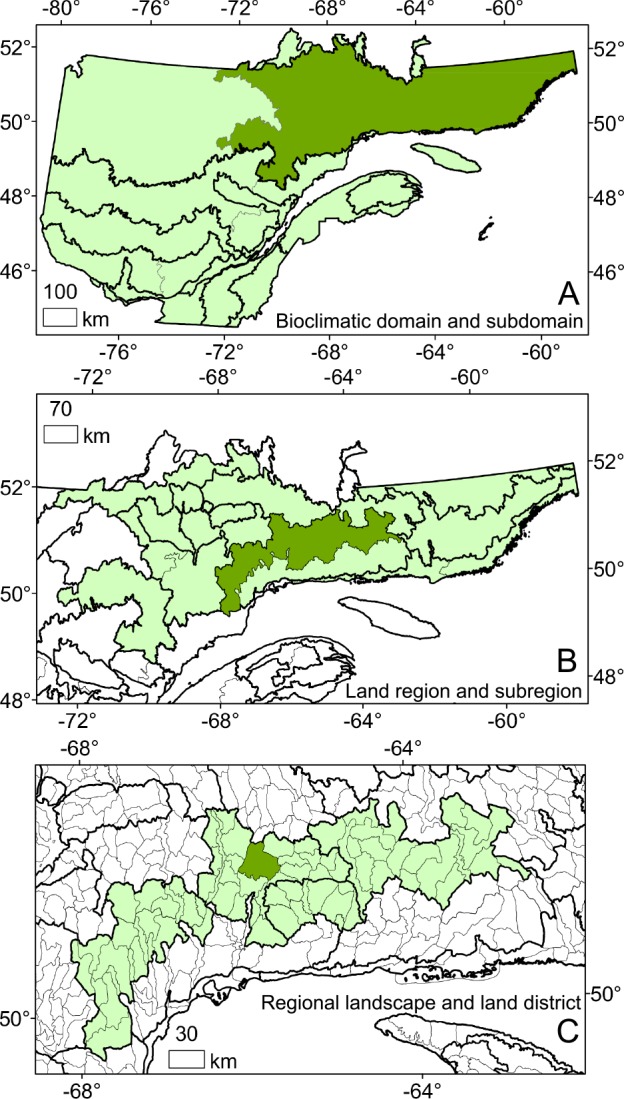
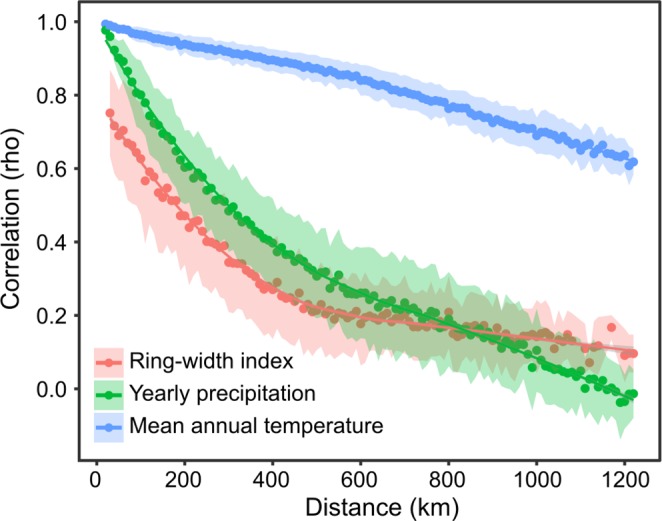
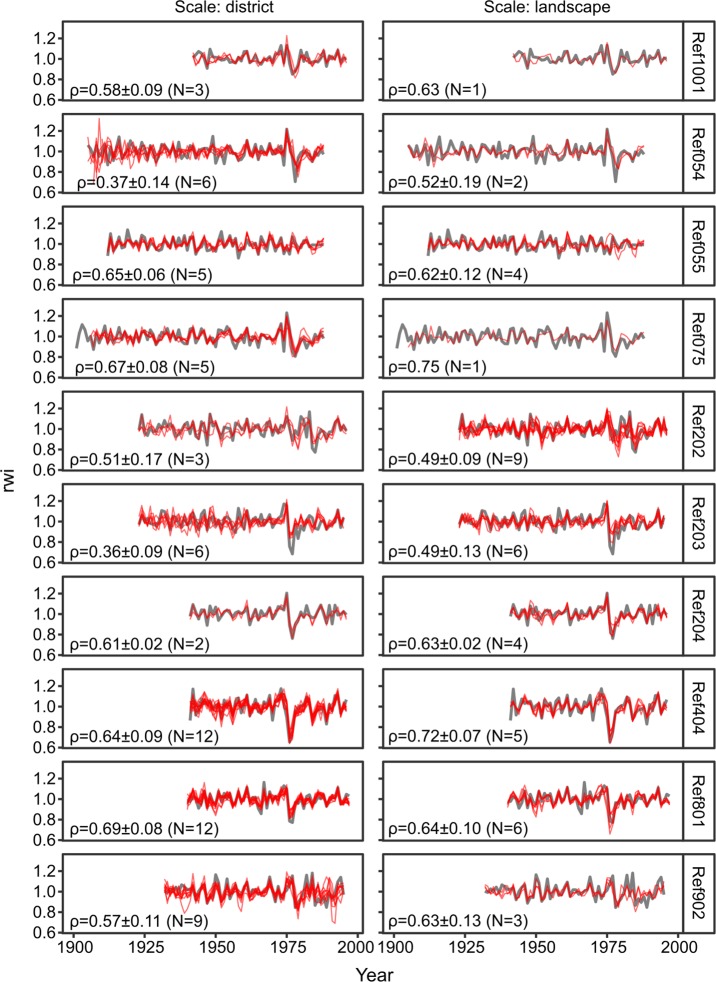
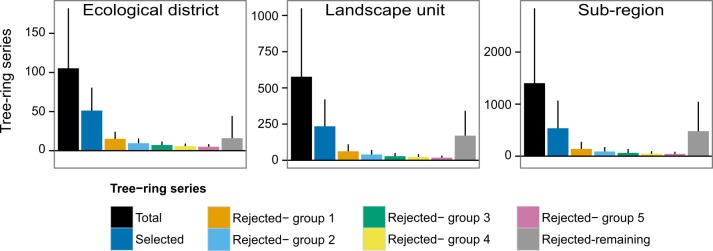
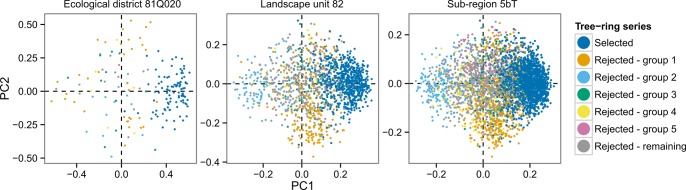
Increasing access to extensively replicated and broadly distributed tree-ring collections has led to a greater use of these large data sets to investigate climate forcing on tree growth. However, the number of chronologies added to large accessible databases is declining and few are updated, while chronologies are often sparsely distributed and are more representative of marginal growing environments. On the other hand, National Forest Inventories (NFI), although poorly replicated at the plot level as compared to classic dendrochronological sampling, contain a large amount of tree-ring data with high spatial density designed to be spatially representative of the forest cover. We propose an a posteriori approach to validating tree-ring measurements and dating, selecting individual tree-ring width time series, and building average chronologies at various spatial scales based on an extensive collection of ring width measurements of nearly 94,000 black spruce trees distributed over a wide area and collected as part of the NFI in the province of Quebec, Canada. Our results show that reliable signals may be derived at various spatial scales (from 37 to 583,000 km2) from NFI increment core samples. Signals from independently built chronologies are spatially coherent with each other and well-correlated with independent reference chronologies built at the stand level. We thus conclude that tree-ring data from NFIs provide an extraordinary opportunity to strengthen the spatial and temporal coverage of tree-ring data and to improve coordination with other contemporary measurements of forest growth to provide a better understanding of tree growth-climate relationships over broad spatial scales.
越来越多的人能够获取大量经过广泛复制和广泛分布的树木年轮数据集,这使得人们更多地利用这些大数据集来研究气候对树木生长的影响。然而,添加到大型可访问数据库中的年代序列数量正在减少,而且很少有更新,同时年代序列往往分布稀疏,更多地代表边缘生长环境。另一方面,国家森林资源清查(NFI)虽然在样地层面上与经典的树木年代学采样相比复制性较差,但包含大量具有高空间密度的树木年轮数据,旨在在空间上代表森林覆盖情况。我们提出了一种事后验证方法,用于验证树木年轮测量和定年、选择单个树木年轮宽度时间序列,并基于分布在广阔区域的近94,000棵黑云杉的大量年轮宽度测量数据构建不同空间尺度的平均年代序列,这些数据是作为加拿大魁北克省国家森林资源清查的一部分收集的。我们的结果表明,可以从国家森林资源清查的增量芯样在不同空间尺度(从37到583,000平方公里)上获得可靠的信号。独立构建的年代序列的信号在空间上相互连贯,并且与在林分层面构建的独立参考年代序列高度相关。因此,我们得出结论,国家森林资源清查的树木年轮数据提供了一个绝佳的机会,可以加强树木年轮数据的空间和时间覆盖范围,并改善与森林生长的其他当代测量方法的协调,以便在更广泛的空间尺度上更好地理解树木生长与气候的关系。