Ludwig Boltzmann Institute for Cancer Research (LBI-CR), Vienna, Austria.
Institute of Cancer Research, Medical University of Vienna, Comprehensive Cancer Center (CCC), Vienna, Austria.
Cancer Med. 2018 Feb;7(2):445-453. doi: 10.1002/cam4.1293. Epub 2017 Dec 28.
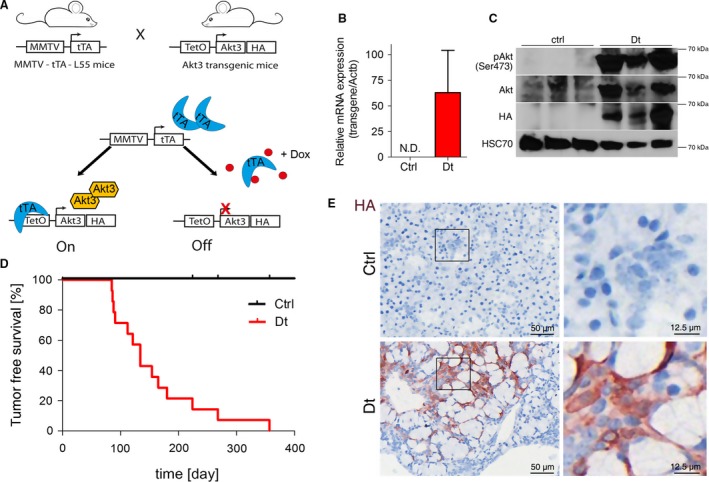
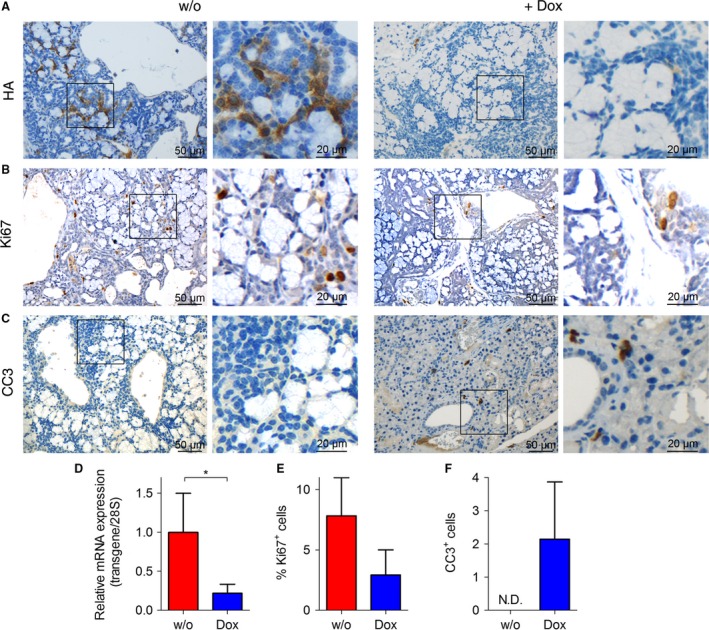
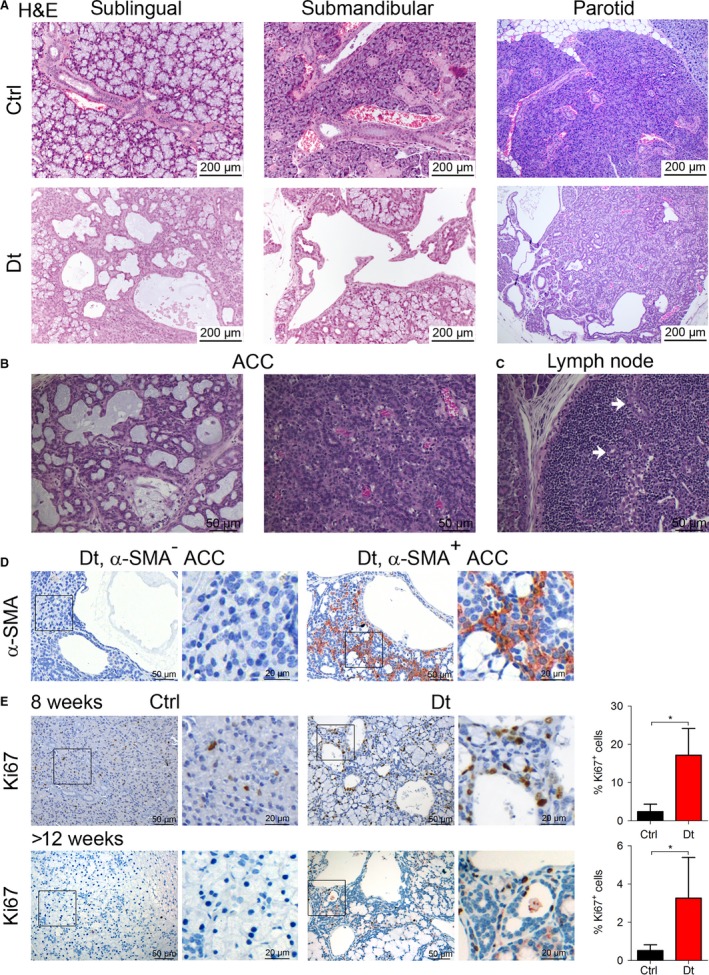
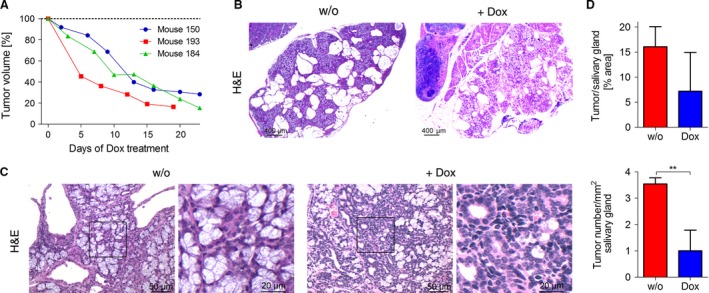
Salivary gland cancer is an aggressive and painful cancer, but a rare tumor type accounting for only ~0.5% of cancer cases. Tumors of the salivary gland exhibit heterogeneous histologic and genetic features and they are subdivided into different subtypes, with adenoid cystic carcinomas (ACC) being one of the most abundant. Treatment of ACC patients is afflicted by high recurrence rates, the high potential of the tumors to metastasize, as well as the poor response of ACC to chemotherapy. A prerequisite for the development of targeted therapies is insightful genetic information for driver core cancer pathways. Here, we developed a transgenic mouse model toward establishment of a preclinical model. There is currently no available mouse model for adenoid cystic carcinomas as a rare disease entity to serve as a test system to block salivary gland tumors with targeted therapy. Based on tumor genomic data of ACC patients, a key role for the activation of the PI3K-AKT-mTOR pathway was suggested in tumors of secretory glands. Therefore, we investigated the role of Akt3 expression in tumorigenesis and report that Akt3 overexpression results in ACC of salivary glands with 100% penetrance, while abrogation of transgenic Akt3 expression could revert the phenotype. In summary, our findings validate a novel mouse model to study ACC and highlight the druggable potential of AKT3 in the treatment of salivary gland patients.
唾液腺癌是一种侵袭性和疼痛性癌症,但它是一种罕见的肿瘤类型,仅占癌症病例的约 0.5%。唾液腺肿瘤表现出异质的组织学和遗传学特征,并被细分为不同的亚型,其中腺样囊性癌(ACC)是最常见的一种。ACC 患者的治疗受到高复发率、肿瘤高转移潜能以及 ACC 对化疗反应差的困扰。靶向治疗的发展前提是对驱动核心癌症途径的有见地的遗传信息。在这里,我们开发了一种转基因小鼠模型,以建立临床前模型。目前,由于作为罕见疾病实体的腺样囊性癌缺乏可用的小鼠模型,因此无法作为用靶向治疗阻断唾液腺癌的测试系统。基于 ACC 患者的肿瘤基因组数据,提示 PI3K-AKT-mTOR 通路的激活在分泌腺肿瘤中起关键作用。因此,我们研究了 Akt3 表达在肿瘤发生中的作用,并报告 Akt3 过表达导致唾液腺 ACC 的发生率为 100%,而转基因 Akt3 表达的缺失可使表型逆转。总之,我们的研究结果验证了一种研究 ACC 的新型小鼠模型,并强调了 AKT3 在治疗唾液腺癌患者方面的可用药潜力。