Department of Experimental Psychology, University of Oxford, New Richards Building, Oxford, Headington, OX3 7LG, UK.
Department of Anaesthesiology, Perioperative and Pain Medicine, Stanford University, Stanford, CA, USA.
BMC Psychol. 2017 Dec 29;5(1):41. doi: 10.1186/s40359-017-0210-3.
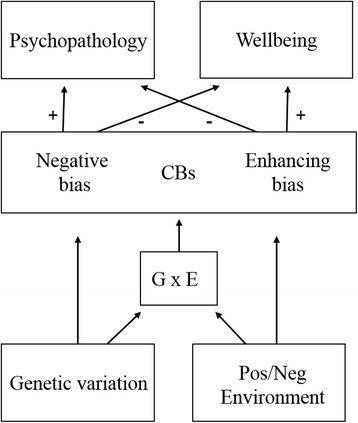
Optimal psychological development is dependent upon a complex interplay between individual and situational factors. Investigating the development of these factors in adolescence will help to improve understanding of emotional vulnerability and resilience. The CogBIAS longitudinal study (CogBIAS-L-S) aims to combine cognitive and genetic approaches to investigate risk and protective factors associated with the development of mood and impulsivity-related outcomes in an adolescent sample.
CogBIAS-L-S is a three-wave longitudinal study of typically developing adolescents conducted over 4 years, with data collection at age 12, 14 and 16. At each wave participants will undergo multiple assessments including a range of selective cognitive processing tasks (e.g. attention bias, interpretation bias, memory bias) and psychological self-report measures (e.g. anxiety, depression, resilience). Saliva samples will also be collected at the baseline assessment for genetic analyses. Multilevel statistical analyses will be performed to investigate the developmental trajectory of cognitive biases on psychological functioning, as well as the influence of genetic moderation on these relationships.
CogBIAS-L-S represents the first longitudinal study to assess multiple cognitive biases across adolescent development and the largest study of its kind to collect genetic data. It therefore provides a unique opportunity to understand how genes and the environment influence the development and maintenance of cognitive biases and provide insight into risk and protective factors that may be key targets for intervention.
最佳的心理发展取决于个体因素和情境因素之间的复杂相互作用。研究这些因素在青少年时期的发展将有助于提高对情绪脆弱性和弹性的理解。CogBIAS 纵向研究(CogBIAS-L-S)旨在结合认知和遗传方法,调查与青少年样本中情绪和冲动相关结果的发展相关的风险和保护因素。
CogBIAS-L-S 是一项为期 4 年的典型青少年三波纵向研究,在 12、14 和 16 岁时进行数据收集。在每一波中,参与者将接受多次评估,包括一系列选择性认知加工任务(例如注意偏差、解释偏差、记忆偏差)和心理自我报告测量(例如焦虑、抑郁、弹性)。基线评估时还将采集唾液样本进行遗传分析。将进行多层次统计分析,以研究认知偏差对心理功能的发展轨迹,以及遗传调节对这些关系的影响。
CogBIAS-L-S 代表了评估青少年发展过程中多种认知偏差的首个纵向研究,也是收集遗传数据的同类最大研究。因此,它提供了一个独特的机会,可以了解基因和环境如何影响认知偏差的发展和维持,并深入了解可能是干预关键目标的风险和保护因素。