Ye Xia, Wang Huiyu, Chen Peng, Fu Bing, Zhang Mengyang, Li Jidong, Zheng Xianbo, Tan Bin, Feng Jiancan
College of Horticulture, Henan Agricultural University, Zhengzhou 450002, China.
Hortic Res. 2017 Dec 27;4:17080. doi: 10.1038/hortres.2017.80. eCollection 2017.
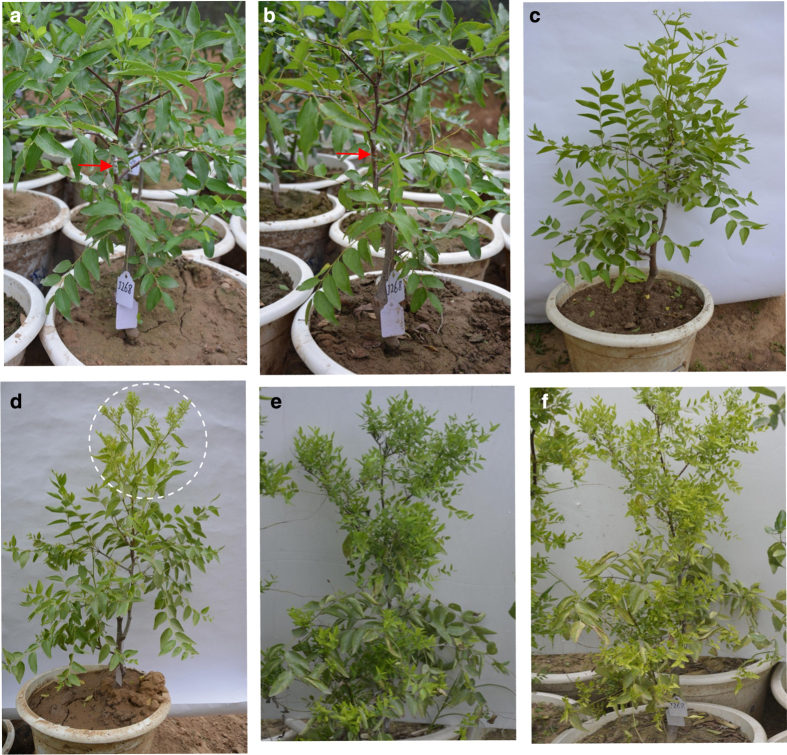
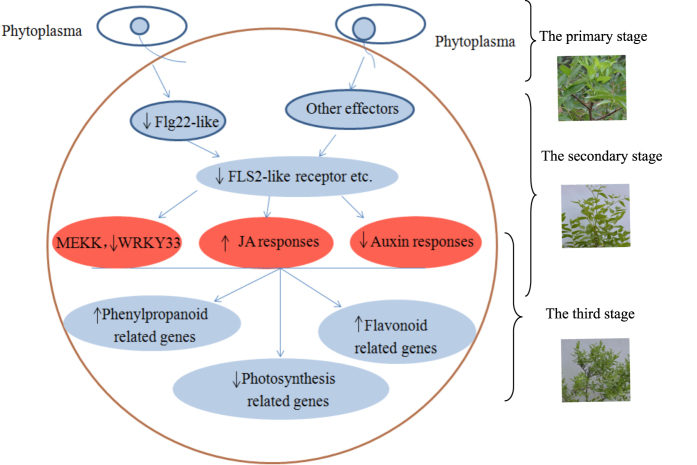
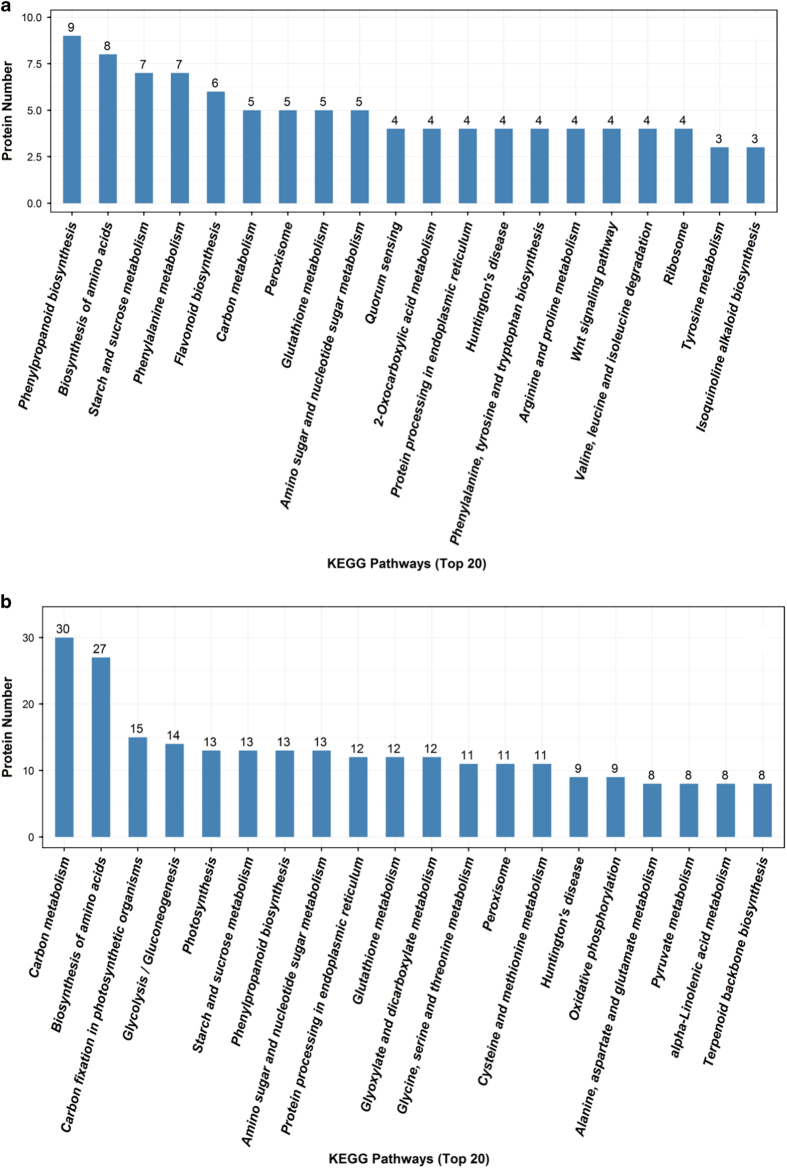
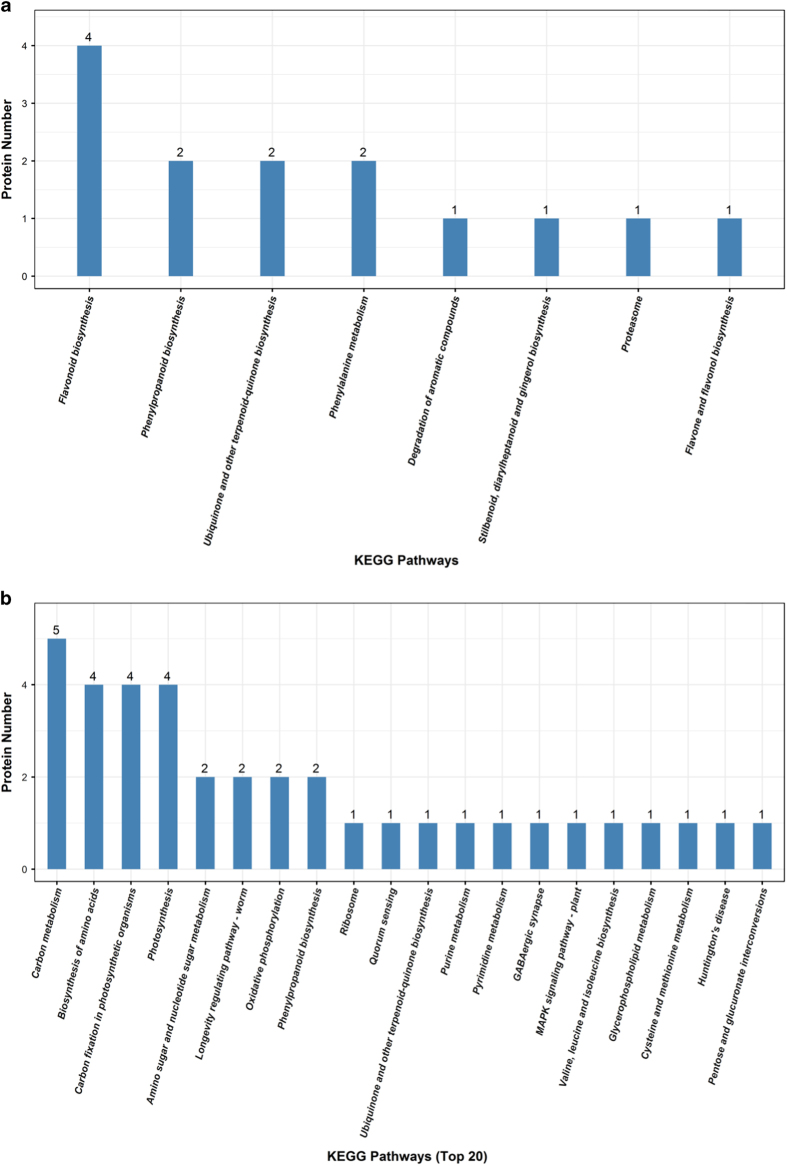
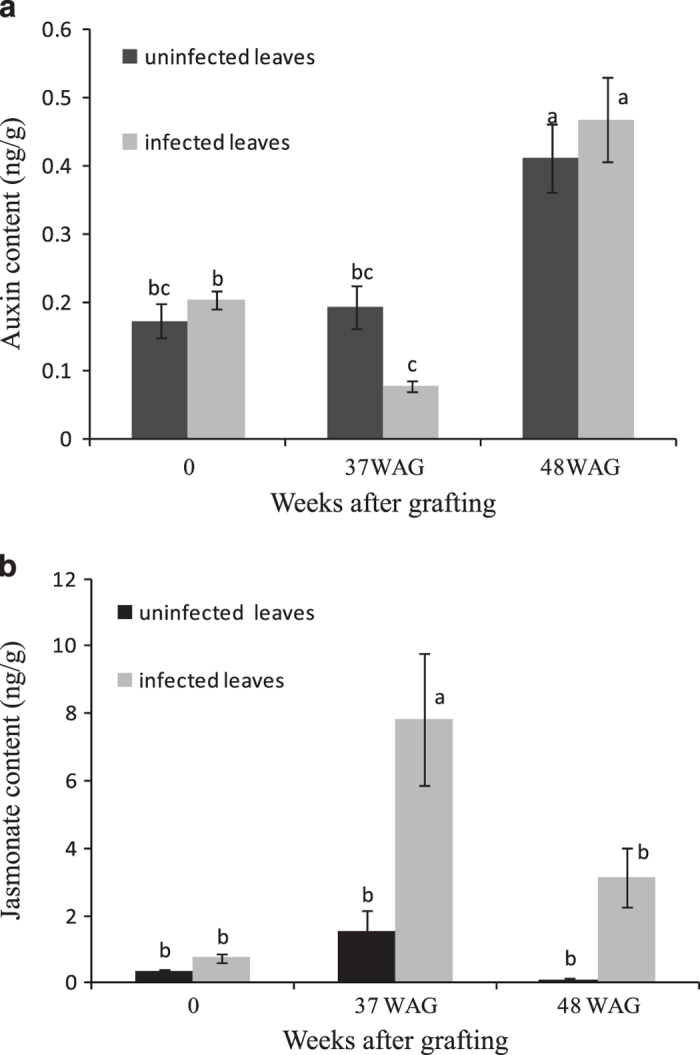
Jujube witches' broom (JWB) is caused by infection with a phytoplasma. A multi-omics approach was taken during graft infection of jujube by JWB-infected scion through the analysis of the plant transcriptome, proteome and phytohormone levels. A high number of differentially expressed genes (DEGs) were identified 37 weeks after grafting (WAG), followed by observation of typical symptoms of JWB at 48 WAG. At 37 WAG, the majority of the upregulated DEGs and differentially expressed proteins (DEPs) were related to flavonoid biosynthesis, phenylalanine metabolism and phenylpropanoid biosynthesis. Two of the four upregulated proteins were similar to jasmonate-induced protein-like. Among the downregulated genes, the two most populated GO terms were plant-pathogen interaction and plant hormone signal transduction (mainly for tryptophan metabolism). Moreover, phytoplasma infection resulted in reduced auxin content and increased jasmonate content, indicating that auxin and jasmonic acid have important roles in regulating jujube responses during the first and second stages of phytoplasma infection. At 48 WAG, the two largest groups of upregulated genes were involved in phenylpropanoid biosynthesis and flavonoid biosynthesis. Both genes and proteins involved in carbon metabolism and carbon fixation in photosynthetic organisms were downregulated, indicating that photosynthesis was affected by the third stage of phytoplasma infection.
枣疯病(JWB)是由植原体感染引起的。通过对枣树转录组、蛋白质组和植物激素水平的分析,在将感染枣疯病的接穗嫁接到枣树的过程中采用了多组学方法。嫁接后37周(WAG)鉴定出大量差异表达基因(DEG),随后在48 WAG观察到枣疯病的典型症状。在37 WAG时,大多数上调的DEG和差异表达蛋白(DEP)与类黄酮生物合成、苯丙氨酸代谢和苯丙烷生物合成有关。四种上调蛋白中的两种与茉莉酸诱导蛋白类似。在下调基因中,两个最主要的基因本体(GO)术语是植物-病原体相互作用和植物激素信号转导(主要涉及色氨酸代谢)。此外,植原体感染导致生长素含量降低和茉莉酸含量增加,表明生长素和茉莉酸在调节植原体感染第一阶段和第二阶段枣树的反应中具有重要作用。在48 WAG时,上调基因的两个最大组涉及苯丙烷生物合成和类黄酮生物合成。参与光合生物中碳代谢和碳固定的基因和蛋白质均下调,表明光合作用受到植原体感染第三阶段的影响。