Dr. Margarete Fischer-Bosch-Institute of Clinical Pharmacology and University of Tübingen, Auerbachstr. 112, 70376, Stuttgart, Germany.
upcyte technologies GmbH, Osterfeldstraße 12-14, 22529, Hamburg, Germany.
Arch Toxicol. 2018 Mar;92(3):1099-1112. doi: 10.1007/s00204-017-2147-y. Epub 2017 Dec 28.
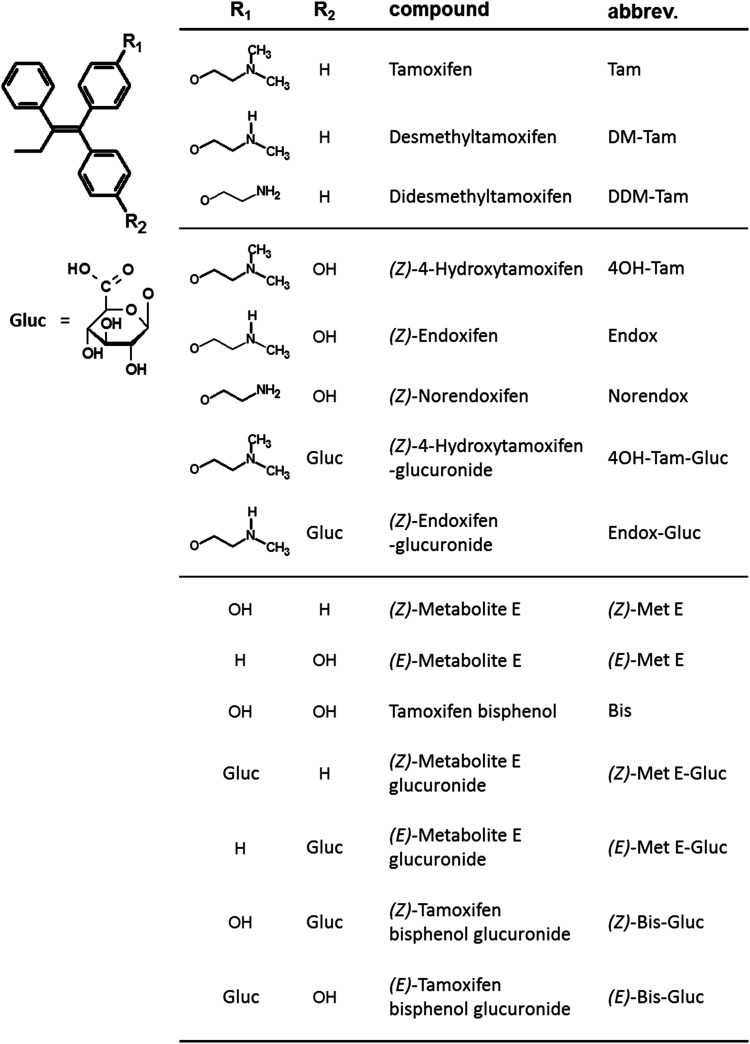
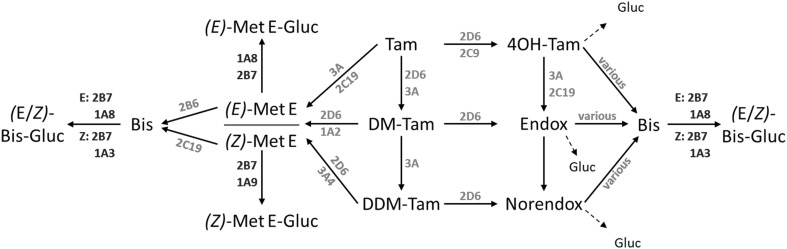
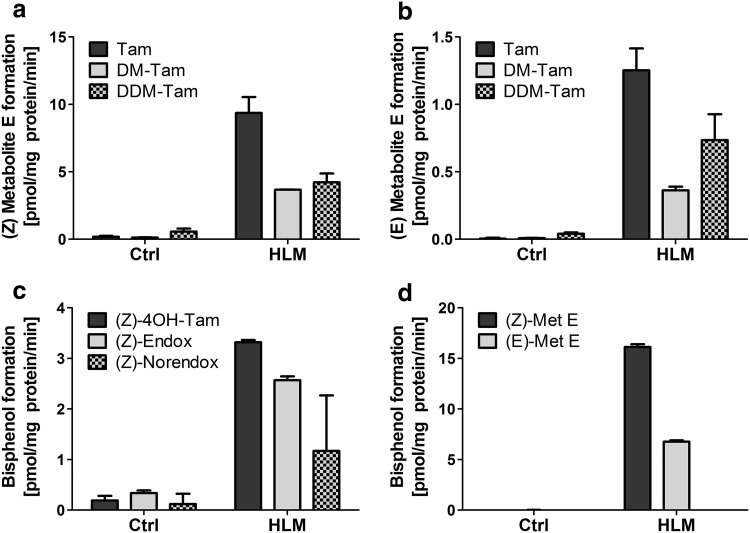
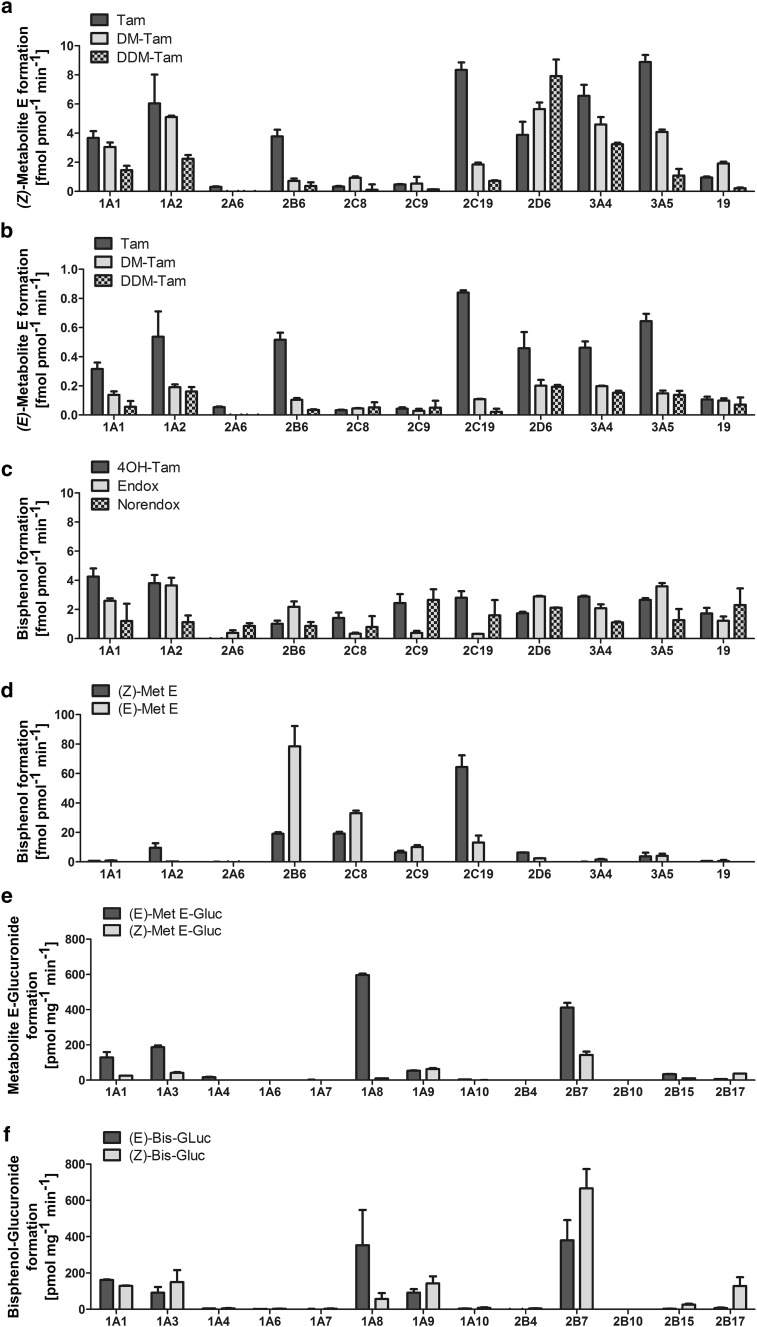
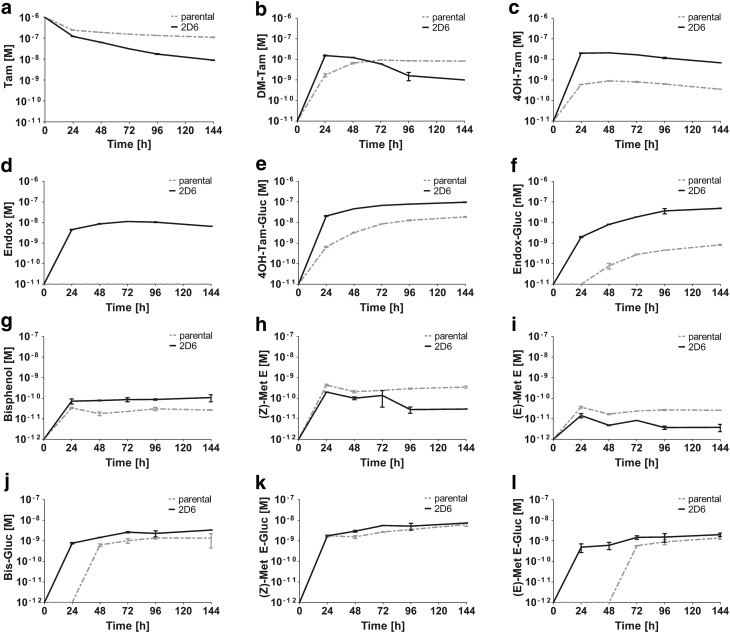
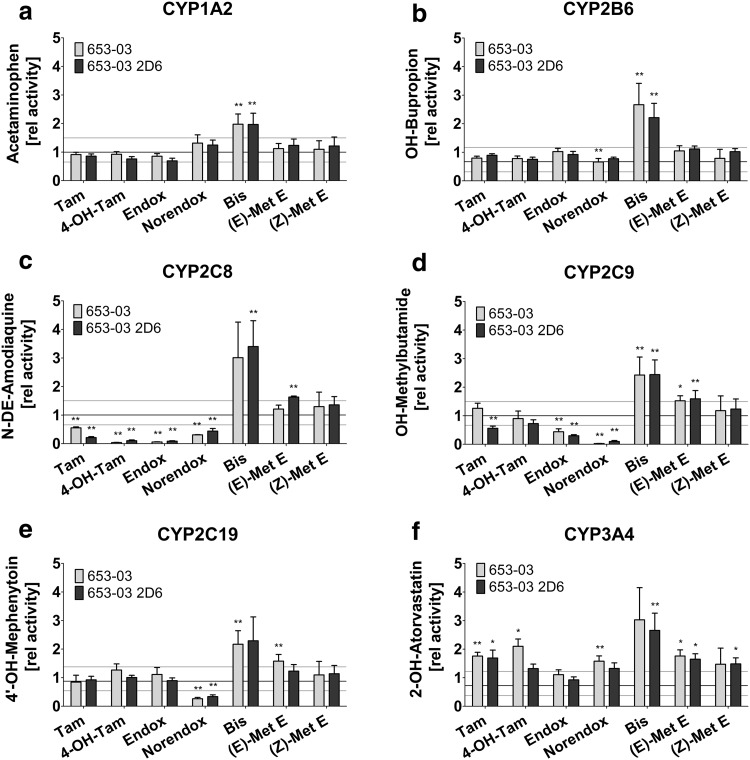
Tamoxifen, a standard therapy for breast cancer, is metabolized to compounds with anti-estrogenic as well as estrogen-like action at the estrogen receptor. Little is known about the formation of estrogen-like metabolites and their biological impact. Thus, we characterized the estrogen-like metabolites tamoxifen bisphenol and metabolite E for their metabolic pathway and their influence on cytochrome P450 activity and ADME gene expression. The formation of tamoxifen bisphenol and metabolite E was studied in human liver microsomes and Supersomes™. Cellular metabolism and impact on CYP enzymes was analyzed in upcyte® hepatocytes. The influence of 5 µM of tamoxifen, anti-estrogenic and estrogen-like metabolites on CYP activity was measured by HPLC MS/MS and on ADME gene expression using RT-PCR analyses. Metabolite E was formed from tamoxifen by CYP2C19, 3A and 1A2 and from desmethyltamoxifen by CYP2D6, 1A2 and 3A. Tamoxifen bisphenol was mainly formed from (E)- and (Z)-metabolite E by CYP2B6 and CYP2C19, respectively. Regarding phase II metabolism, UGT2B7, 1A8 and 1A3 showed highest activity in glucuronidation of tamoxifen bisphenol and metabolite E. Anti-estrogenic metabolites (Z)-4-hydroxytamoxifen, (Z)-endoxifen and (Z)-norendoxifen inhibited the activity of CYP2C enzymes while tamoxifen bisphenol consistently induced CYPs similar to rifampicin and phenobarbital. On the transcript level, highest induction up to 5.6-fold was observed for CYP3A4 by tamoxifen, (Z)-4-hydroxytamoxifen, tamoxifen bisphenol and (E)-metabolite E. Estrogen-like tamoxifen metabolites are formed in CYP-dependent reactions and are further metabolized by glucuronidation. The induction of CYP activity by tamoxifen bisphenol and the inhibition of CYP2C enzymes by anti-estrogenic metabolites may lead to drug-drug-interactions.
他莫昔芬是一种用于治疗乳腺癌的标准疗法,它在雌激素受体处代谢为具有抗雌激素和雌激素样作用的化合物。关于雌激素样代谢物的形成及其生物学影响知之甚少。因此,我们对他莫昔芬双酚和代谢物 E 的代谢途径及其对细胞色素 P450 活性和 ADME 基因表达的影响进行了表征。在人肝微粒体和 Supersomes™中研究了他莫昔芬双酚和代谢物 E 的形成。在 upcyte®肝细胞中分析了细胞代谢和对 CYP 酶的影响。通过 HPLC-MS/MS 测量 5µM 他莫昔芬、抗雌激素和雌激素样代谢物对 CYP 活性的影响,以及通过 RT-PCR 分析对 ADME 基因表达的影响。代谢物 E 由 CYP2C19、3A 和 1A2 从他莫昔芬形成,由 CYP2D6、1A2 和 3A 从去甲基他莫昔芬形成。他莫昔芬双酚主要由 CYP2B6 和 CYP2C19 分别从(E)-和(Z)-代谢物 E 形成。关于 II 相代谢,UGT2B7、1A8 和 1A3 在他莫昔芬双酚和代谢物 E 的葡萄糖醛酸化中表现出最高的活性。抗雌激素代谢物(Z)-4-羟基他莫昔芬、(Z)-依西美坦和(Z)-去甲依西美坦抑制 CYP2C 酶的活性,而他莫昔芬双酚一致诱导类似于利福平的 CYP。在转录水平上,他莫昔芬、(Z)-4-羟基他莫昔芬、他莫昔芬双酚和(E)-代谢物 E 引起 CYP3A4 的最高诱导高达 5.6 倍。雌激素样他莫昔芬代谢物在 CYP 依赖性反应中形成,并进一步通过葡萄糖醛酸化代谢。他莫昔芬双酚对 CYP 活性的诱导和抗雌激素代谢物对 CYP2C 酶的抑制可能导致药物相互作用。