Department of Hand Surgery, Huashan Hospital, Fudan University, Shanghai 200040, P.R. China.
Int J Mol Med. 2018 Mar;41(3):1509-1517. doi: 10.3892/ijmm.2017.3333. Epub 2017 Dec 19.
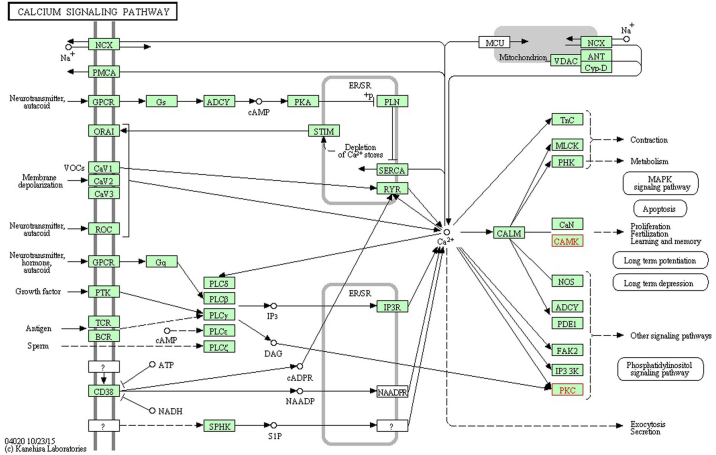
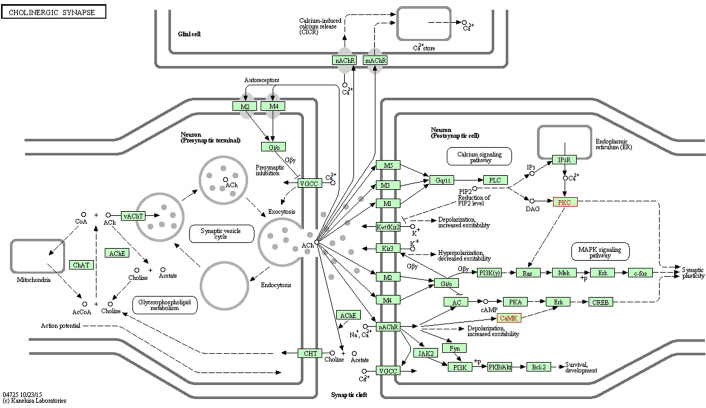
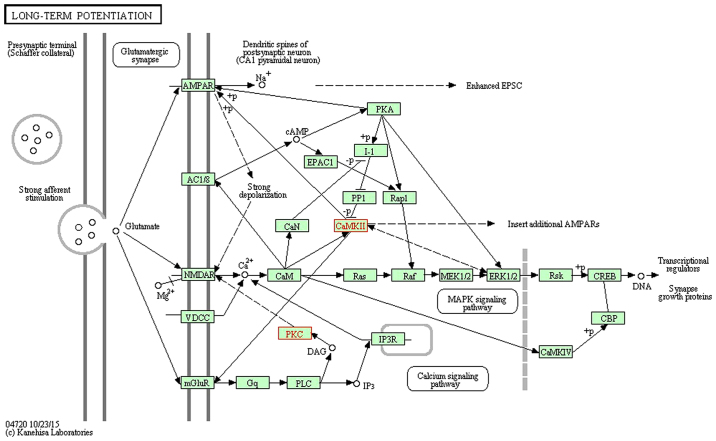
The present study aimed to perform microRNA (miRNA/miR) expression profiling of the thalamus (T), the anterior cingulate (AC), the dorsal horn of the spinal cord (DHSC) and the blood (B) in post‑complete brachial plexus avulsion (CBPA) pain model, and analyze biological functions. Neuropathic pain was induced in Sprague‑Dawley rats by CBPA. Animal behavioral tests were performed to differentiate the pain and control groups. DHSC, T, AC and B tissues were collected from the two groups for miRNA array analysis. The predicted mRNA targets were investigated by Gene Ontology analysis and pathway analysis. The results revealed that in the post‑CBPA pain model, there were 10 differentially expressed miRNAs revealed among 4 different tissues. A total of 4 microRNAs in the AC and 3 microRNAs in the T were shown to be significantly upregulated. The functions of the differentially expressed miRNAs in the AC and T were synergetic in the aspect of positive regulation of neuron apoptotic process, inhibition of long‑term potentiation and formation of synapse plasticity. miR‑30c‑1‑3p and its predicted genes [calcium/calmodulin dependent protein kinase IIβ (Camk2b) and protein kinase Cγ (Prkcg)] existed in the AC and T groups with significant changes in expression. There were 2 miRNAs in the DHSC and B groups, respectively, with significant downregulation. The function of the change in miRNAs in the DHSC group was opposite to that in the AC and T groups. The differentially expressed microRNAs in the B group were revealed to be negative for the regulation of cell apoptosis. In conclusion, the central nerve groups (AC and T) and the peripheral nerve group (DHSC) exhibited contrasting effects on synapse plasticity and neuron apoptosis. miR‑30c‑1‑3p and its predicted genes (Camk2b and Prkcg) existed in the AC and T groups with significant changes in expression.
本研究旨在对全臂丛根性撕脱伤(CBPA)后疼痛模型的丘脑(T)、前扣带回(AC)、脊髓背角(DHSC)和血液(B)进行 microRNA(miRNA/miR)表达谱分析,并进行生物功能分析。通过 CBPA 诱导 Sprague-Dawley 大鼠产生神经性疼痛。对动物行为进行测试以区分疼痛组和对照组。从两组中采集 DHSC、T、AC 和 B 组织进行 miRNA 芯片分析。通过基因本体论分析和通路分析研究预测的 mRNA 靶标。结果显示,在 CBPA 后疼痛模型中,4 种不同组织中有 10 种差异表达的 miRNA。AC 中有 4 个 microRNA 和 T 中有 3 个 microRNA 明显上调。AC 和 T 中差异表达的 miRNA 的功能在神经元凋亡过程的正调控、长时程增强抑制和突触可塑性形成方面具有协同作用。miR-30c-1-3p 及其预测基因[钙/钙调蛋白依赖性蛋白激酶 IIβ(Camk2b)和蛋白激酶 Cγ(Prkcg)]存在于 AC 和 T 组,表达明显变化。DHSC 和 B 组分别有 2 个 miRNA 明显下调。DHSC 组 miRNA 变化的功能与 AC 和 T 组相反。B 组差异表达的 microRNA 对细胞凋亡的调节呈负相关。总之,中枢神经群(AC 和 T)和周围神经群(DHSC)在突触可塑性和神经元凋亡方面表现出相反的作用。miR-30c-1-3p 及其预测基因(Camk2b 和 Prkcg)存在于 AC 和 T 组,表达明显变化。