Medical Department, Cancer Hospital of China Medical University, Shenyang, Liaoning 110042, P.R. China.
Radiotherapy Department, Cancer Hospital of China Medical University, Shenyang, Liaoning 110042, P.R. China.
Mol Med Rep. 2018 Mar;17(3):3583-3590. doi: 10.3892/mmr.2017.8329. Epub 2017 Dec 20.
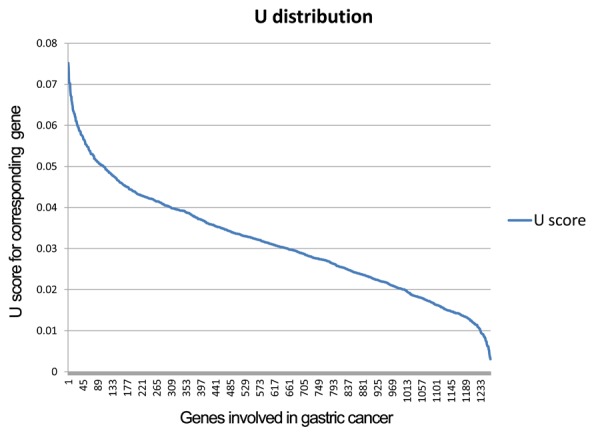
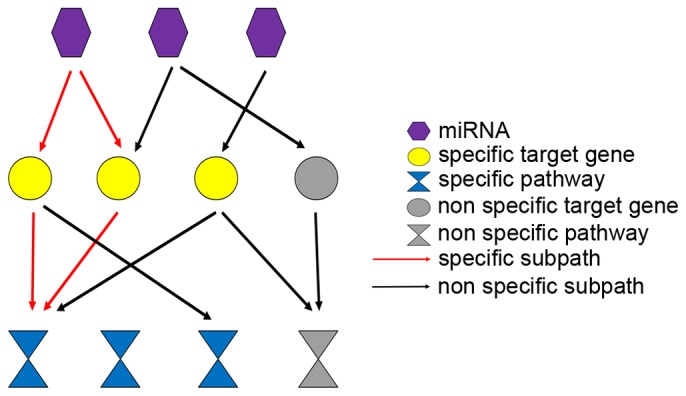
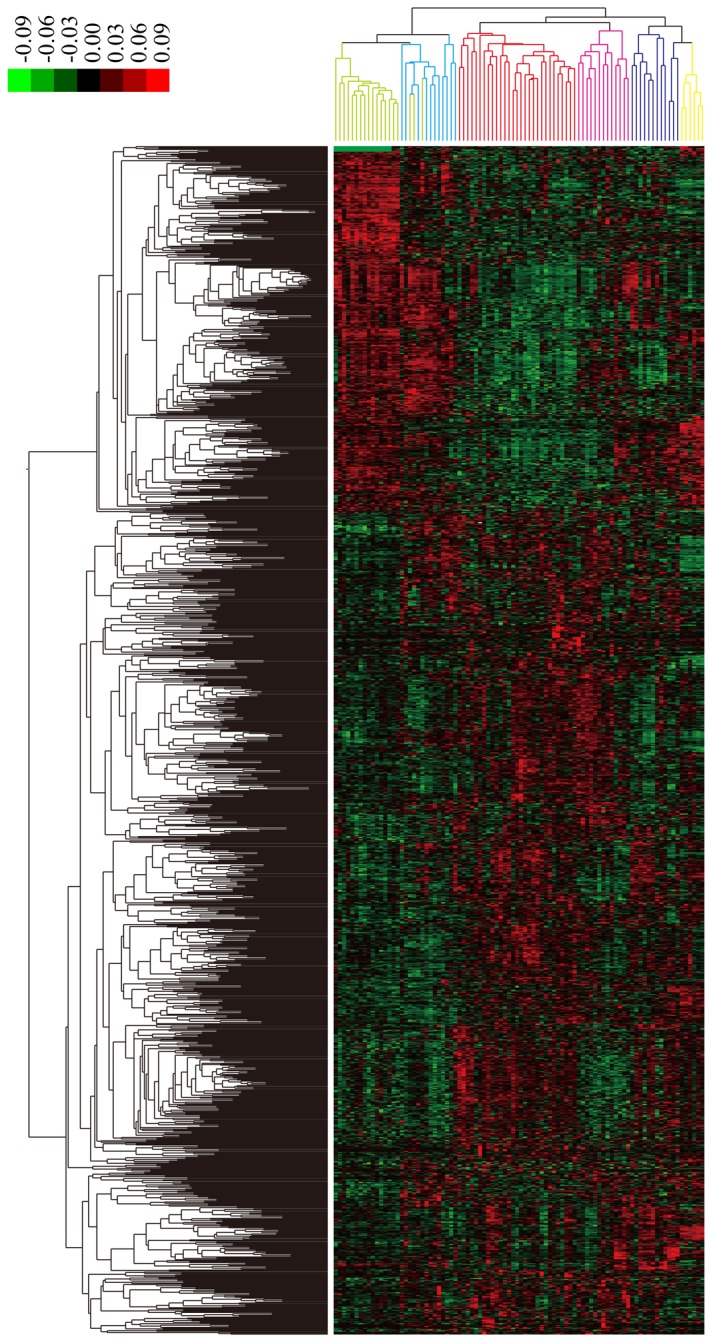
The present study aimed to classify gastric cancer (GC) into subtypes and to screen the subtype‑specific genes, their targeted microRNAs (miRNAs) and enriched pathways to explore the putative mechanism of each GC subtypes. The GSE13861 data set was downloaded from the Gene Expression Omnibus and used to screen differential expression genes (DEGs) in GC samples based on the detection of imbalanced differential signal algorithm. The specific genes in each subtype were identified with the cut‑off criterion of U>0.04, pathway enrichment analysis was performed and the subtype‑specific subpaths of miRNA‑target pathway were determined. A total of 1,263 DEGs were identified in the primary gastric adenocarcinoma (PGD) samples, which were subsequently divided into four subtypes, according to the hierarchy cluster analysis. Identification of the subpaths of each subtype indicated that the subpath related to subtype 1 was miRNA (miR)‑202/calcium voltage‑gated channel subunit α1 (CACNA1E)/type II diabetes mellitus. The nuclear factor‑κB signaling pathway was the most significantly specific pathway and subpath identified for subtype 2, which was regulated by miR‑338‑targeted suppression of C‑C motif chemokine ligand 21 (CCL21). For subtype 3, significant related pathways included ubiquitin‑mediated proteolysis and proteasome, and the important subpath was miR‑146B/proteasome 26S subunit, non‑ATPase 3 (PSMD3)/proteasome; focal adhesion was the significant pathway indicated for subtype 4, and the subpaths were miR‑34A/vinculin (VCL)/focal adhesion and miR‑34C/VCL/focal adhesion. In addition, Helicobacter pylori infection was higher in GC subtype 1 than in other subtypes. Specific genes, such as CACNA1E, CCL21, PSMD3 and VCL, may be used as potential feature genes to identify different subtypes of GC, and their associated subpaths may partially explain the pathogenetic mechanism of each GC subtype.
本研究旨在对胃癌(GC)进行亚型分类,并筛选出各亚型特异性基因、靶向 microRNA(miRNA)及其富集途径,以探讨各 GC 亚型的潜在机制。从基因表达综合数据库中下载 GSE13861 数据集,基于不平衡差异信号算法检测筛选 GC 样本中的差异表达基因(DEGs)。采用 U>0.04 的截断标准确定各亚型中的特定基因,进行通路富集分析,并确定 miRNA-靶向通路的亚型特异性亚路径。在原发性胃腺癌(PGD)样本中鉴定出 1263 个 DEGs,随后根据层次聚类分析将其分为四个亚型。确定各亚型的亚路径表明,与亚型 1 相关的亚路径是 miRNA(miR)-202/钙电压门控通道亚基 α1(CACNA1E)/2 型糖尿病。核因子-κB 信号通路是最显著的特异性通路和亚型 2 鉴定的亚路径,该亚路径受 miR-338 靶向抑制 C-趋化因子配体 21(CCL21)调控。对于亚型 3,显著相关的途径包括泛素介导的蛋白水解和蛋白酶体,重要的亚路径是 miR-146B/蛋白酶体 26S 亚基,非-ATP 酶 3(PSMD3)/蛋白酶体;对于亚型 4,显著的途径是黏着斑,亚路径是 miR-34A/纽蛋白(VCL)/黏着斑和 miR-34C/VCL/黏着斑。此外,GC 亚型 1 的幽门螺杆菌感染率高于其他亚型。CACNA1E、CCL21、PSMD3 和 VCL 等特定基因可能作为潜在的特征基因,用于识别不同的 GC 亚型,其相关的亚路径可能部分解释了各 GC 亚型的发病机制。