Gallerani Giulia, Cocchi Claudia, Bocchini Martine, Piccinini Filippo, Fabbri Francesco
Biosciences Laboratory, Istituto Scientifico Romagnolo per lo Studio e la Cura dei Tumori (IRST) IRCCS;
Associazione Annastaccatolisa Onlus.
J Vis Exp. 2017 Dec 21(130):56936. doi: 10.3791/56936.
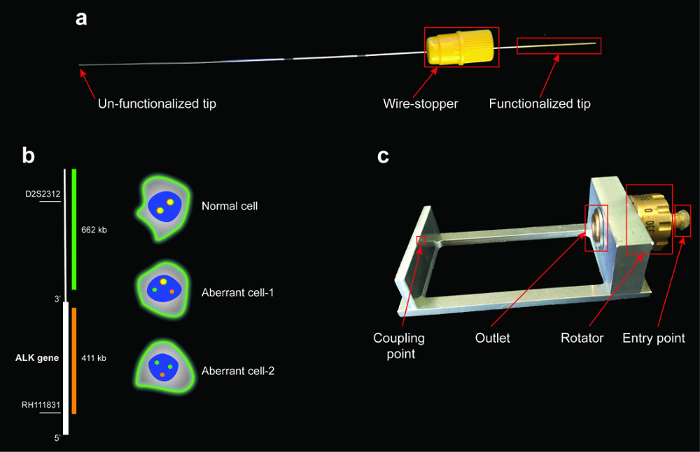
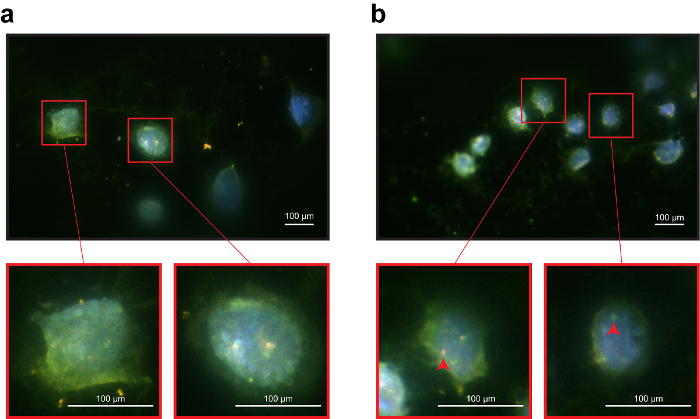
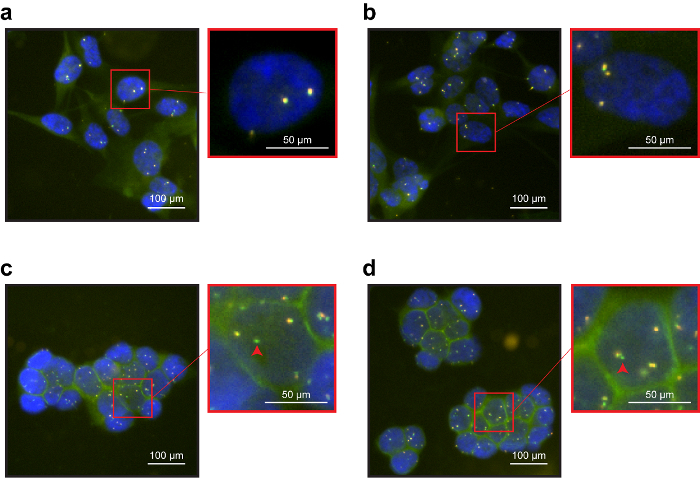
Circulating tumor cells (CTCs) are associated with poor survival in metastatic cancer. Their identification, phenotyping, and genotyping could lead to a better understanding of tumor heterogeneity and thus facilitate the selection of patients for personalized treatment. However, this is hampered because of the rarity of CTCs. We present an innovative approach for sampling a high volume of the patient blood and obtaining information about presence, phenotype, and gene translocation of CTCs. The method combines immunofluorescence staining and DNA fluorescent-in-situ-hybridization (DNA FISH) and is based on a functionalized medical wire. This wire is an innovative device that permits the in vivo isolation of CTCs from a large volume of peripheral blood. The blood volume screened by a 30-min administration of the wire is approximately 1.5-3 L. To demonstrate the feasibility of this approach, epithelial cell adhesion molecule (EpCAM) expression and the chromosomal translocation of the ALK gene were determined in non-small-cell lung cancer (NSCLC) cell lines captured by the functionalized wire and stained with an immuno-DNA FISH approach. Our main challenge was to perform the assay on a 3D structure, the functionalized wire, and to determine immuno-phenotype and FISH signals on this support using a conventional fluorescence microscope. The results obtained indicate that catching CTCs and analyzing their phenotype and chromosomal rearrangement could potentially represent a new companion diagnostic approach and provide an innovative strategy for improving personalized cancer treatments.
循环肿瘤细胞(CTCs)与转移性癌症患者的不良生存预后相关。对其进行识别、表型分析和基因分型,有助于更好地理解肿瘤异质性,从而为个性化治疗选择合适的患者。然而,由于CTCs数量稀少,这一过程受到阻碍。我们提出了一种创新方法,可采集大量患者血液,并获取有关CTCs的存在、表型和基因易位的信息。该方法结合了免疫荧光染色和DNA荧光原位杂交(DNA FISH),并基于一种功能化医用金属丝。这种金属丝是一种创新装置,能够在体内从大量外周血中分离出CTCs。通过30分钟的金属丝给药所筛查的血量约为1.5 - 3升。为证明该方法的可行性,我们采用免疫DNA FISH方法,对功能化金属丝捕获的非小细胞肺癌(NSCLC)细胞系进行上皮细胞粘附分子(EpCAM)表达和ALK基因染色体易位的检测。我们面临的主要挑战是在三维结构(功能化金属丝)上进行检测,并使用传统荧光显微镜在该载体上确定免疫表型和FISH信号。所得结果表明,捕获CTCs并分析其表型和染色体重排可能代表一种新的伴随诊断方法,并为改善个性化癌症治疗提供创新策略。