Kim Dong Yeon, Kang Min-Kyung, Park Sin-Hye, Lee Eun-Jung, Kim Yun-Ho, Oh Hyeongjoo, Choi Yean-Jung, Kang Young-Hee
Department of Food and Nutrition, Hallym University, Chuncheon, Korea.
Oncotarget. 2017 Oct 16;8(63):106190-106205. doi: 10.18632/oncotarget.22311. eCollection 2017 Dec 5.
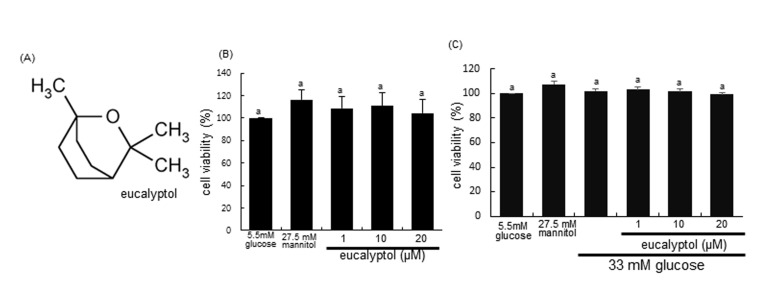
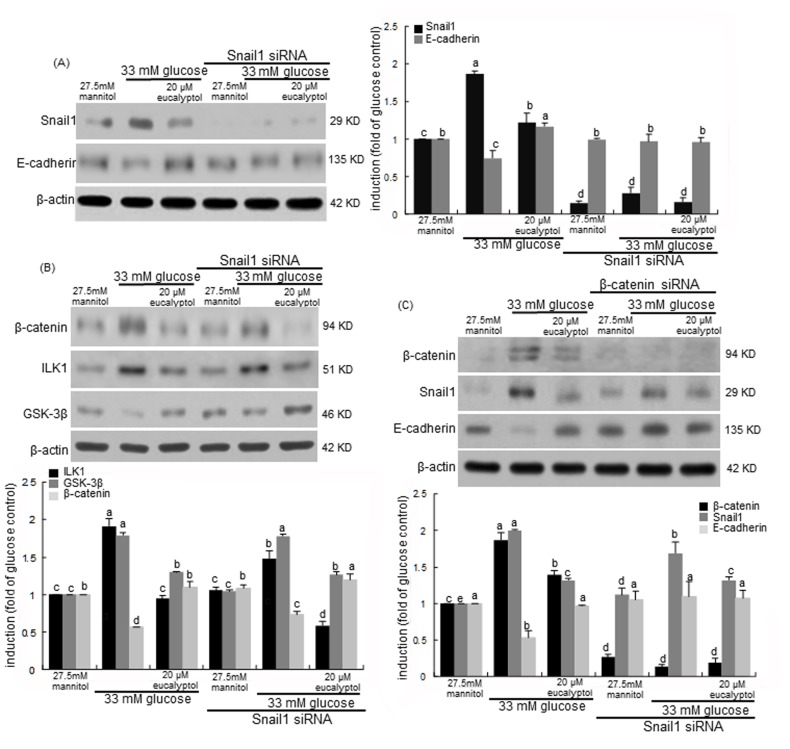
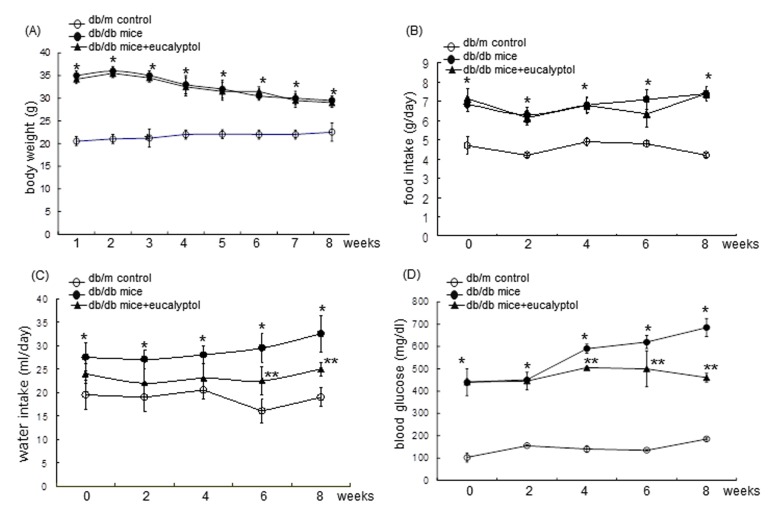
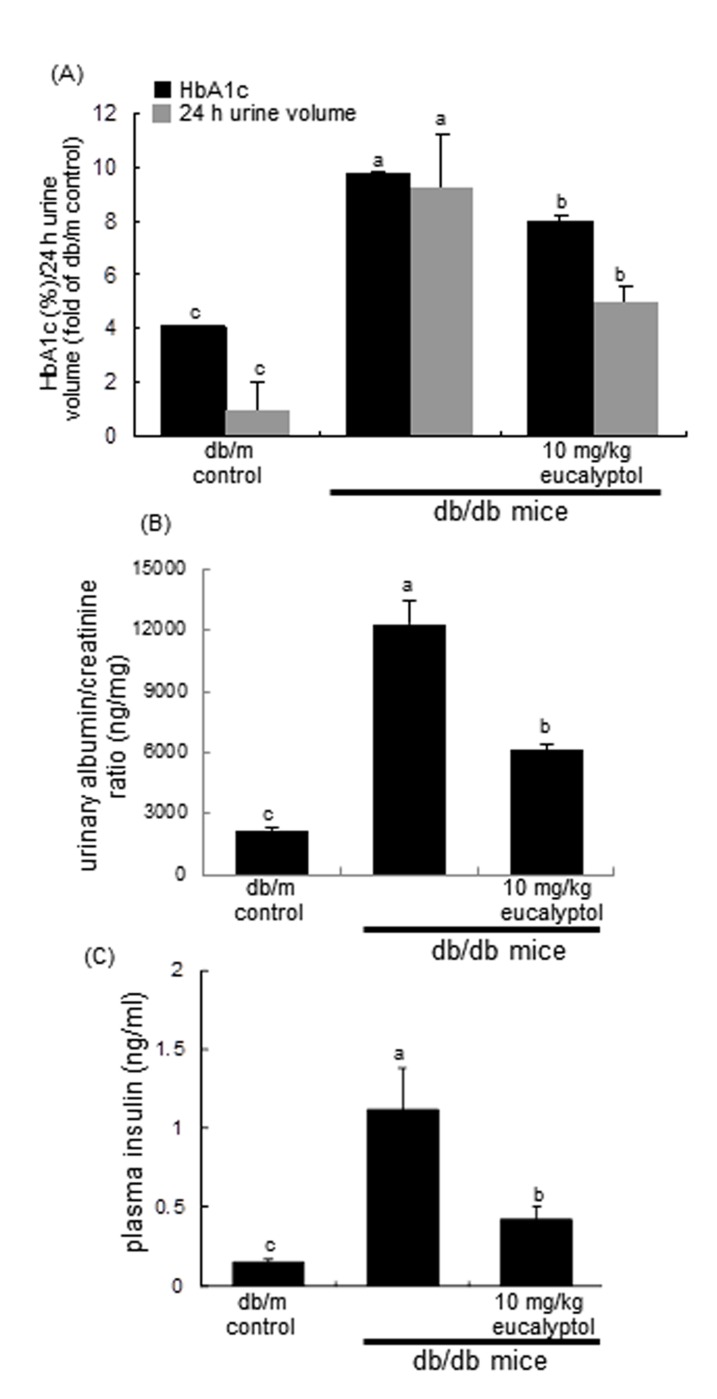
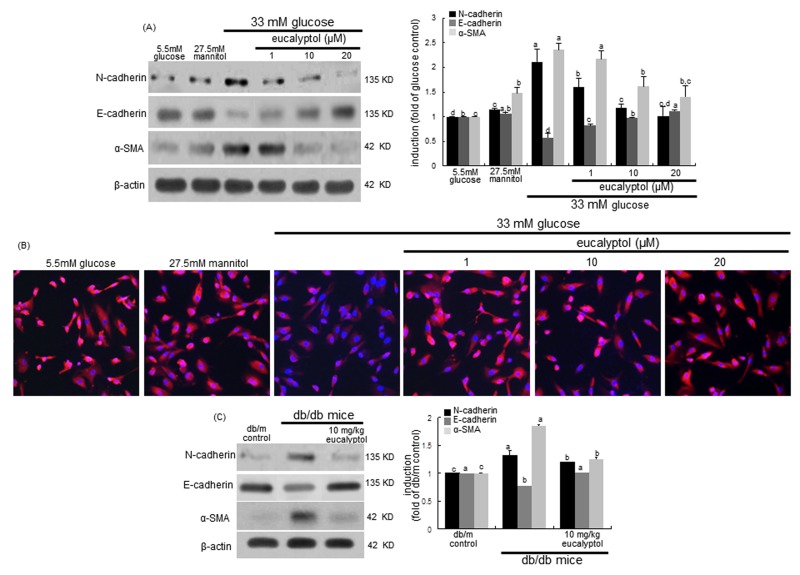
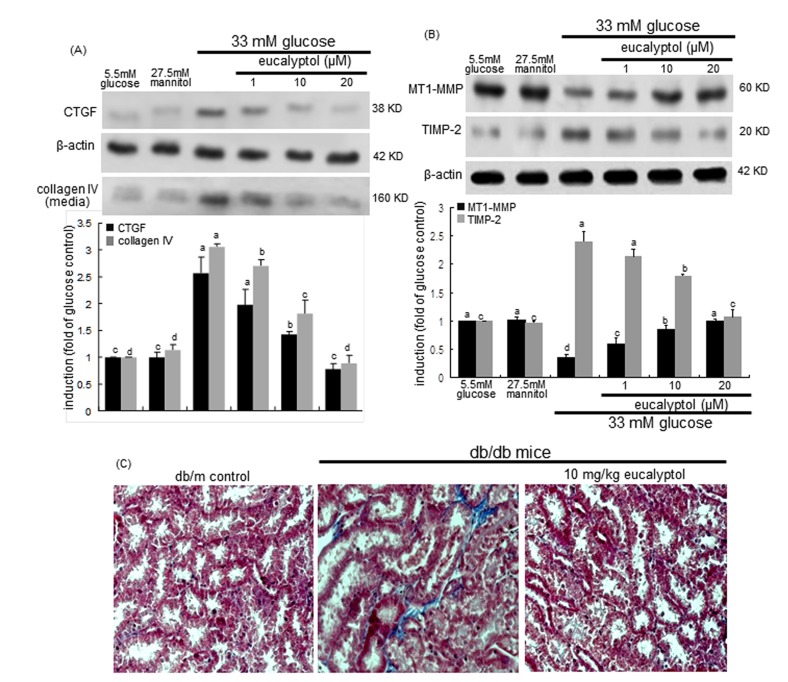
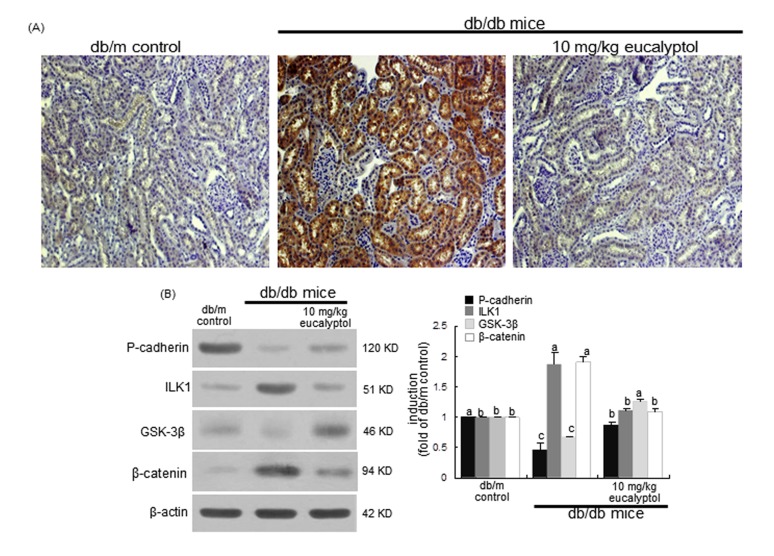
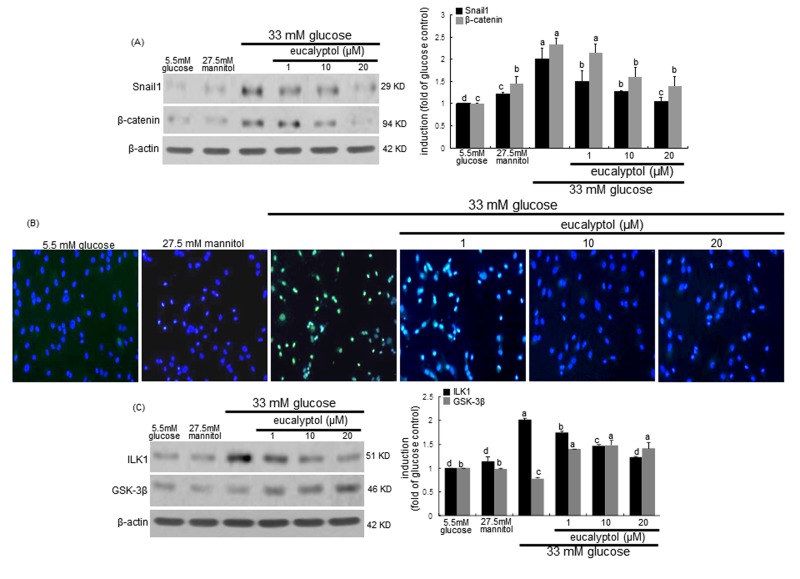
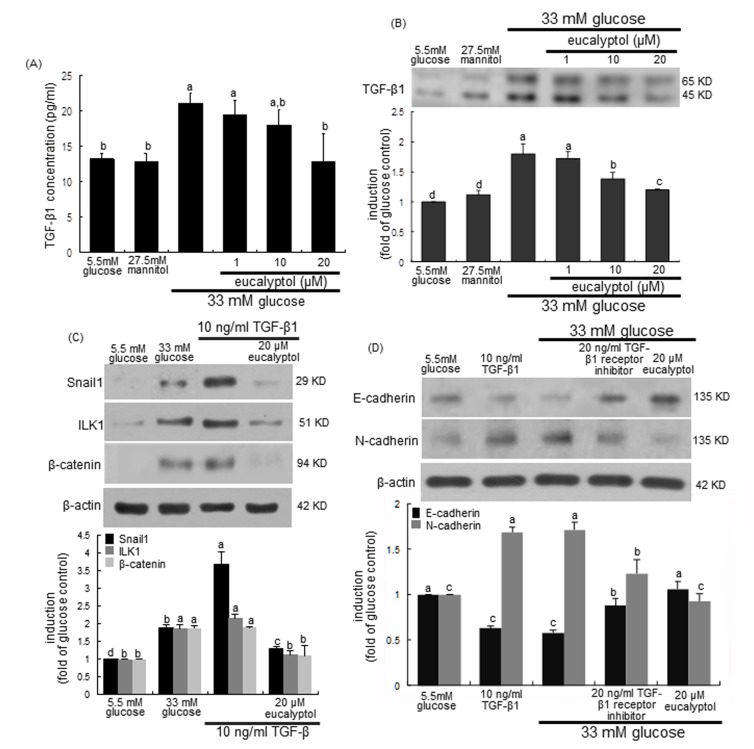
Renal tubulointerstitial fibrosis is an important event in the pathogenesis of diabetic nephropathy. Under pathologic conditions, renal tubular epithelial cells undergo transition characterized by loss of cell-cell adhesion and increased cell migration. This study investigated that eucalyptol inhibited tubular epithelial cell disjunction and tubulointerstitial fibrosis stimulated by glucose. Human renal proximal tubular epithelial cells were incubated for up to 72 h in media containing 27.5 mM mannitol as osmotic controls or 33 mM glucose in the presence of 1-20 μM eucalyptol. Nontoxic eucalyptol inhibited glucose-induced expression of the mesenchymal markers of N-cadherin and α-smooth muscle actin, whereas the induction of E-cadherin was enhanced. Eucalyptol attenuated the induction of connective tissue growth factor and collagen IV by glucose, whereas the membrane type 1-matrix metalloproteinase expression was enhanced with reducing tissue inhibitor of metalloproteinase-2 expression. Oral administration of 10 mg/kg eucalyptol to db/db mice for 8 weeks blunted hyperglycemia and proteinuria. Eucalyptol reversed tissue levels of E-cadherin, N-cadherin and P-cadherin and the collagen fiber deposition in diabetic kidneys. Eucalyptol attenuated the induction of Snail1, β-catenin and integrin-linked kinase 1 (ILK1) in glucose-exposed tubular cells and diabetic kidneys, and the glycogen synthase kinase (GSK)-3β expression was reversely enhanced. Glucose prompted TGF-β1 production in tubular cells, leading to induction of Snail1, β-catenin and ILK1, which was dampened by eucalyptol. Furthermore, the Snail1 gene deletion encumbered the β-catenin induction in glucose/eucalyptol-treated tubular cells accompanying enhanced GSK-3β expression. Therefore, eucalyptol may antagonize hyperglycemia-induced tubular epithelial derangement and tubulointerstitial fibrosis through blocking ILK1-dependent transcriptional interaction of Snail1/β-catenin.
肾小管间质纤维化是糖尿病肾病发病机制中的一个重要事件。在病理条件下,肾小管上皮细胞会发生转变,其特征是细胞间黏附丧失和细胞迁移增加。本研究调查了桉叶油醇对葡萄糖刺激的肾小管上皮细胞分离和肾小管间质纤维化的抑制作用。将人肾近端小管上皮细胞在含有27.5 mM甘露醇作为渗透压对照的培养基中或在1-20 μM桉叶油醇存在下的33 mM葡萄糖中孵育长达72小时。无毒的桉叶油醇抑制葡萄糖诱导的N-钙黏蛋白和α-平滑肌肌动蛋白等间充质标志物的表达,而E-钙黏蛋白的诱导则增强。桉叶油醇减弱了葡萄糖对结缔组织生长因子和IV型胶原的诱导作用,而膜型1-基质金属蛋白酶的表达增强,同时金属蛋白酶组织抑制剂-2的表达降低。给db/db小鼠口服10 mg/kg桉叶油醇8周可减轻高血糖和蛋白尿。桉叶油醇逆转了糖尿病肾脏中E-钙黏蛋白、N-钙黏蛋白和P-钙黏蛋白的组织水平以及胶原纤维沉积。桉叶油醇减弱了葡萄糖处理的肾小管细胞和糖尿病肾脏中Snail1、β-连环蛋白和整合素连接激酶1(ILK1)的诱导,并且糖原合酶激酶(GSK)-3β的表达反向增强。葡萄糖促使肾小管细胞产生转化生长因子-β1,导致Snail1、β-连环蛋白和ILK1的诱导,而桉叶油醇可抑制这种诱导。此外,Snail1基因缺失阻碍了葡萄糖/桉叶油醇处理的肾小管细胞中β-连环蛋白的诱导,同时GSK-3β表达增强。因此,桉叶油醇可能通过阻断Snail1/β-连环蛋白的ILK1依赖性转录相互作用来拮抗高血糖诱导的肾小管上皮紊乱和肾小管间质纤维化。