Luo Cunjin, Wang Kuanquan, Zhang Henggui
School of Computer Science and Technology, Harbin Institute of Technology (HIT), Harbin, China.
School of Physics and Astronomy, The University of Manchester, Manchester, United Kingdom.
Oncotarget. 2017 Nov 18;8(63):106511-106526. doi: 10.18632/oncotarget.22490. eCollection 2017 Dec 5.
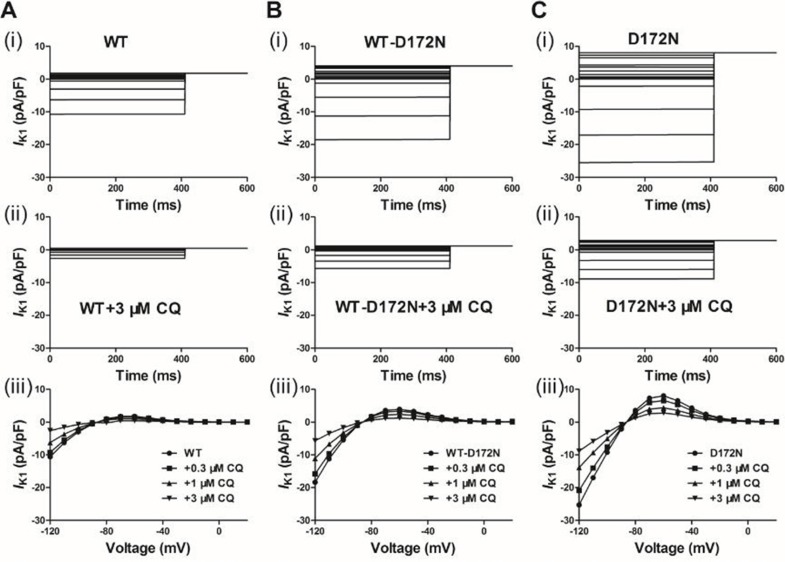
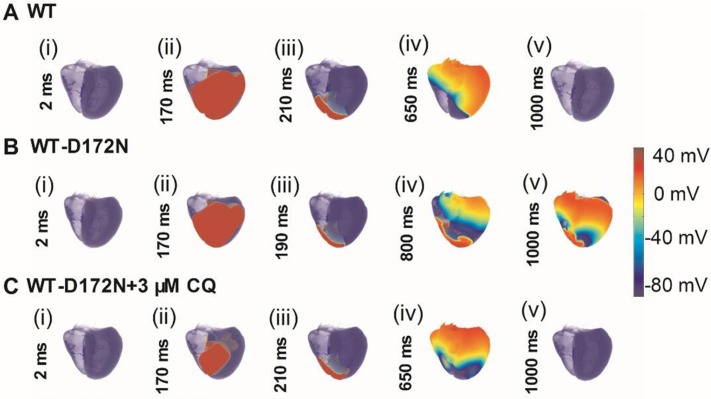
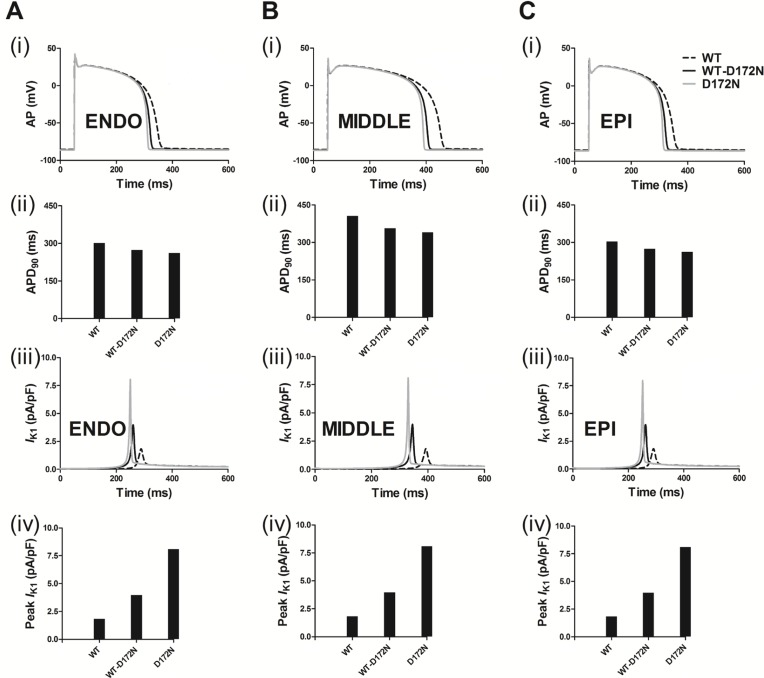
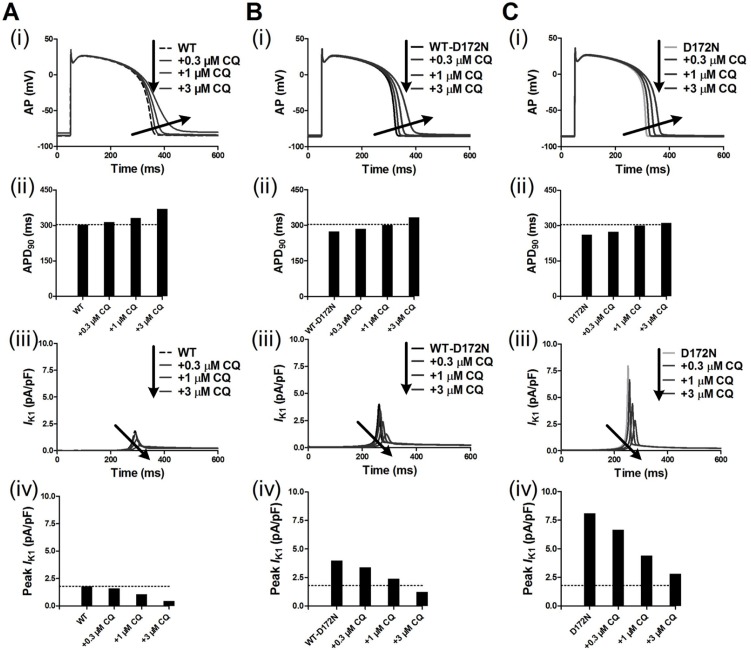
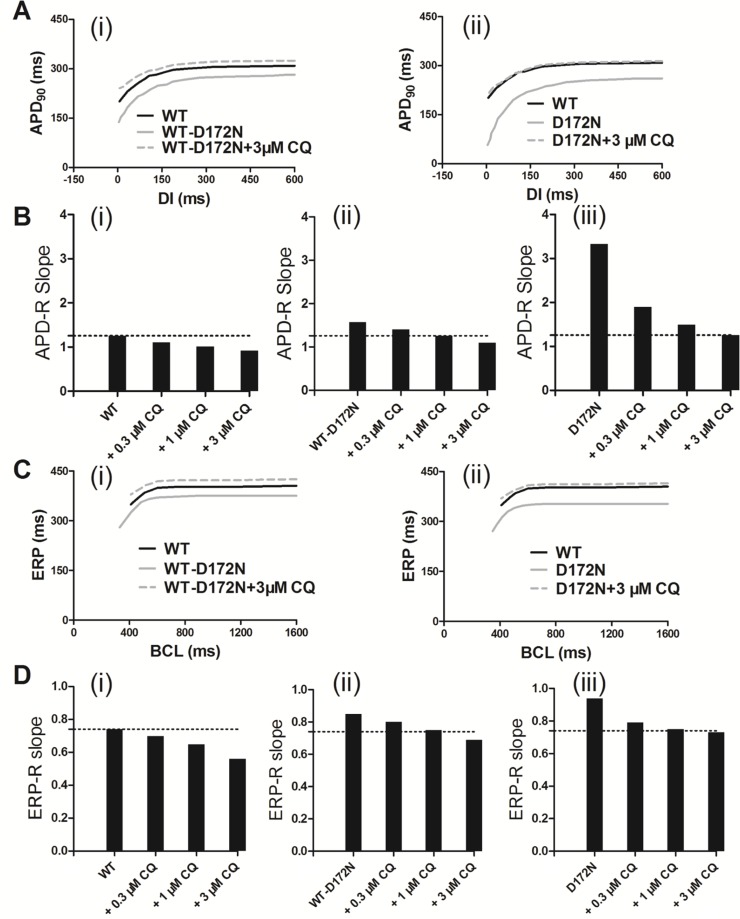
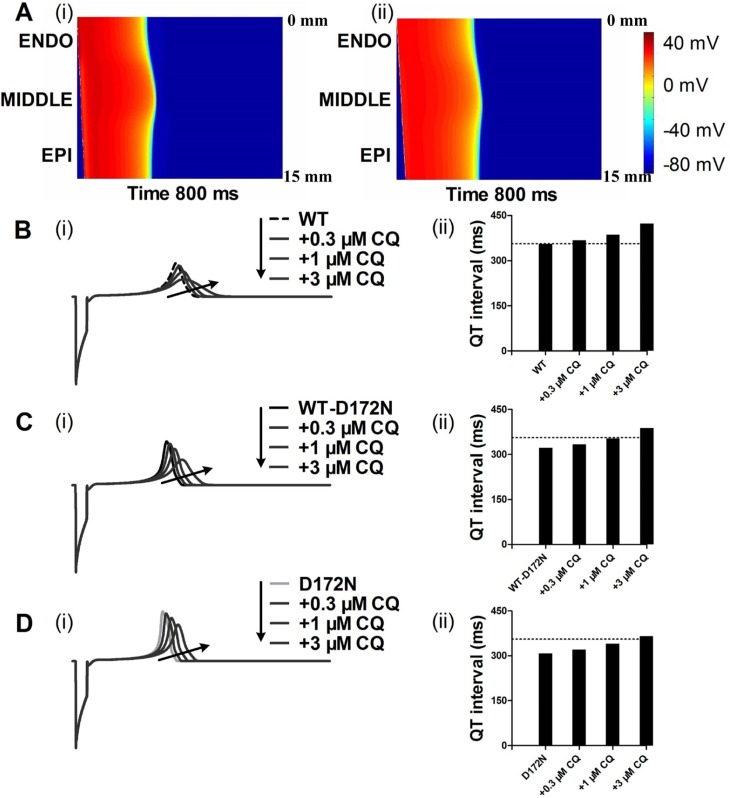
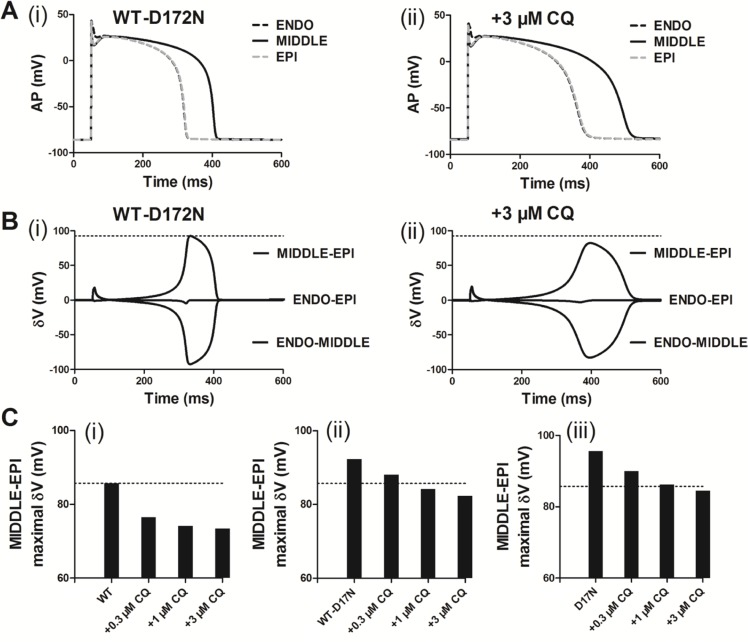
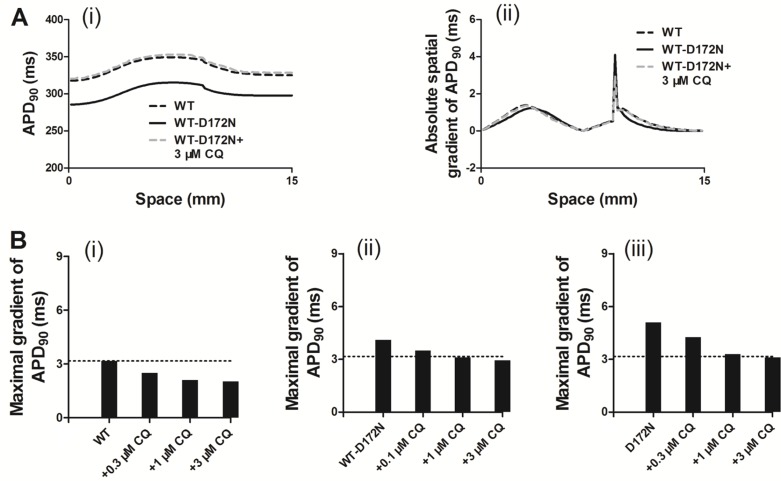
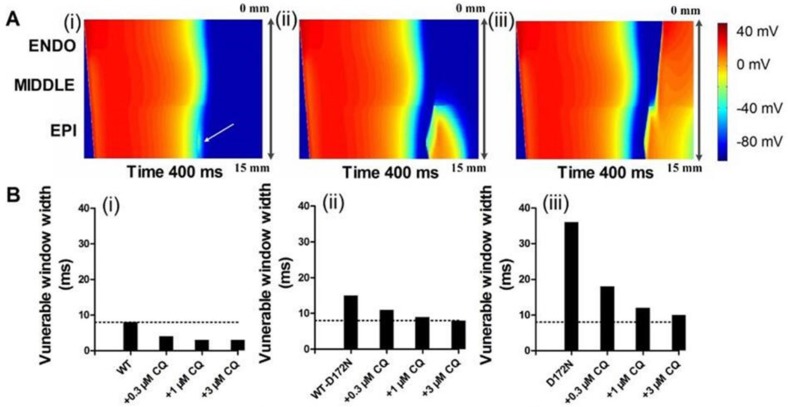
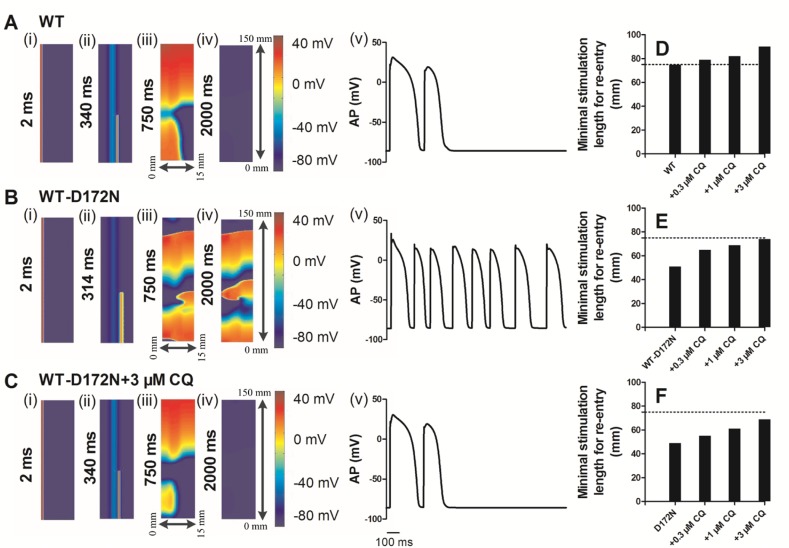
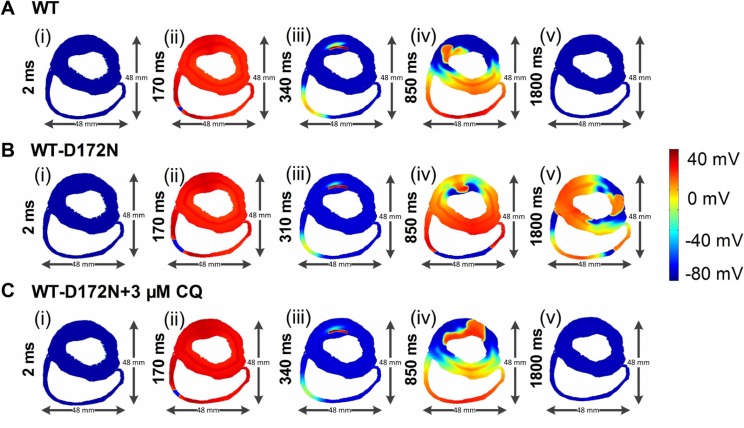
A gain-of-function D172N mutation in KCNJ2-encoded Kir2.1 channels underlies one form of short QT syndrome (SQT3), which is associated with increased susceptibility to arrhythmias and sudden death. Anti-malarial drug chloroquine was reported as an effective inhibitor of Kir2.1 channels. Using biophysically-detailed human ventricle computer models, this study assessed the effects of chloroquine on SQT3. The ten Tusscher model of human ventricular cell action potential was modified to recapitulate functional changes in the inward rectifier K current () due to heterozygous and homozygous forms of the D172N mutation. Mutant formulations were incorporated into multi-scale models. The blocking effects of chloroquine on ionic currents were modelled using IC and Hill coefficient values from literatures. Effects of chloroquine on action potential duration (APD), effective refractory period (ERP) and pseudo-ECGs were quantified. It was shown that chloroquine caused a dose-dependent reduction in , prolonged APD, and decreased the maximum voltage heterogeneity. Chloroquine prolonged QT interval and declined the T-wave amplitude. Although chloroquine reduced tissue's temporal vulnerability, it increased the minimum substrate size necessary for sustaining re-entry. The actions of chloroquine decreased arrhythmia risk, due to the reduced tissue vulnerability, prolonged ERP and wavelength of re-entrant excitation waves, which in combination prevented and terminated re-entry in the tissue models. In conclusion, the results of this study provide new evidence that the anti-arrhythmic effects of chloroquine on SQT3 and, by extension, to the possibility that chloroquine may be a potential therapeutic agent for SQT3 treatment.
KCNJ2编码的Kir2.1通道中的功能获得性D172N突变是短QT综合征(SQT3)的一种形式的基础,这与心律失常和猝死易感性增加有关。抗疟药物氯喹被报道为Kir2.1通道的有效抑制剂。本研究使用生物物理细节丰富的人类心室计算机模型评估了氯喹对SQT3的影响。对人类心室细胞动作电位的Ten Tusscher模型进行了修改,以概括由于D172N突变的杂合和纯合形式导致的内向整流钾电流( )的功能变化。将突变体公式纳入多尺度模型。使用文献中的IC和希尔系数值对氯喹对离子电流的阻断作用进行建模。量化了氯喹对动作电位时程(APD)、有效不应期(ERP)和伪心电图的影响。结果表明,氯喹导致 剂量依赖性降低,延长APD,并降低最大电压异质性。氯喹延长QT间期并降低T波振幅。尽管氯喹降低了组织的时间易损性,但它增加了维持折返所需的最小底物大小。氯喹的作用降低了心律失常风险,这是由于组织易损性降低、ERP延长以及折返兴奋波的波长延长,这些因素共同阻止并终止了组织模型中的折返。总之,本研究结果提供了新的证据,证明氯喹对SQT3具有抗心律失常作用,进而表明氯喹可能是治疗SQT3的潜在治疗药物。