Yuan Yongfeng, Bai Xiangyun, Luo Cunjin, Wang Kuanquan, Zhang Henggui
School of Computer Science and Technology, Harbin Institute of Technology, Harbin, China.
Biological Physics Group, School of Physics and Astronomy, The University of Manchester, Manchester, UK.
Br J Pharmacol. 2015 Dec;172(23):5531-47. doi: 10.1111/bph.12996. Epub 2015 Jan 13.
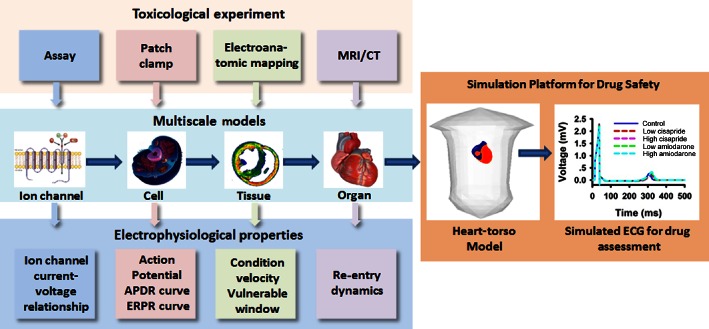
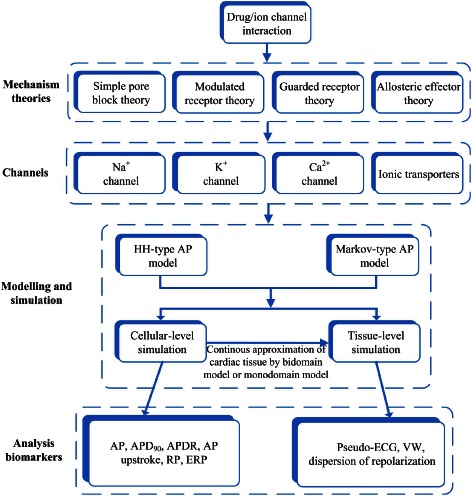
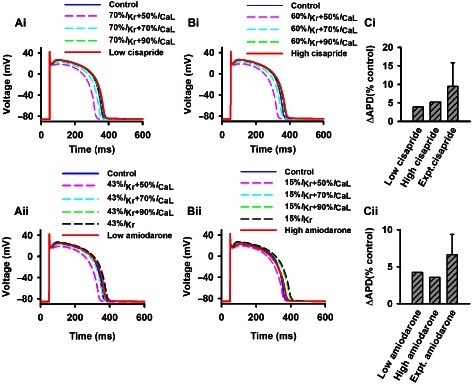
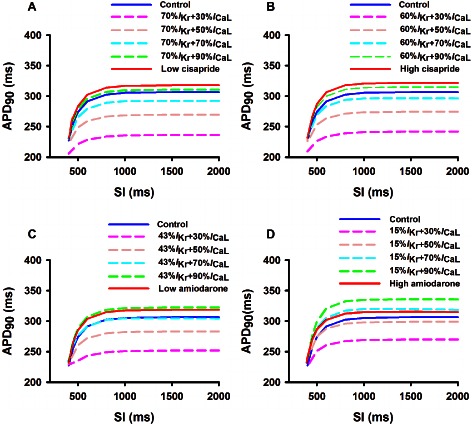
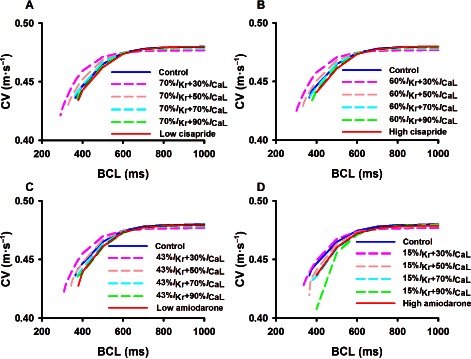
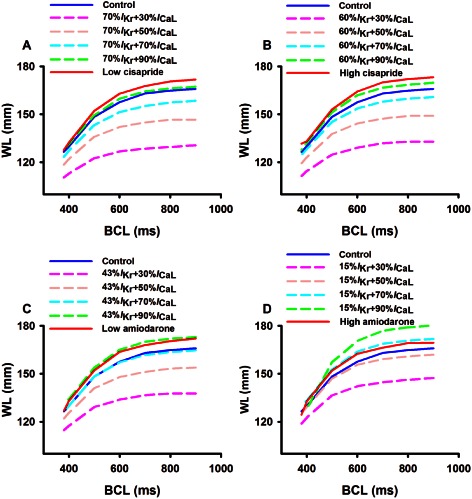
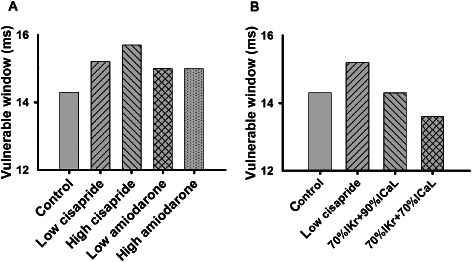
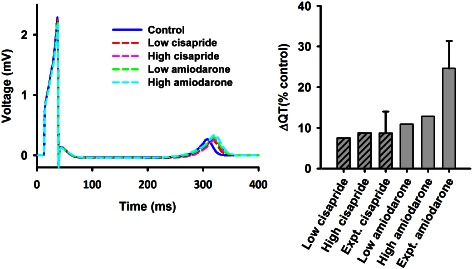
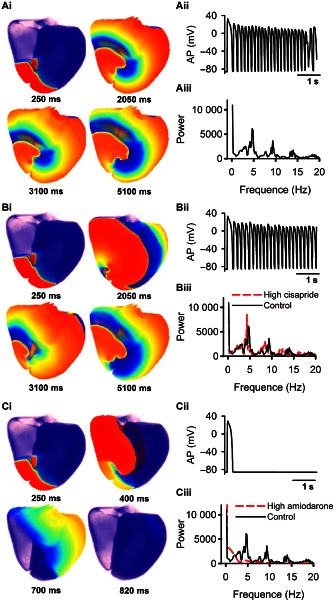
To predict the safety of a drug at an early stage in its development is a major challenge as there is a lack of in vitro heart models that correlate data from preclinical toxicity screening assays with clinical results. A biophysically detailed computer model of the heart, the virtual heart, provides a powerful tool for simulating drug-ion channel interactions and cardiac functions during normal and disease conditions and, therefore, provides a powerful platform for drug cardiotoxicity screening. In this article, we first review recent progress in the development of theory on drug-ion channel interactions and mathematical modelling. Then we propose a family of biomarkers that can quantitatively characterize the actions of a drug on the electrical activity of the heart at multi-physical scales including cellular and tissue levels. We also conducted some simulations to demonstrate the application of the virtual heart to assess the pro-arrhythmic effects of cisapride and amiodarone. Using the model we investigated the mechanisms responsible for the differences between the two drugs on pro-arrhythmogenesis, even though both prolong the QT interval of ECGs. Several challenges for further development of a virtual heart as a platform for screening drug cardiotoxicity are discussed.
在药物研发的早期阶段预测其安全性是一项重大挑战,因为缺乏能够将临床前毒性筛查试验数据与临床结果相关联的体外心脏模型。心脏的生物物理细节计算机模型,即虚拟心脏,为模拟正常和疾病状态下药物与离子通道的相互作用以及心脏功能提供了强大工具,因此为药物心脏毒性筛查提供了强大平台。在本文中,我们首先回顾药物与离子通道相互作用理论及数学建模发展的最新进展。然后我们提出了一系列生物标志物,这些标志物能够在多物理尺度(包括细胞和组织水平)上定量表征药物对心脏电活动的作用。我们还进行了一些模拟,以展示虚拟心脏在评估西沙必利和胺碘酮致心律失常作用方面的应用。尽管两种药物都会延长心电图的QT间期,但我们使用该模型研究了导致这两种药物在促心律失常作用上存在差异的机制。讨论了将虚拟心脏进一步发展成为药物心脏毒性筛查平台所面临的若干挑战。