Key Lab of Drug Metabolism and Pharmacokinetics, State Key Laboratory of Natural Medicines, China Pharmaceutical University, 24 Tong Jia Xiang, Nanjing, Jiangsu, China.
Nanjing Drum Tower Hospital, The Affiliated Hospital of Nanjing University Medical School, Nanjing, Jiangsu, China.
Redox Biol. 2018 May;15:253-265. doi: 10.1016/j.redox.2017.12.009. Epub 2017 Dec 21.
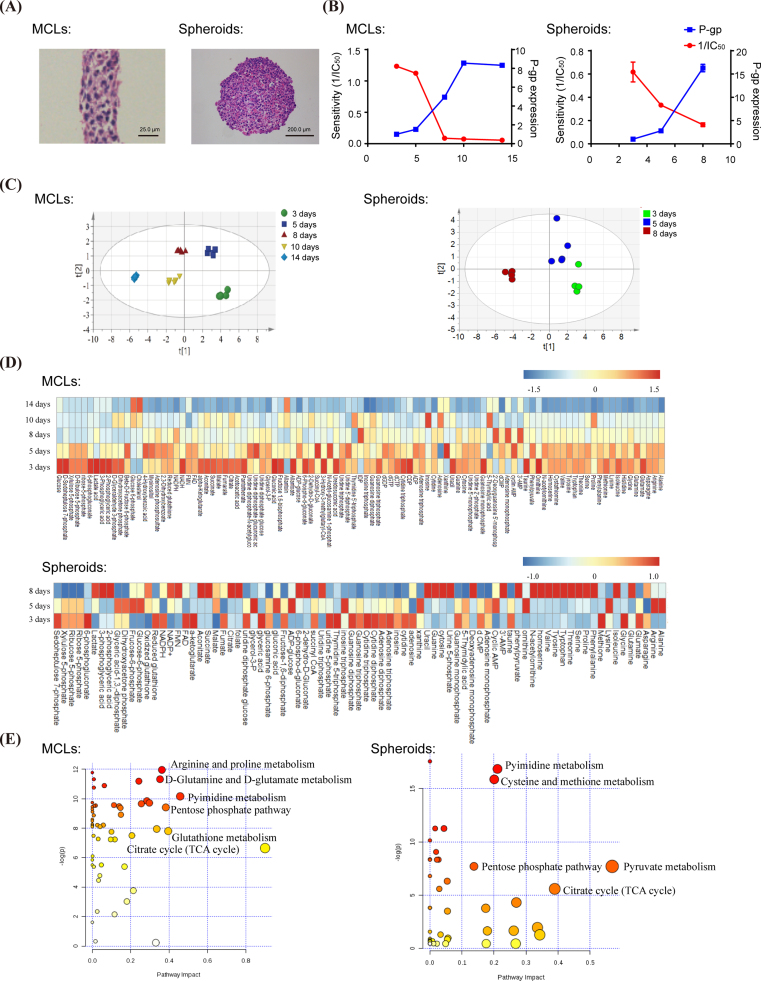
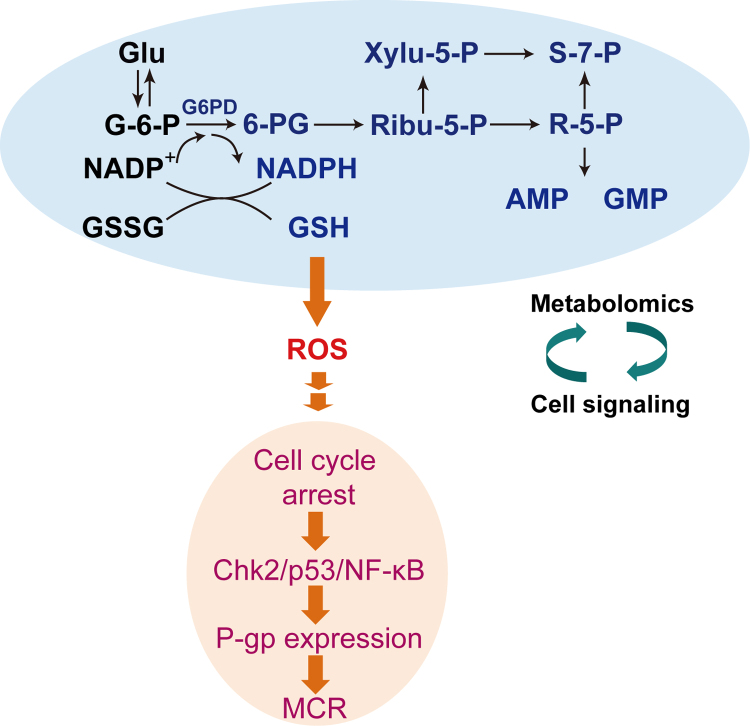
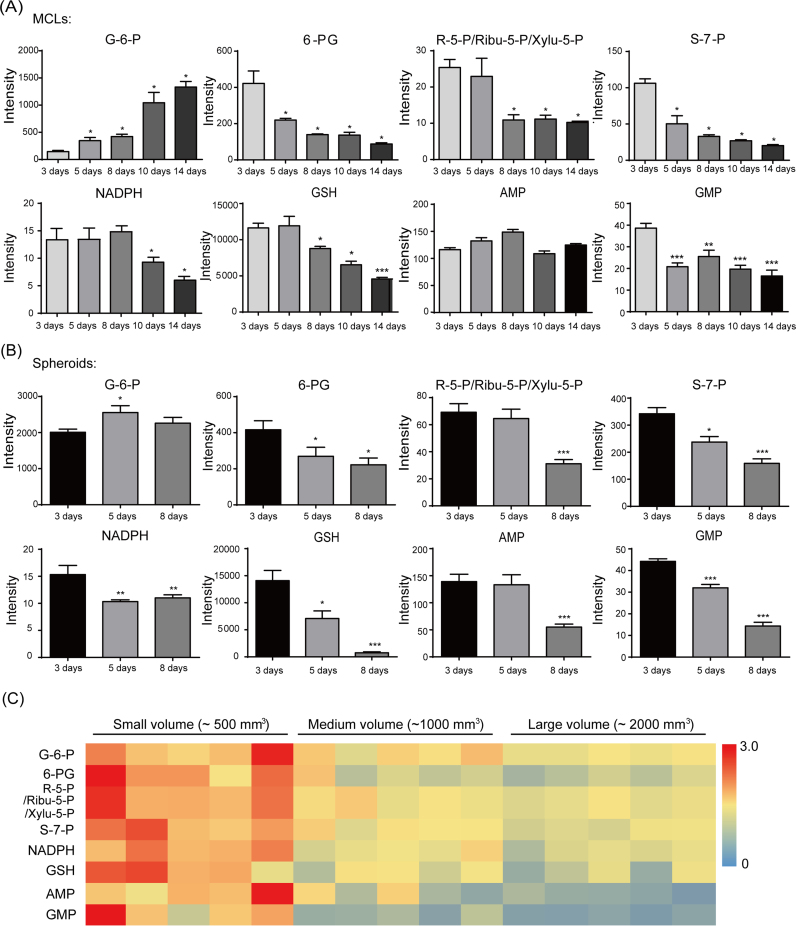
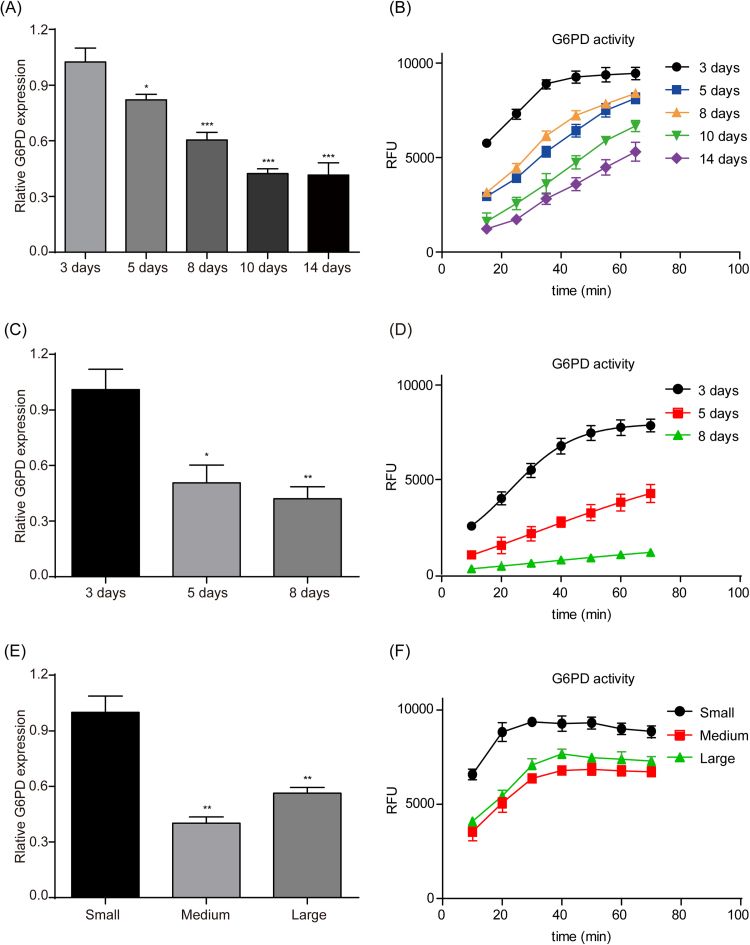
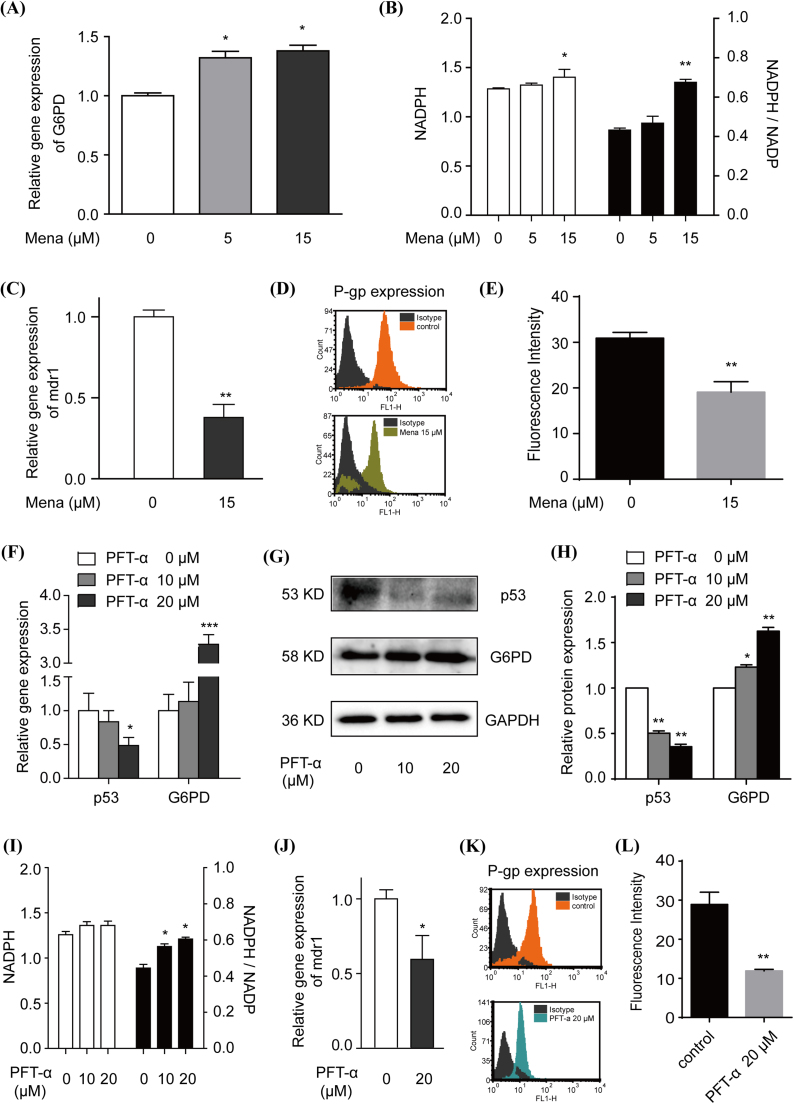
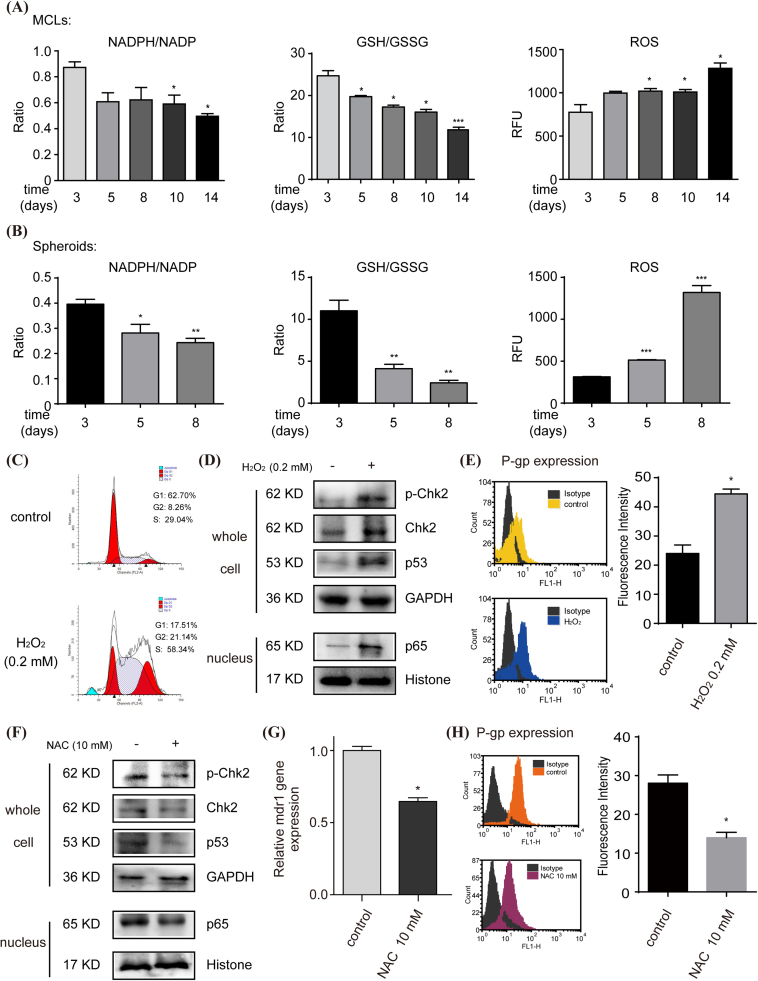
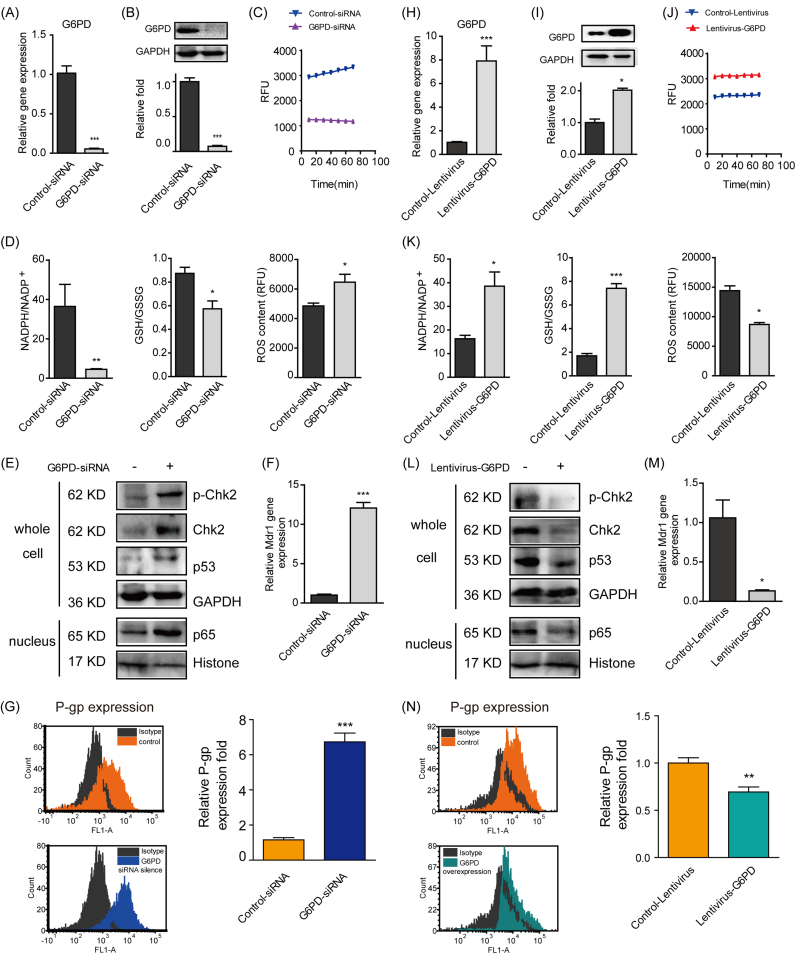
Although metabolic reprogramming and redox imbalance are widely reported to be involved in chemo-resistance in cancer treatment, much more attention was paid to anti-cancer drug induced effect. Our previous studies showed that cancer cells can develop P-gp overexpression-mediated intrinsic drug resistance in the formation of 3D MCF-7 multi-cellular layers (MCLs) without any drug induction. However, whether metabolic reprogramming and redox imbalance functioned during this progress remained unrevealed. In our present study, LC-Q/TOF-MS and GC-MS were used in combination for analysing intracellular metabolites. The contribution of pentose phosphate pathway (PPP) and its related redox status were checked by chemical interfering and silencing/over-expression of glucose-6-phosphate dehydrogenase (G6PD). The downstream products of G6PD were assayed by quantitative real-time PCR, western blot and flow cytometry. Results showed that not only G6PD expression but also G6PD activity was significantly lowered along with 3D MCF-7 cells culture time. Impaired PPP disturbed redox-cycling, generated reactive oxygen species (ROS), which triggered cell cycle arrest and caused the switch to Chk2/p53/NF-κB pathway-mediated P-gp induction. Our results provided a new attempt to associate intrinsic small molecule metabolites (impaired PPP) communicating with cell signalling pathways through disturbed intracellular redox status to elucidate multi-cellular resistance (MCR) in 3D MCF-7 cells, which improved the understanding of the mechanisms of P-gp up-regulation in MCR with metabolomic and related redox status support.
虽然代谢重编程和氧化还原失衡广泛报道与癌症治疗中的化疗耐药有关,但更多的关注集中在抗癌药物诱导的作用上。我们之前的研究表明,在没有任何药物诱导的情况下,癌细胞可以在形成三维 MCF-7 多细胞层(MCLs)的过程中通过过度表达 P-糖蛋白(P-gp)而产生内在的药物耐药性。然而,代谢重编程和氧化还原失衡在这个过程中是否起作用仍未被揭示。在本研究中,我们联合使用 LC-Q/TOF-MS 和 GC-MS 分析细胞内代谢物。通过化学干扰和葡萄糖-6-磷酸脱氢酶(G6PD)的沉默/过表达来检查戊糖磷酸途径(PPP)及其相关氧化还原状态的贡献。通过定量实时 PCR、western blot 和流式细胞术检测 G6PD 的下游产物。结果表明,不仅 G6PD 的表达,而且 G6PD 的活性随着 3D MCF-7 细胞培养时间的延长而显著降低。受损的 PPP 扰乱了氧化还原循环,产生了活性氧(ROS),从而触发细胞周期停滞,并导致细胞转向 Chk2/p53/NF-κB 通路介导的 P-gp 诱导。我们的结果提供了一种新的尝试,即将内在的小分子代谢物(受损的 PPP)与细胞信号通路联系起来,通过扰乱细胞内氧化还原状态来阐明三维 MCF-7 细胞中的多细胞耐药性(MCR),这有助于理解代谢组学和相关氧化还原状态支持下 MCR 中 P-gp 上调的机制。