Department of Horticulture, Sunchon National University, 255 Jungangro, Suncheon, Jeonnam 57922, Korea.
Department of Horticultural Science, Kyungpook National University, 80 Daehakro, Bukgu, Daegu 41566, Korea.
Molecules. 2017 Dec 8;22(12):2180. doi: 10.3390/molecules22122180.
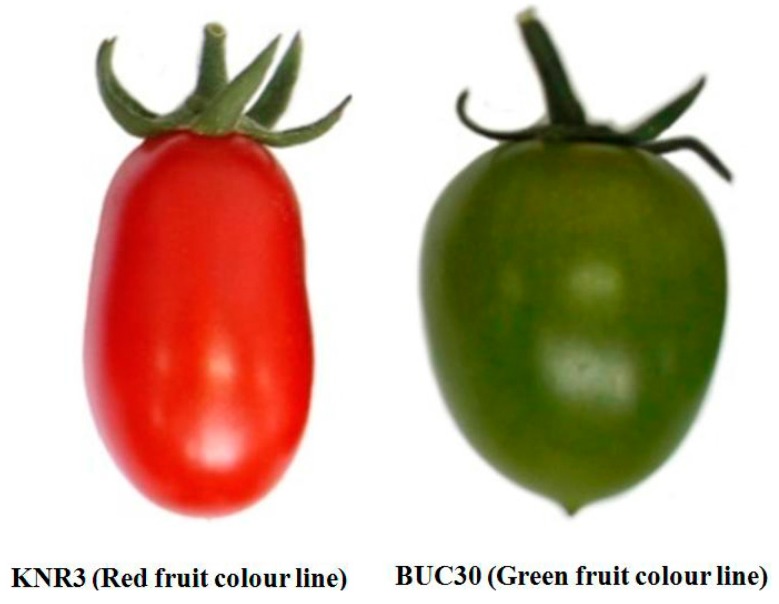
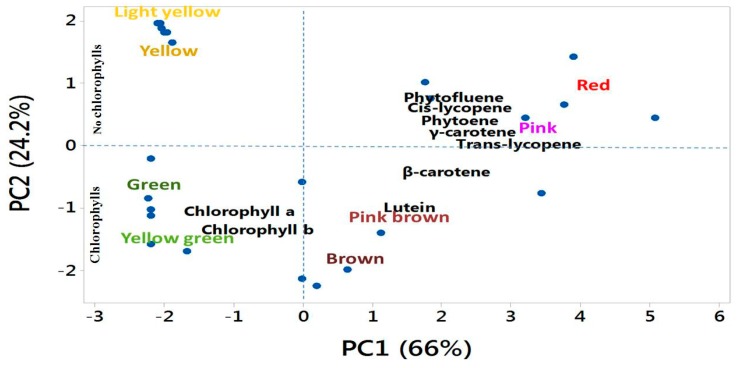
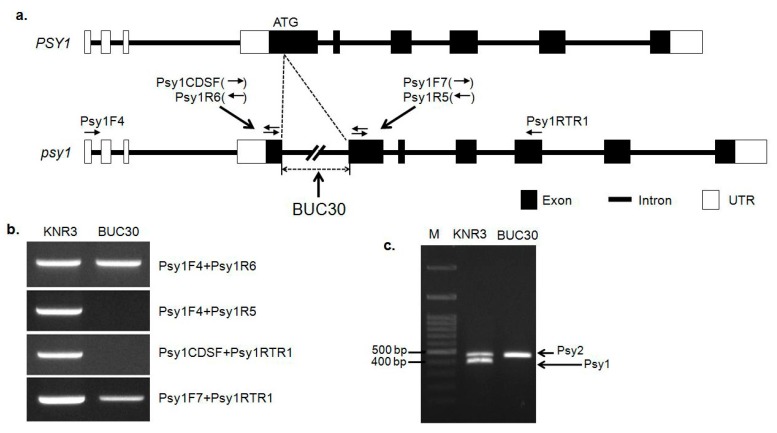
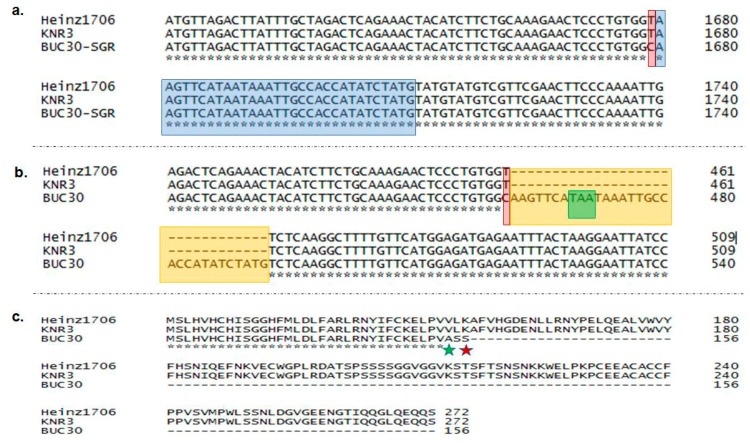
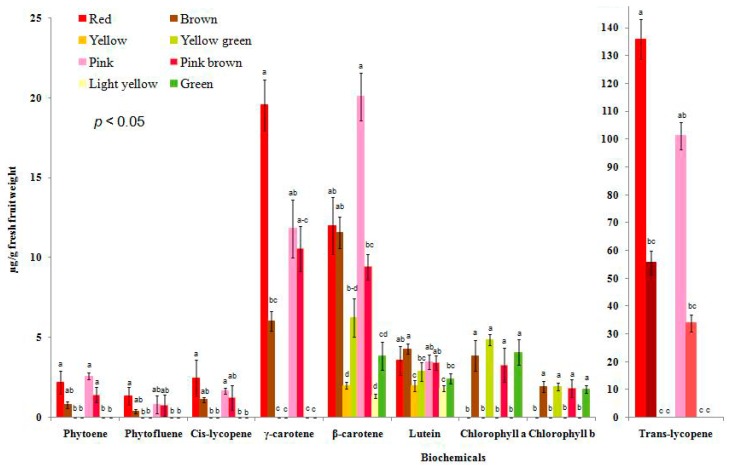
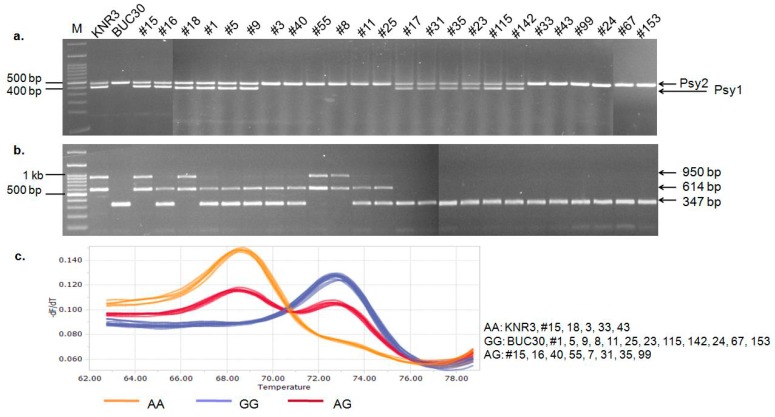
The color of tomato () fruit flesh is often used as an indicator of quality. Generally, fruit color is determined by the accumulation of carotenoids and flavonoids, along with concomitant degradation of chlorophylls during ripening. Several genes, such as (), (), and , have been extensively studied to elucidate the genes controlling fruit coloration. In this study, we observed low carotenoid levels without degradation of chlorophylls in green-fruited tomato caused by mutations in three genes, , , and . We crossed two inbred lines, BUC30 (green-fruited) and KNR3 (red-fruited), to confirm the causal effects of these mutations on fruit coloration. The F₂ population segregated for eight different fruit colors in the proportions expected for three pairs of gene, as confirmed by a chi-square test. Therefore, we developed a population of tomato with diverse fruit colors and used molecular markers to detect the genes responsible for the individual fruit colors. These newly-designed DNA-based markers can be used for selecting desired fruit color genotypes within adapted breeding materials and cultivars for breeding.
番茄()果实果肉的颜色通常用作品质指标。一般来说,果实颜色由类胡萝卜素和类黄酮的积累决定,同时在成熟过程中伴随着叶绿素的降解。已经有几个基因,如()、()和,被广泛研究以阐明控制果实着色的基因。在这项研究中,我们观察到由于三个基因()、()和的突变导致绿果番茄中类胡萝卜素水平低而叶绿素没有降解。我们将两个自交系 BUC30(绿果)和 KNR3(红果)进行杂交,以确认这些突变对果实着色的因果影响。F₂群体在三个基因对的比例上表现出八种不同的果实颜色分离,卡方检验证实了这一点。因此,我们开发了一个具有多种果实颜色的番茄群体,并使用分子标记来检测负责个体果实颜色的基因。这些新设计的基于 DNA 的标记可以用于选择适应的育种材料和品种中的所需果实颜色基因型进行育种。