Mackinson Steven, Platts Mark, Garcia Clement, Lynam Christopher
Centre for Environment, Fisheries and Aquaculture Science, Lowestoft, Suffolk, United Kingdom.
Ardent Data Analytics, Sheffield, South Yorkshire, United Kingdom.
PLoS One. 2018 Jan 2;13(1):e0190015. doi: 10.1371/journal.pone.0190015. eCollection 2018.
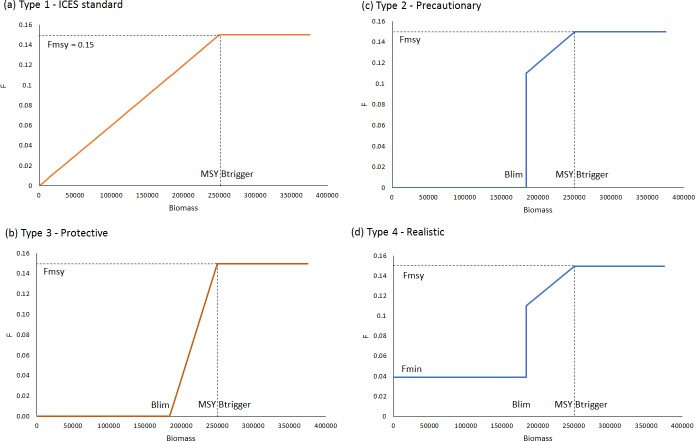
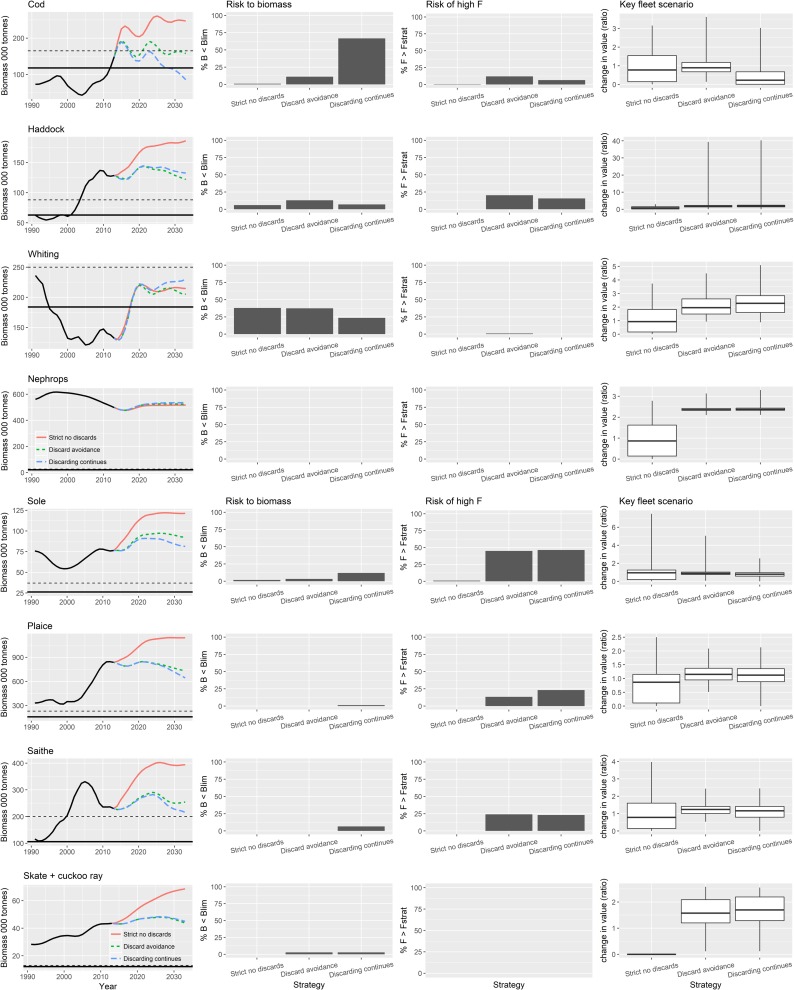
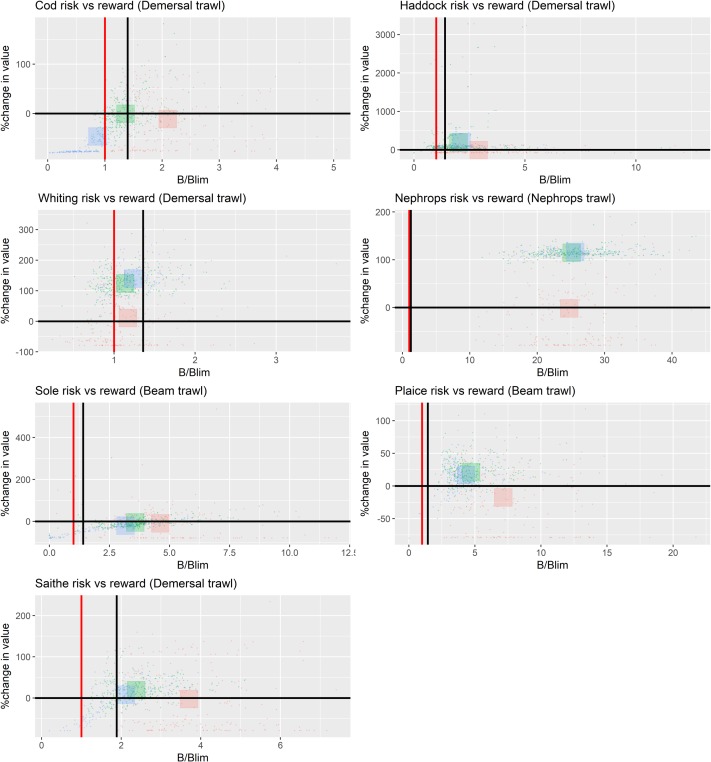
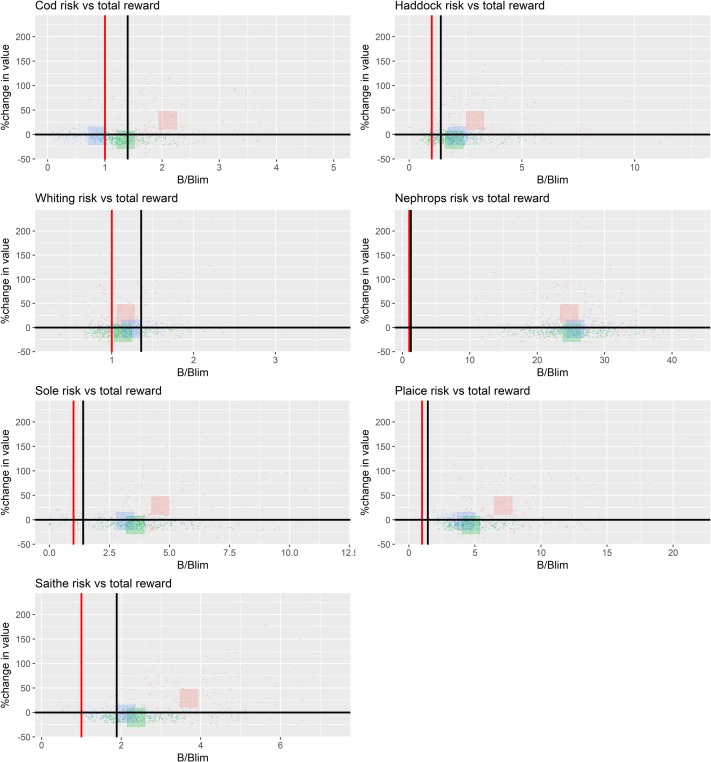
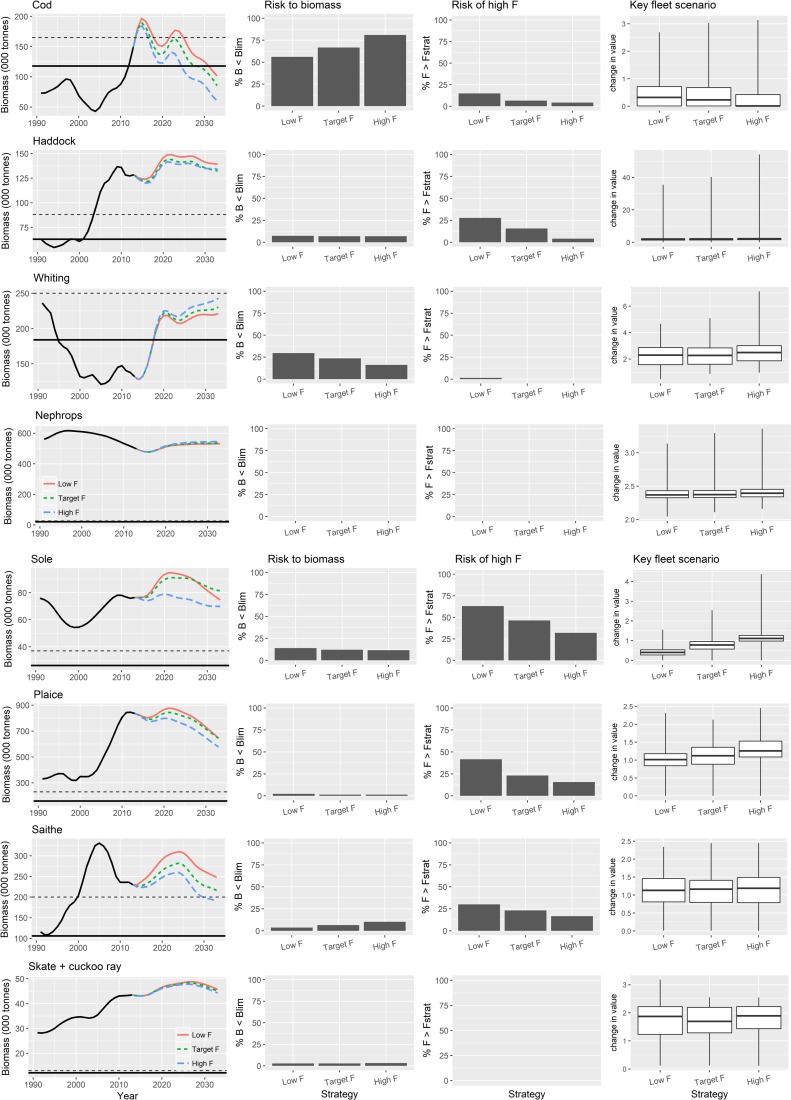
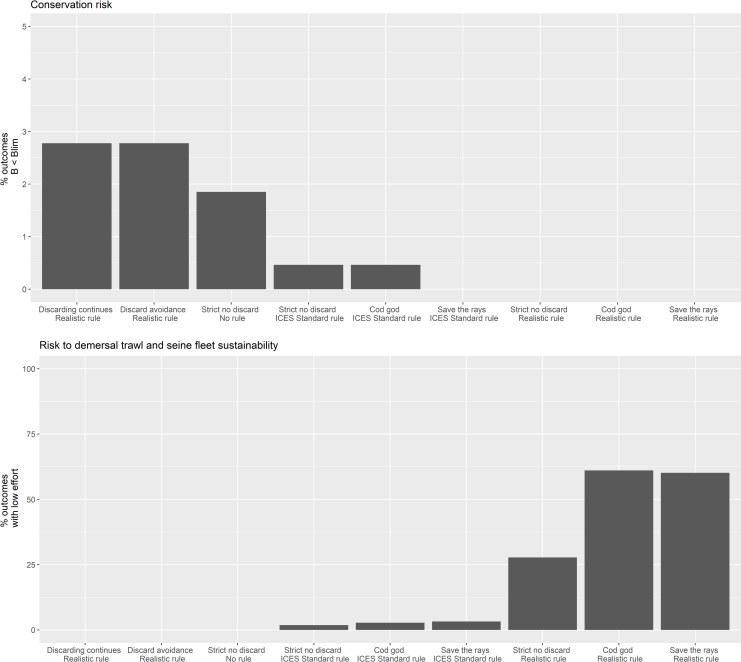
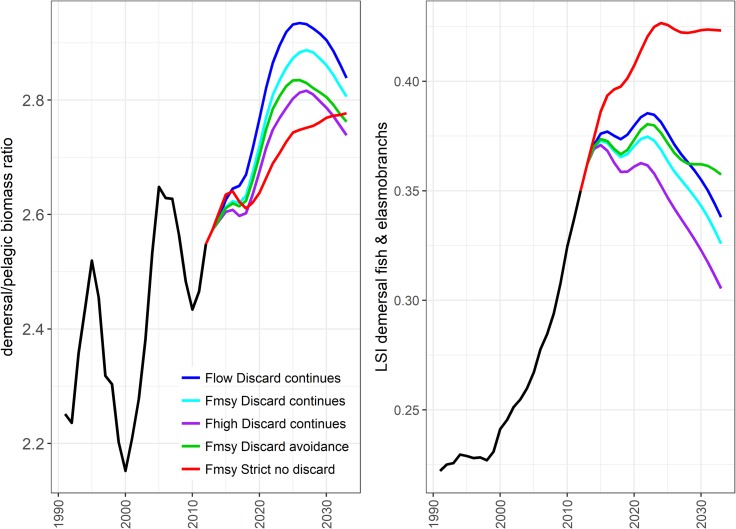
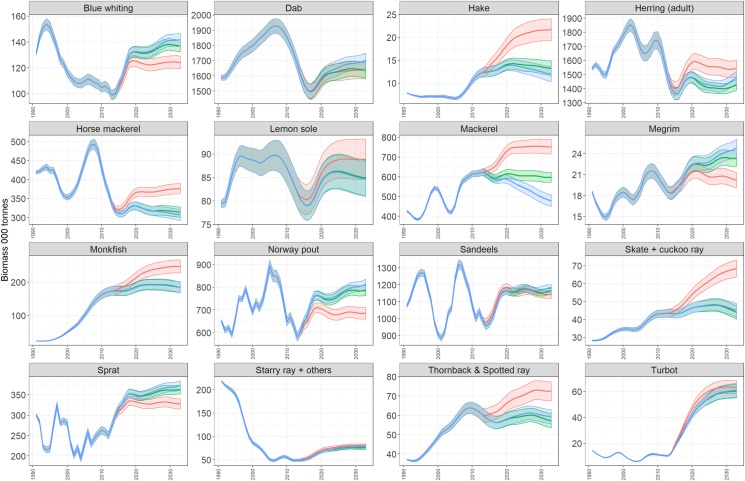
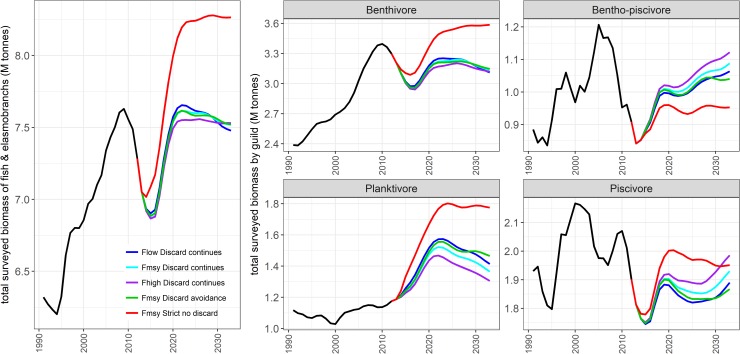
The possible impacts of the European Commission's proposed North Sea Multi-Annual Plan are evaluated in terms of its likely outcomes to achieve management objectives for fishing pressure, species' biomass, fishery yield, the landed value of key species and ecosystem objectives. The method applies management strategy evaluation procedures that employ an ecosystem model of the North Sea and its fisheries as the operating model. Taking five key dimensions of the proposed plan, it identifies those areas that are key to its successful performance. Overwhelmingly, choices in the options for the implementation of regulatory measures on discarding practices outweigh the effects of options related to fishing within ranges associated with 'pretty good yield', the way that biomass conservation safeguard mechanisms are applied and the timeframe for achieving fishing mortality targets. The impact of safeguard options and ranges in fishing mortality become important only when stock biomass is close to its reference points. The fifth dimension-taking into account wider conservation and ecosystem objectives-reveals that discard policy has a big impact on conservation species, but also that the type of harvest control rule can play an important role in limiting risks to stocks by 'applying the brakes' early. The consequences to fisheries however is heightened risk to their viability, thus exposing the sustainability trade-offs faced with balancing societal pressures for blue growth and enhanced conservation. It also reveals the wider ecosystem impacts that emphasise the connectivity between the demersal and pelagic realms, and thus, the importance of not treating the demersal NSMAP in isolation from other management plans. When stocks are below their biomass reference points, low F strategies lead to better long term economic performance, but for stocks consistently above biomass reference points, high F strategies lead to higher long term value. Nephrops and whiting often show contradictory responses to the strategies because changes in their predators abundance affects their abundance and success of their fisheries.
从实现捕捞压力、物种生物量、渔业产量、关键物种上岸价值及生态系统目标等管理目标的可能结果出发,对欧盟委员会提议的北海多年期计划的潜在影响进行了评估。该方法应用管理策略评估程序,采用北海及其渔业的生态系统模型作为运行模型。针对提议计划的五个关键维度,确定了对其成功实施至关重要的领域。总体而言,在实施关于弃鱼做法的监管措施的选项选择,比与“相当高产量”相关范围内的捕捞选项、生物量保护保障机制的应用方式以及实现捕捞死亡率目标的时间框架等选项的影响更大。只有当种群生物量接近其参考点时,保障选项和捕捞死亡率范围的影响才变得重要。第五个维度——考虑更广泛的保护和生态系统目标——表明弃鱼政策对受保护物种有重大影响,但收获控制规则的类型在通过尽早“刹车”来限制种群风险方面也可发挥重要作用。然而,对渔业的后果是其生存能力面临更高风险,从而暴露了在平衡蓝色增长的社会压力和加强保护之间面临的可持续性权衡。它还揭示了更广泛的生态系统影响,强调了底栖和中上层领域之间的连通性,因此,不能将北海多年度计划的底栖部分与其他管理计划孤立开来对待的重要性。当种群低于其生物量参考点时,低捕捞率策略会带来更好的长期经济表现,但对于持续高于生物量参考点的种群,高捕捞率策略会带来更高的长期价值。挪威龙虾和牙鳕对这些策略的反应往往相互矛盾,因为它们捕食者数量的变化会影响它们的数量及其渔业的成功。