Division of Genetics and Physiology, Department of Biology, FI-20014 University of Turku, Turku, Finland.
Institute of Biotechnology, Viikki Biocenter, P. O. Box 56, FI-00014 University of Helsinki, Helsinki, Finland.
Nucleic Acids Res. 2018 May 18;46(9):4649-4661. doi: 10.1093/nar/gkx1281.
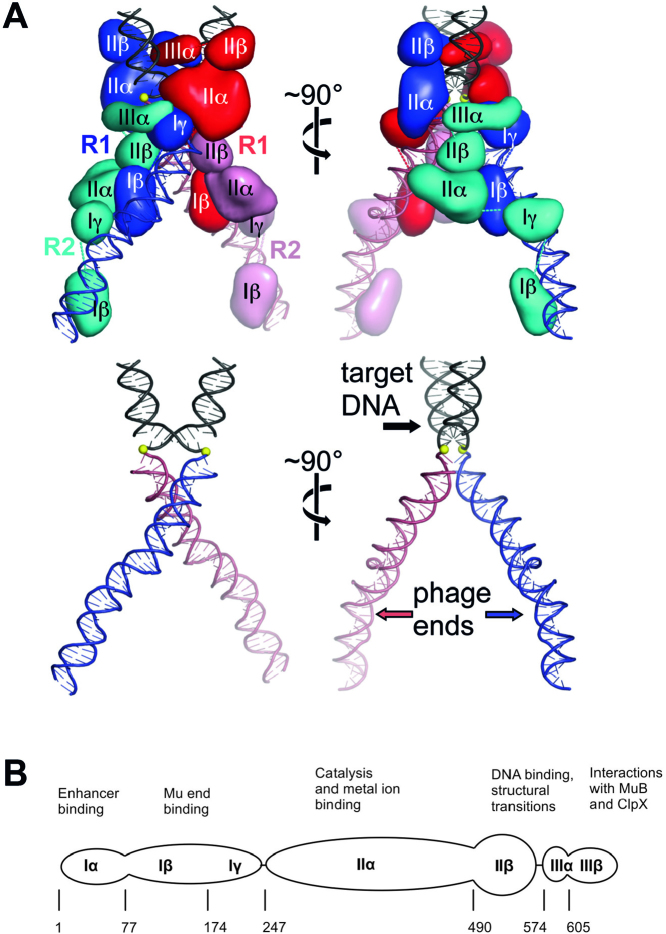
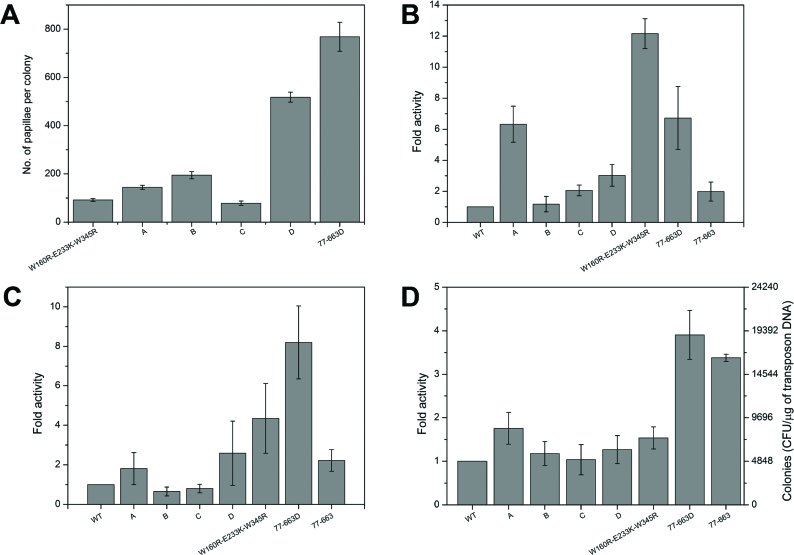
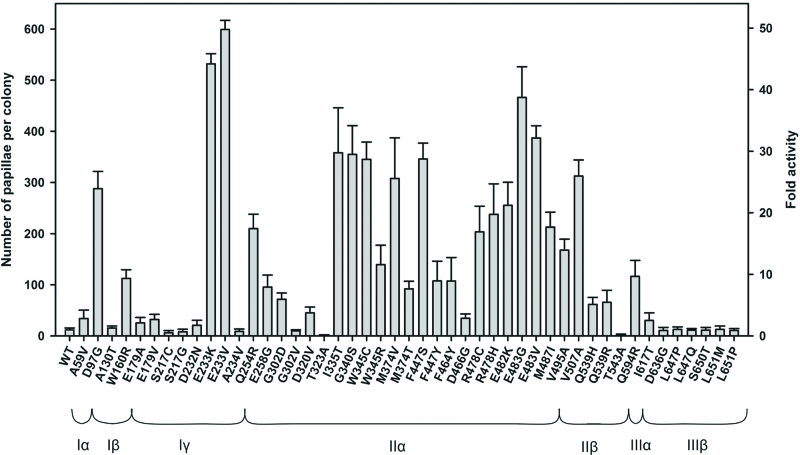
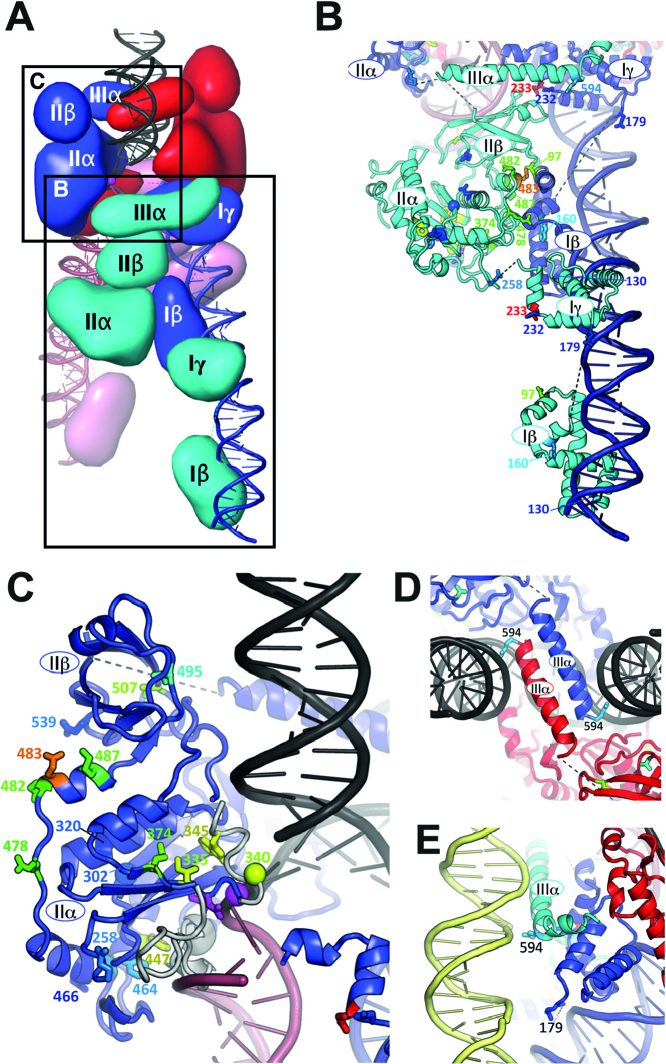
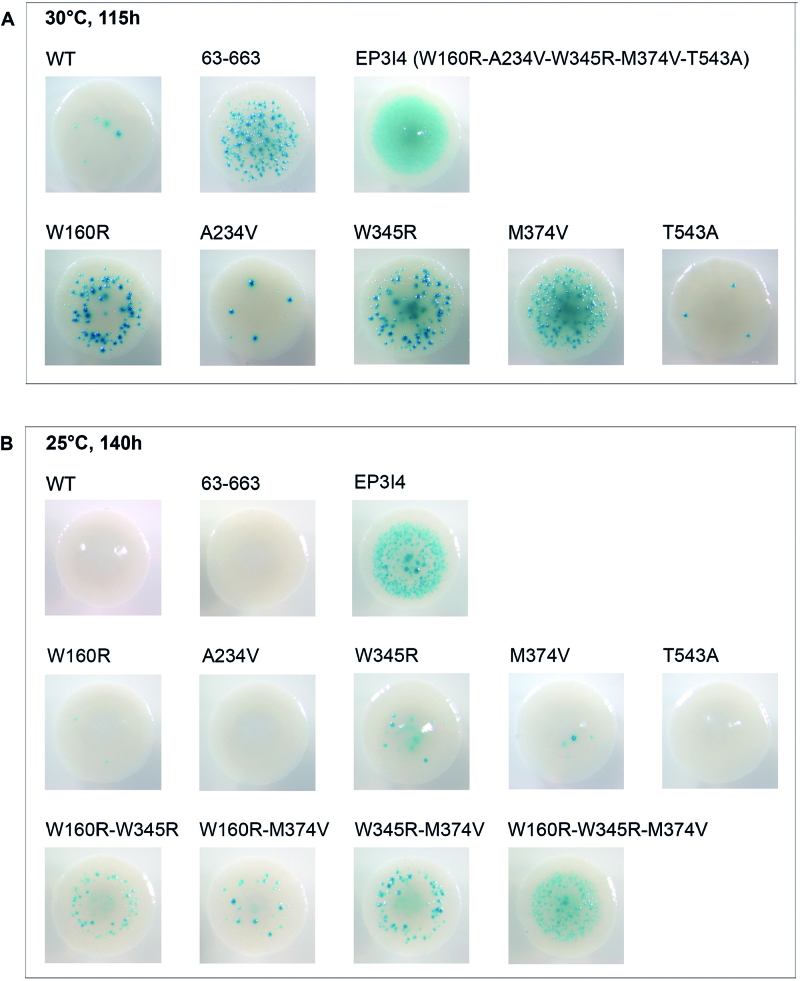
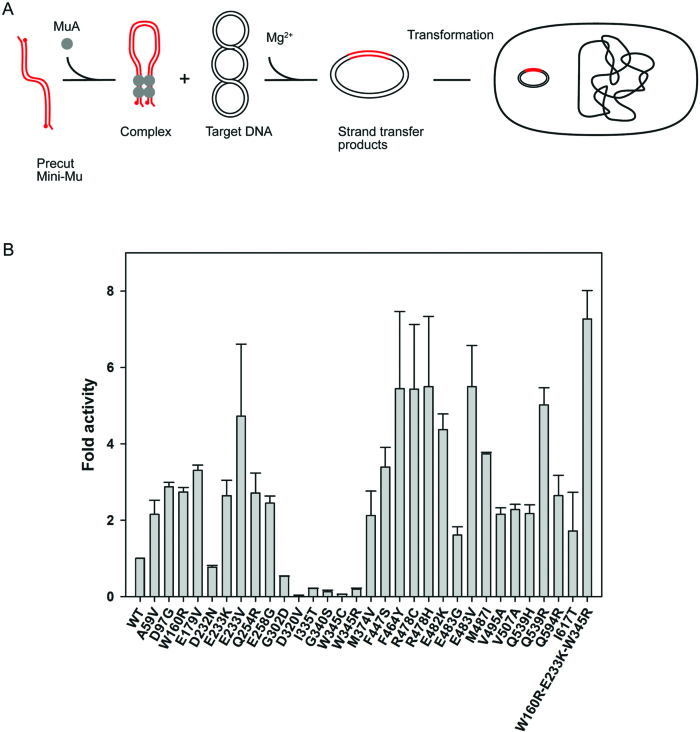
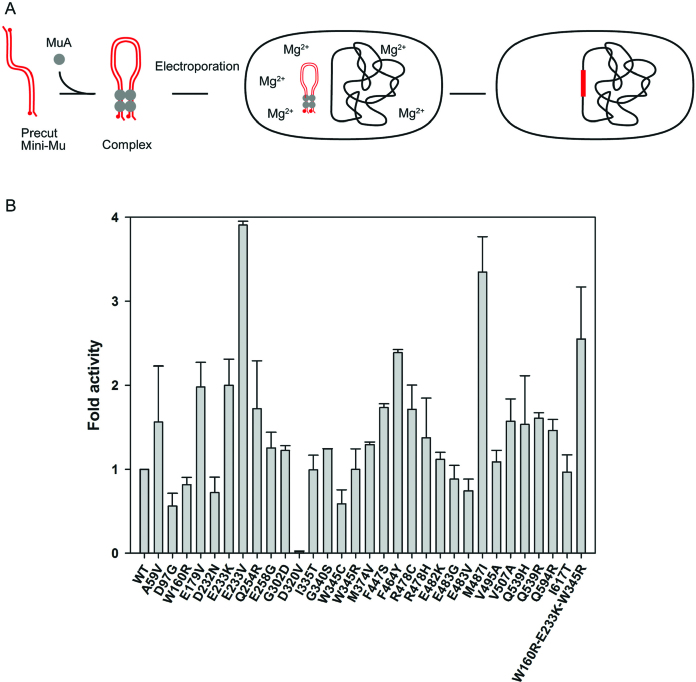
The phage Mu DNA transposition system provides a versatile species non-specific tool for molecular biology, genetic engineering and genome modification applications. Mu transposition is catalyzed by MuA transposase, with DNA cleavage and integration reactions ultimately attaching the transposon DNA to target DNA. To improve the activity of the Mu DNA transposition machinery, we mutagenized MuA protein and screened for hyperactivity-causing substitutions using an in vivo assay. The individual activity-enhancing substitutions were mapped onto the MuA-DNA complex structure, containing a tetramer of MuA transposase, two Mu end segments and a target DNA. This analysis, combined with the varying effect of the mutations in different assays, implied that the mutations exert their effects in several ways, including optimizing protein-protein and protein-DNA contacts. Based on these insights, we engineered highly hyperactive versions of MuA, by combining several synergistically acting substitutions located in different subdomains of the protein. Purified hyperactive MuA variants are now ready for use as second-generation tools in a variety of Mu-based DNA transposition applications. These variants will also widen the scope of Mu-based gene transfer technologies toward medical applications such as human gene therapy. Moreover, the work provides a platform for further design of custom transposases.
噬菌体 Mu DNA 转座系统为分子生物学、基因工程和基因组修饰应用提供了一种通用的种间非特异性工具。Mu 转座由 MuA 转座酶催化,DNA 切割和整合反应最终将转座子 DNA 连接到靶 DNA 上。为了提高 Mu DNA 转座机制的活性,我们对 MuA 蛋白进行了诱变,并使用体内测定筛选了导致高活性的取代。将单个活性增强取代映射到 MuA-DNA 复合物结构上,该结构包含 MuA 转座酶的四聚体、两个 Mu 末端片段和一个靶 DNA。这种分析,结合不同测定中突变的不同效果,暗示突变以多种方式发挥作用,包括优化蛋白质-蛋白质和蛋白质-DNA 接触。基于这些见解,我们通过组合位于蛋白质不同亚结构域中的几个协同作用的取代,设计了高度超活性的 MuA 变体。纯化的超活性 MuA 变体现已准备好用于各种基于 Mu 的 DNA 转座应用的第二代工具。这些变体还将拓宽基于 Mu 的基因转移技术在医学应用(如人类基因治疗)中的应用范围。此外,这项工作为进一步设计定制转座酶提供了一个平台。