Muševič Igor
J. Stefan Institute, Jamova 39, Ljubljana SI-1000, Slovenia.
Faculty of Mathematics and Physics, University of Ljubljana, Jadranska 19, Ljubljana SI-1000, Slovenia.
Materials (Basel). 2017 Dec 25;11(1):24. doi: 10.3390/ma11010024.
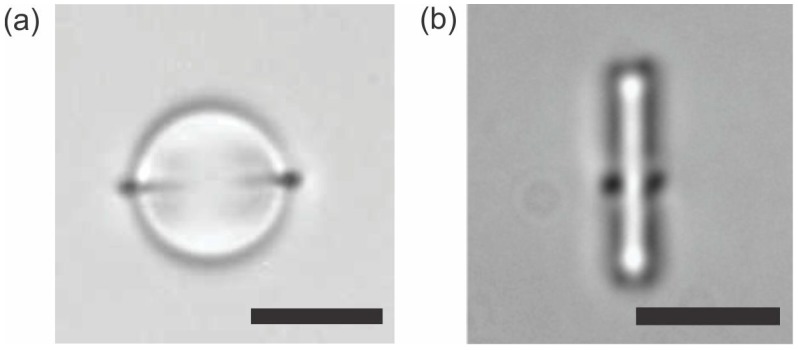
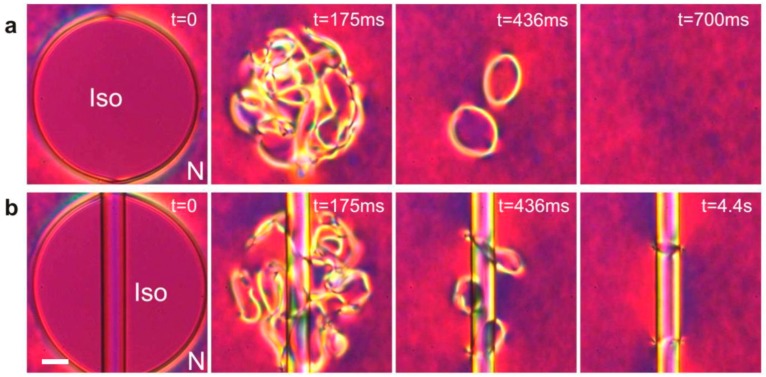
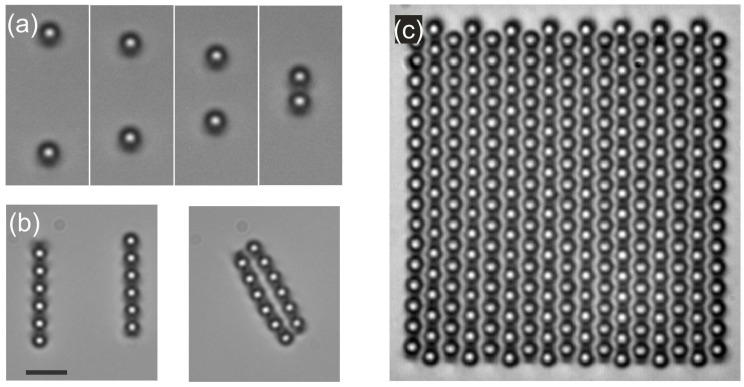
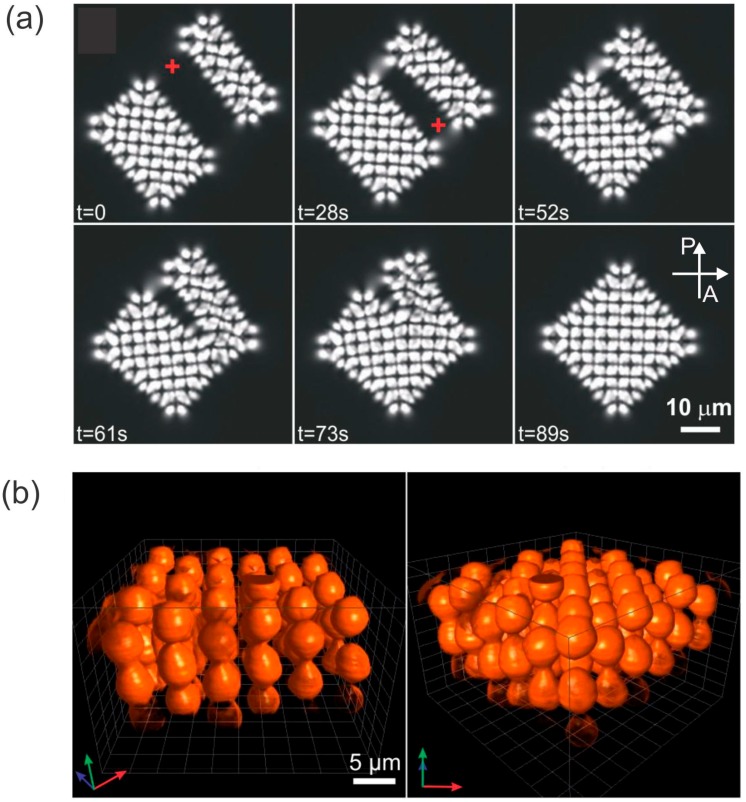
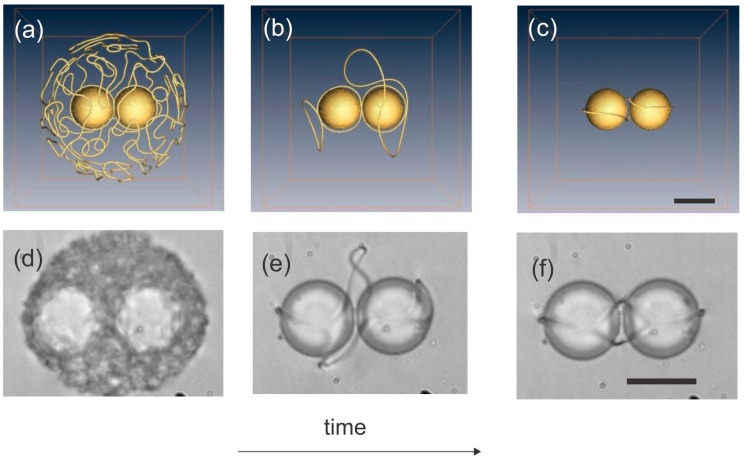
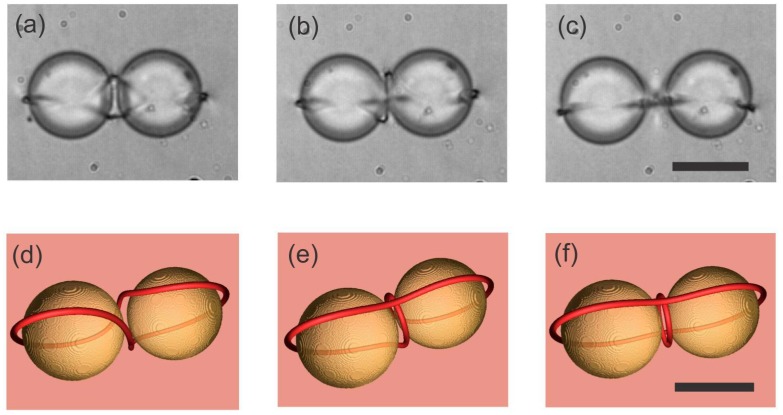
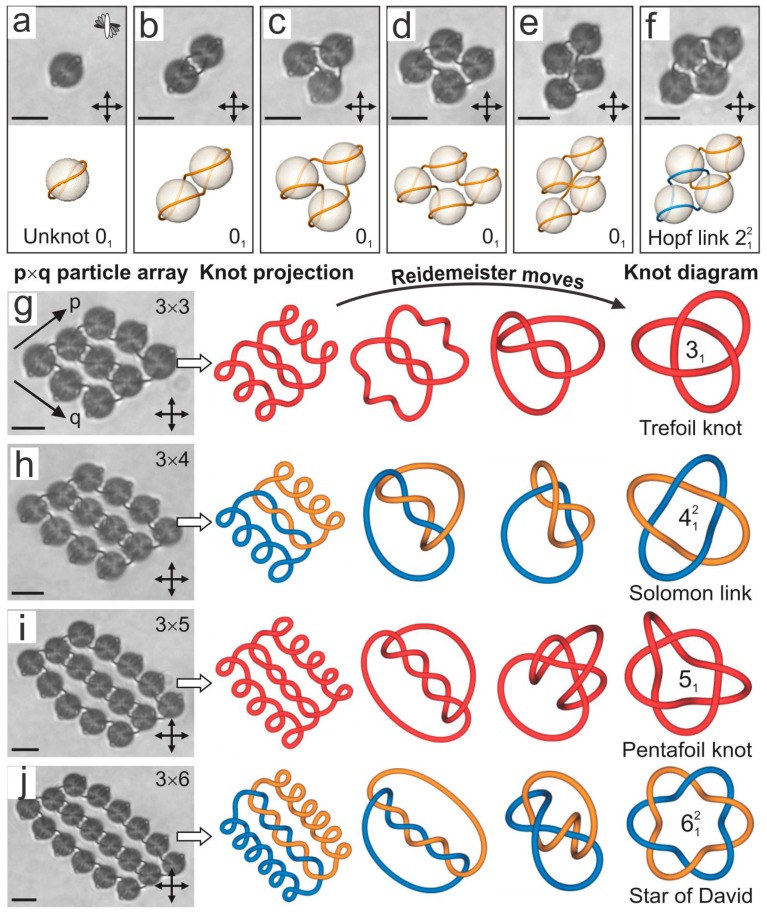
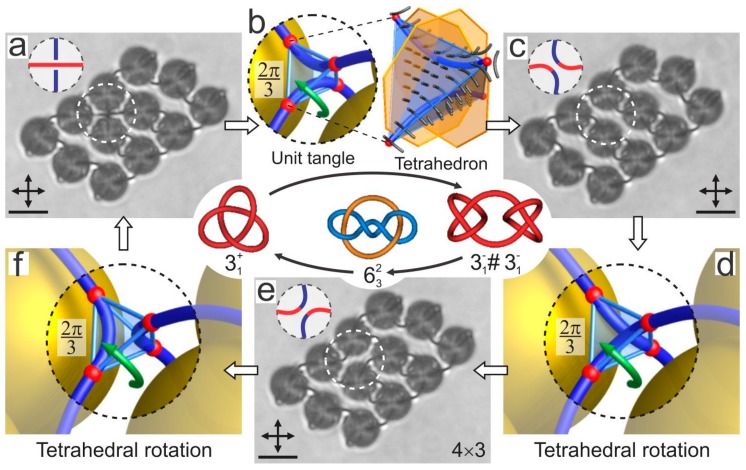
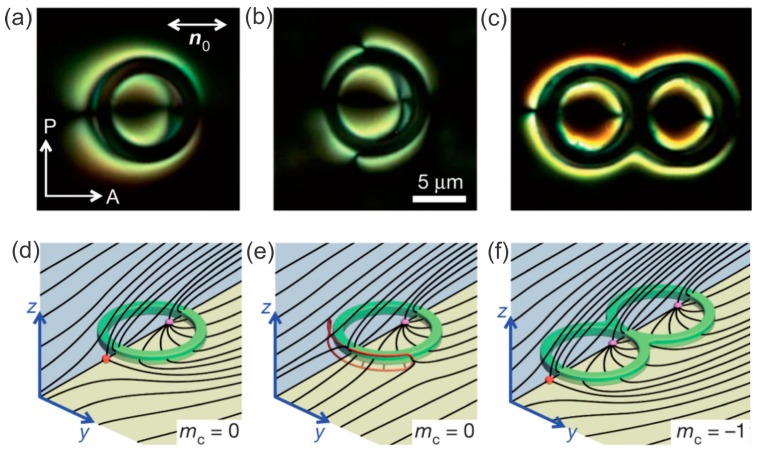
This article provides a concise review of a new state of colloidal matter called nematic liquid-crystal colloids. These colloids are obtained by dispersing microparticles of different shapes in a nematic liquid crystal that acts as a solvent for the dispersed particles. The microparticles induce a local deformation of the liquid crystal, which then generates topological defects and long-range forces between the neighboring particles. The colloidal forces in nematic colloids are much stronger than the forces in ordinary colloids in isotropic solvents, exceeding thousands of per micrometer-sized particle. Of special interest are the topological defects in nematic colloids, which appear in many fascinating forms, such as singular points, closed loops, multitudes of interlinked and knotted loops or soliton-like structures. The richness of the topological phenomena and the possibility to design and control topological defects with laser tweezers make colloids in nematic liquid crystals an excellent playground for testing the basic theorems of topology.
本文简要综述了一种称为向列型液晶胶体的新型胶体物质状态。这些胶体是通过将不同形状的微粒分散在作为分散颗粒溶剂的向列型液晶中获得的。微粒会引起液晶的局部变形,进而产生拓扑缺陷以及相邻颗粒之间的长程力。向列型胶体中的胶体力比各向同性溶剂中普通胶体的力要强得多,每微米大小的颗粒超过数千。特别令人感兴趣的是向列型胶体中的拓扑缺陷,它们以许多迷人的形式出现,如奇点、闭环、大量相互连接和打结的环或类孤子结构。拓扑现象的丰富性以及用激光镊子设计和控制拓扑缺陷的可能性,使得向列型液晶中的胶体成为测试拓扑基本定理的理想场所。