Department of Microbiology and Immunobiology, Division of Immunology, Harvard Medical School, Boston, MA, 02115, USA.
Department of Microbiology, New York University School of Medicine, New York, NY, 10016, USA.
Nat Commun. 2018 Jan 2;9(1):37. doi: 10.1038/s41467-017-02448-6.
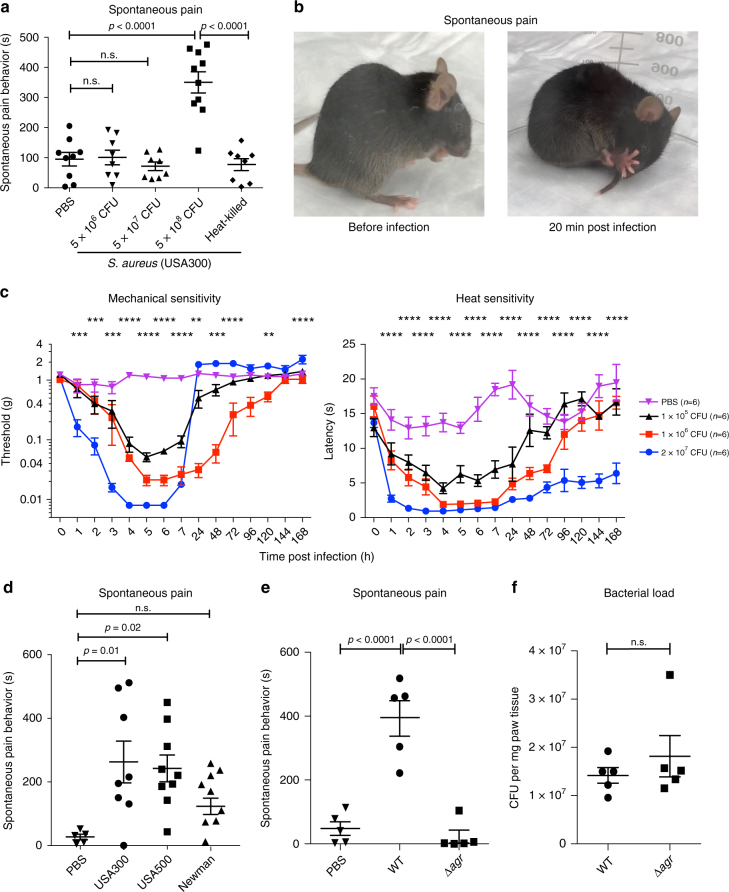
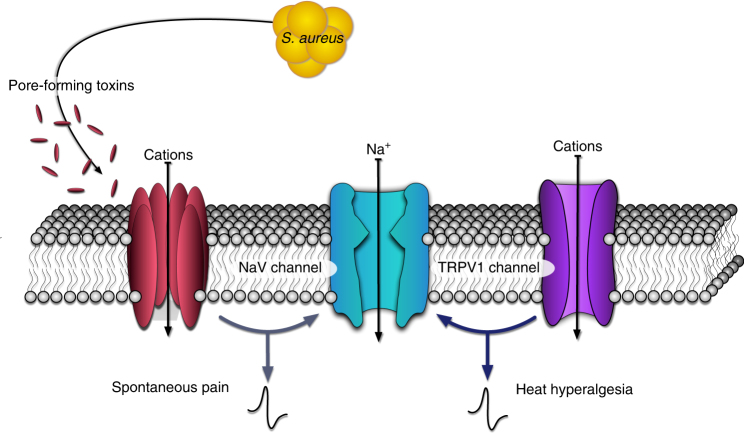
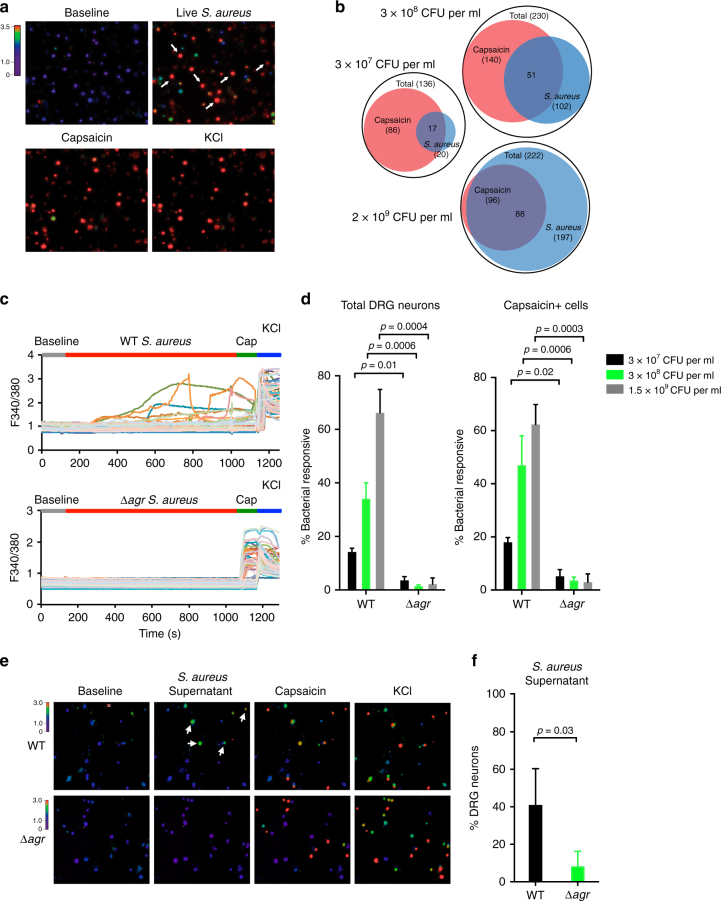
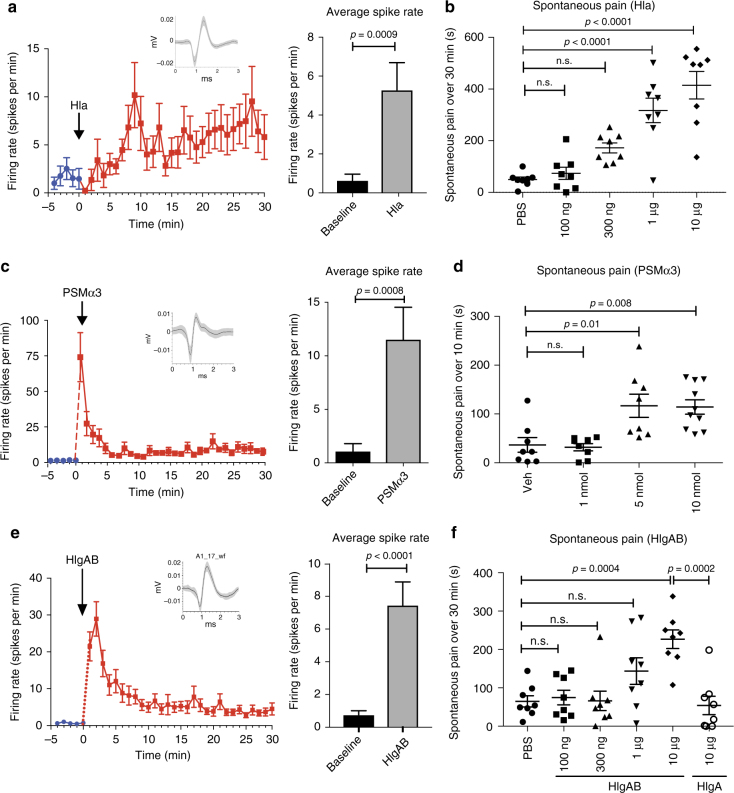
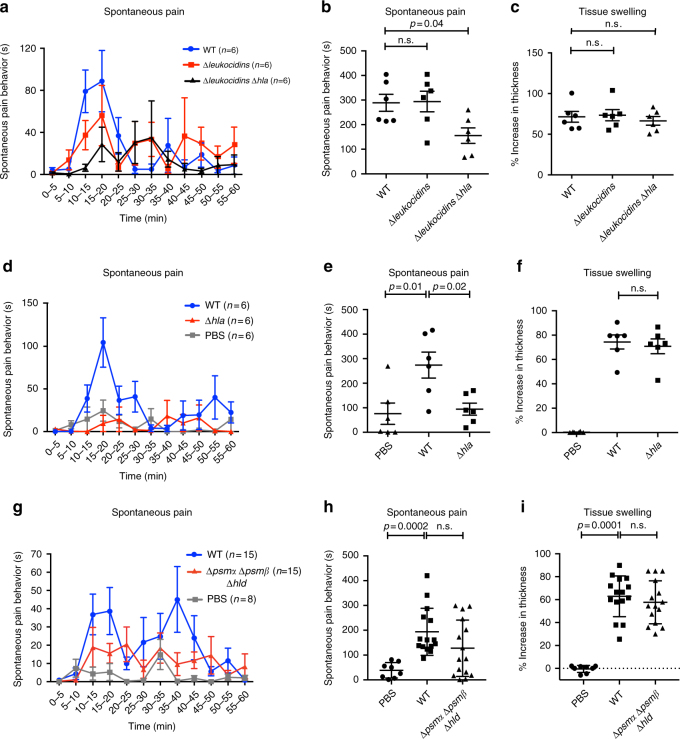
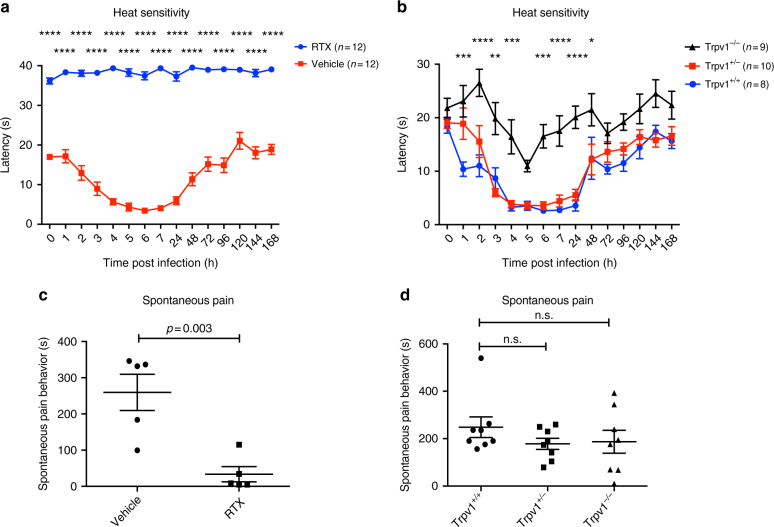
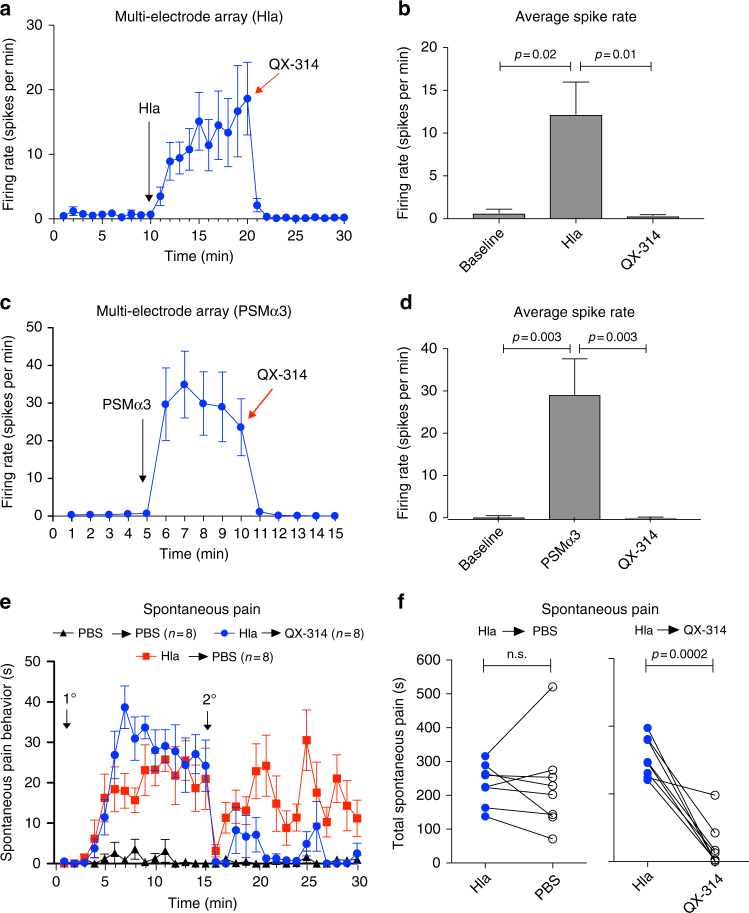
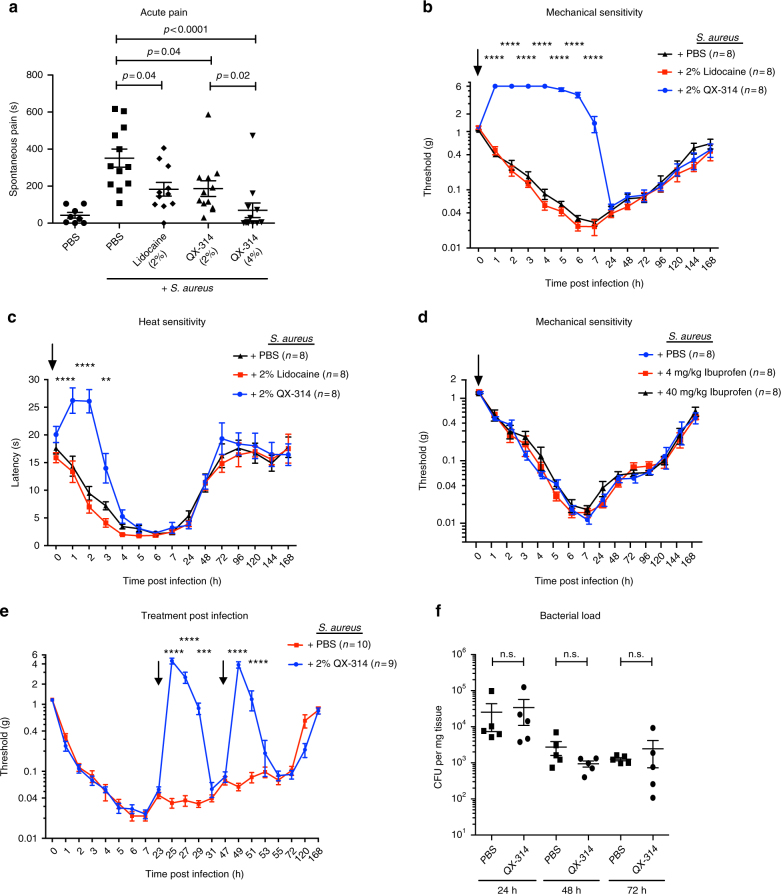
The hallmark of many bacterial infections is pain. The underlying mechanisms of pain during live pathogen invasion are not well understood. Here, we elucidate key molecular mechanisms of pain produced during live methicillin-resistant Staphylococcus aureus (MRSA) infection. We show that spontaneous pain is dependent on the virulence determinant agr and bacterial pore-forming toxins (PFTs). The cation channel, TRPV1, mediated heat hyperalgesia as a distinct pain modality. Three classes of PFTs-alpha-hemolysin (Hla), phenol-soluble modulins (PSMs), and the leukocidin HlgAB-directly induced neuronal firing and produced spontaneous pain. From these mechanisms, we hypothesized that pores formed in neurons would allow entry of the membrane-impermeable sodium channel blocker QX-314 into nociceptors to silence pain during infection. QX-314 induced immediate and long-lasting blockade of pain caused by MRSA infection, significantly more than lidocaine or ibuprofen, two widely used clinical analgesic treatments.
许多细菌感染的标志是疼痛。在活病原体入侵期间产生疼痛的潜在机制尚不清楚。在这里,我们阐明了活耐甲氧西林金黄色葡萄球菌 (MRSA) 感染过程中产生疼痛的关键分子机制。我们表明,自发性疼痛依赖于毒力决定簇 agr 和细菌孔形成毒素 (PFT)。阳离子通道 TRPV1 介导热痛觉过敏作为一种独特的疼痛模式。三类 PFT-α-溶血素 (Hla)、酚可溶性调节素 (PSM) 和白细胞毒素 HlgAB-直接诱导神经元放电并产生自发性疼痛。基于这些机制,我们假设在神经元中形成的孔将允许膜不可渗透的钠离子通道阻滞剂 QX-314 进入伤害感受器,以在感染期间沉默疼痛。QX-314 立即并长时间阻断由 MRSA 感染引起的疼痛,比两种广泛使用的临床镇痛治疗利多卡因或布洛芬更有效。