Lin Sensen, Sun Li, Lyu Xiaodan, Ai Xiongfei, Du Danyu, Su Nan, Li Hongyang, Zhang Luyong, Yu Jun, Yuan Shengtao
Jiangsu Center for Pharmacodynamics Research and Evaluation, China Pharmaceutical University, Nanjing 210009, PR China.
Department of Molecular Biology, Jiangsu Cancer Hospital, Nanjing 210009, PR China.
Oncotarget. 2017 Nov 30;8(66):110426-110443. doi: 10.18632/oncotarget.22786. eCollection 2017 Dec 15.
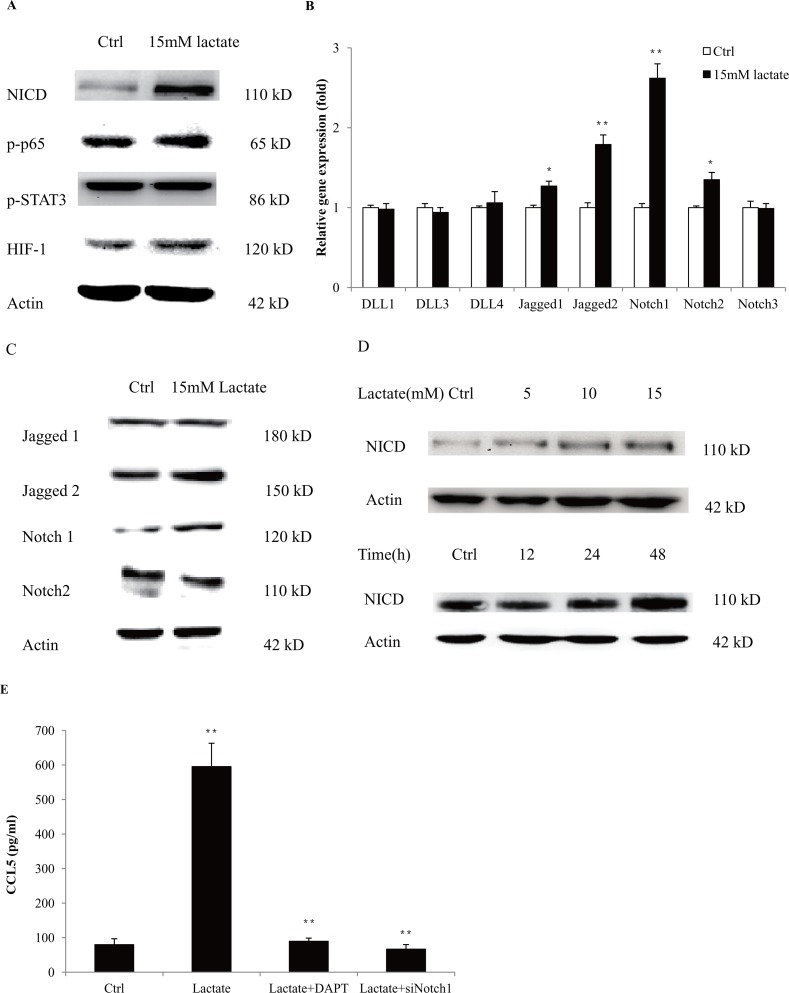
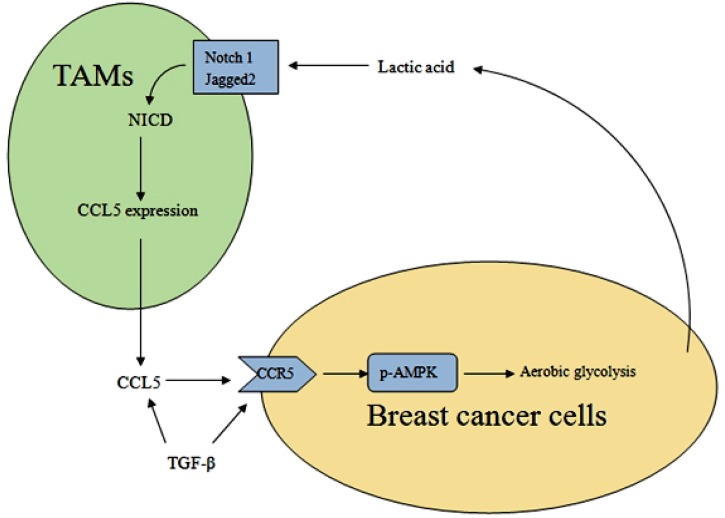
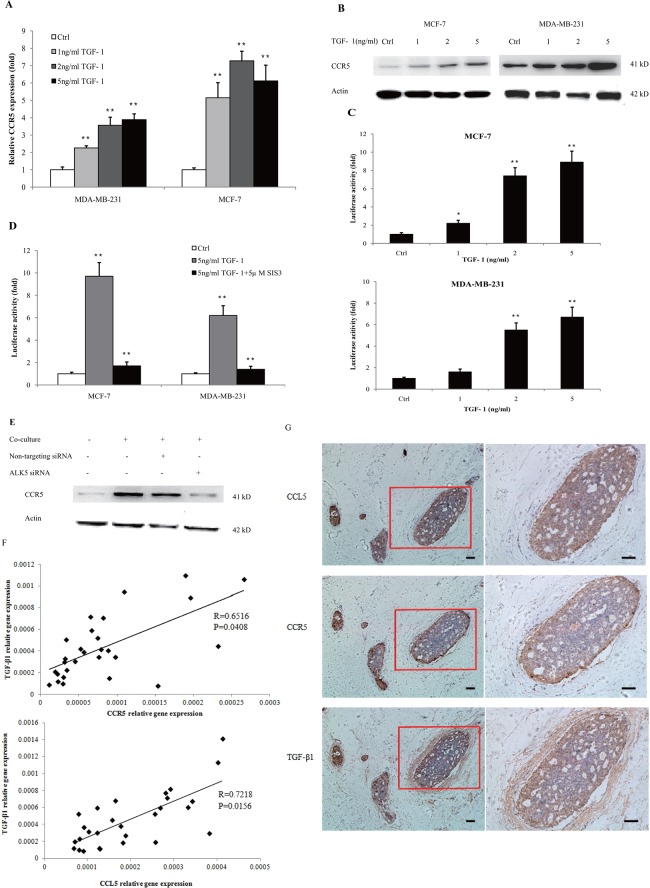
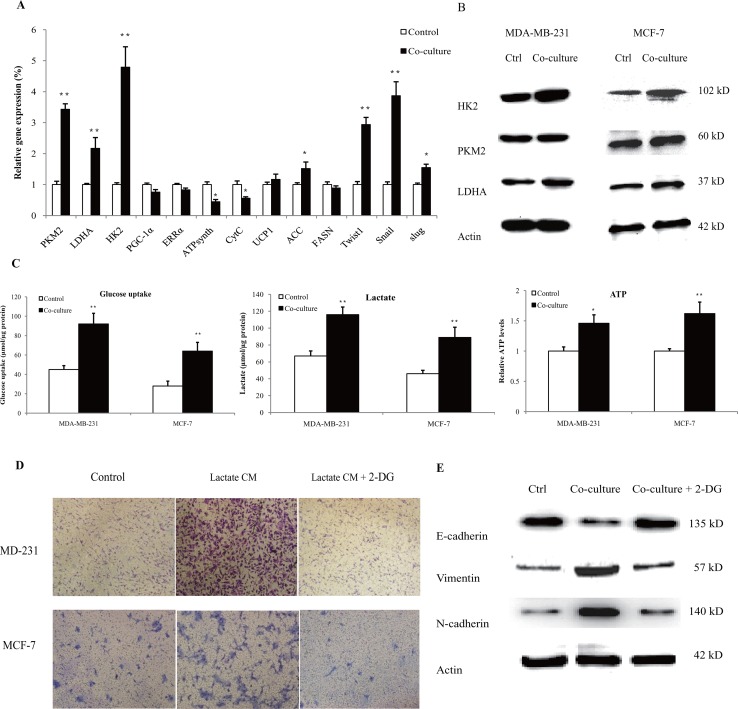
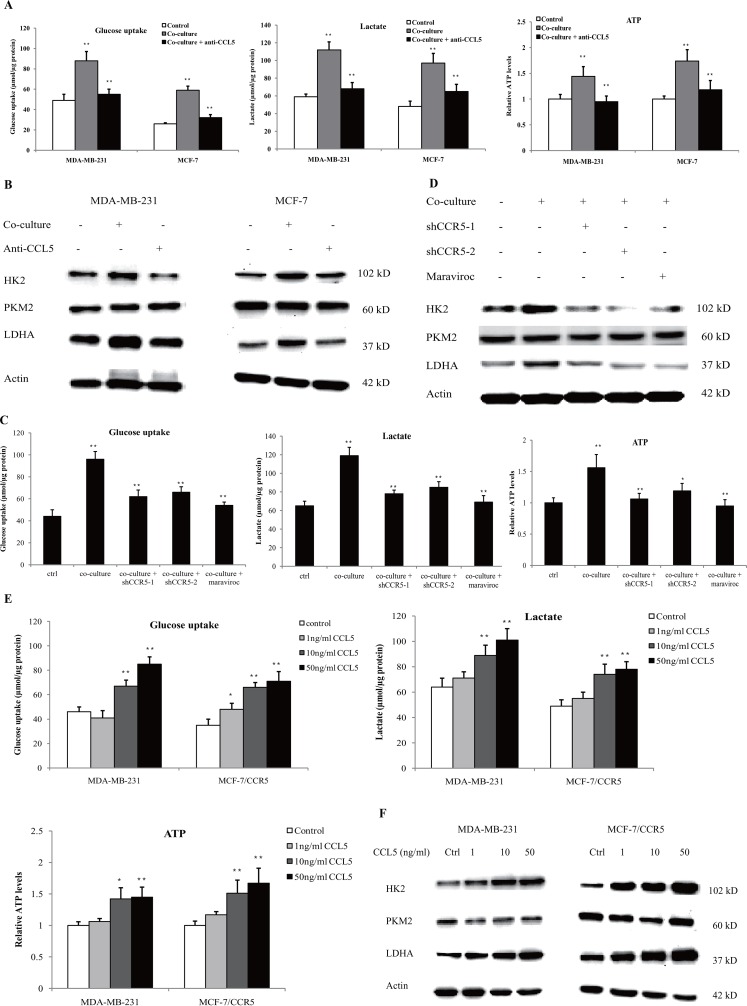
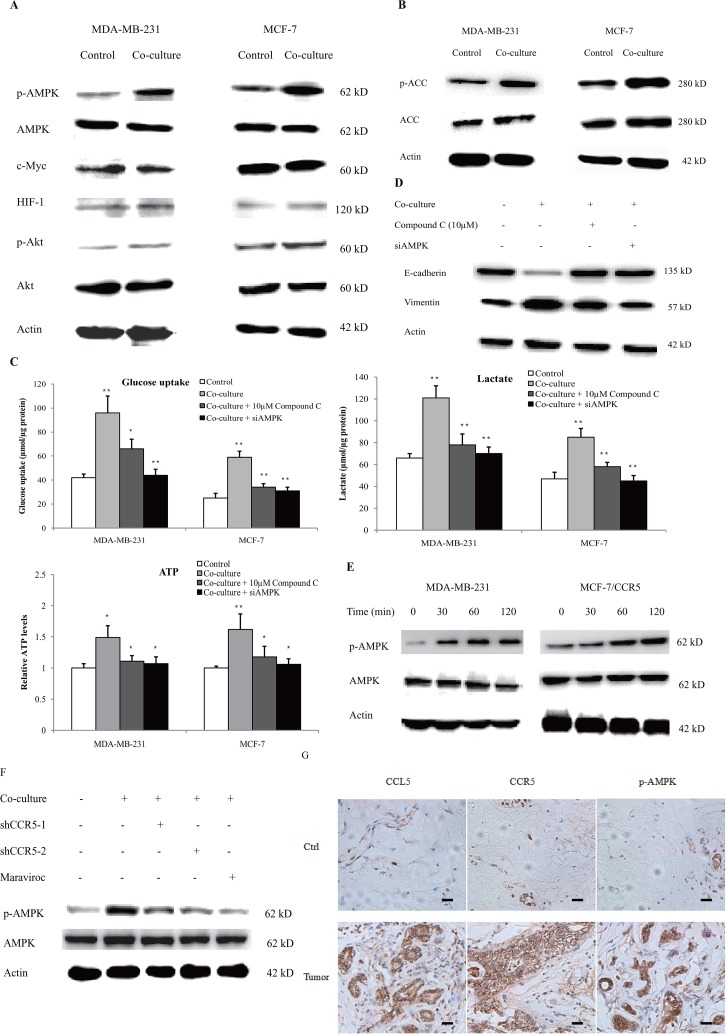
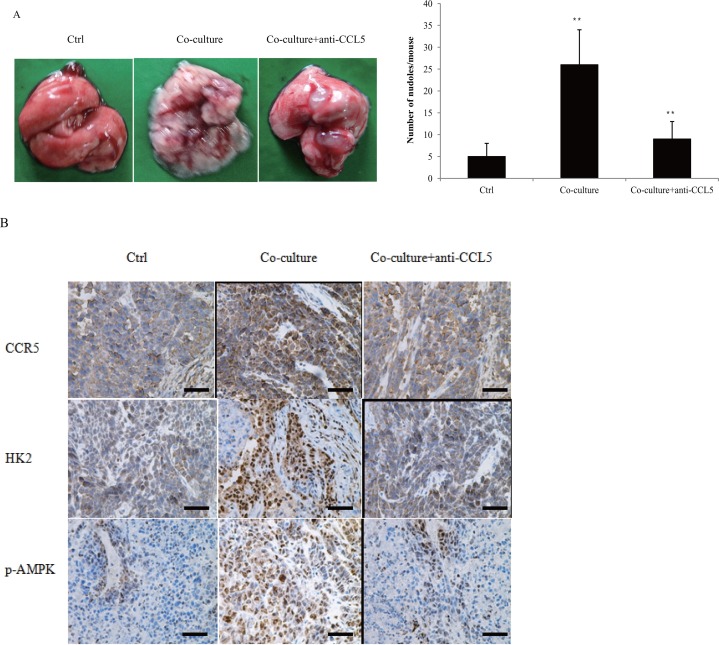
Aberrant energy metabolism is critical for cancer progression. Tumor-associated macrophages (TAMs) can stimulate tumor angiogenesis and enhance cancer metastasis; however, the metabolic interaction between cancer cells and macrophages characterized by lactate shuttles remains unclear. Here, we showed that lactate activated human macrophages to a TAM-like phenotype and stimulated the secretion of CCL5 by activation of Notch signaling in macrophages. Reciprocally, CCL5 increased cell migration, induced cancer cell EMT, and promoted aerobic glycolysis in breast cancer cells, suggesting a positive metabolic feedback loop in the co-culture system. Inhibition of CCR5, the cognate receptor of CCL5, or neutralization of CCL5, broke the metabolic loop and decreased cancer cell migration and EMT. Inhibition of aerobic glycolysis significantly reduced breast cancer cell EMT, indicated that aerobic glycolysis was necessary for the invasive phenotype of cancer cells. We further showed that TGF-β signaling regulated the expression of CCR5 in the co-culture system, and CCL5 induced glycolysis by mediation of AMPK signaling. The expression of CCL5-CCR5 axis was highly associated with macrophage infiltration, TGF-β and p-AMPK in clinical samples. CCL5-CCR5 axis promoted breast cancer metastasis . Our findings suggested a pivotal role of CCL5-CCR5 axis in the metabolic communication between cancer cells and macrophages.
异常的能量代谢对癌症进展至关重要。肿瘤相关巨噬细胞(TAM)可刺激肿瘤血管生成并增强癌症转移;然而,以乳酸穿梭为特征的癌细胞与巨噬细胞之间的代谢相互作用仍不清楚。在此,我们表明乳酸可将人巨噬细胞激活为类似TAM的表型,并通过激活巨噬细胞中的Notch信号来刺激CCL5的分泌。相反,CCL5增加细胞迁移,诱导癌细胞上皮-间质转化(EMT),并促进乳腺癌细胞的有氧糖酵解,这表明在共培养系统中存在一个正向代谢反馈回路。抑制CCL5的同源受体CCR5或中和CCL5,会打破代谢回路并降低癌细胞迁移和EMT。抑制有氧糖酵解显著降低乳腺癌细胞EMT,表明有氧糖酵解是癌细胞侵袭表型所必需的。我们进一步表明,转化生长因子-β(TGF-β)信号在共培养系统中调节CCR5的表达,并且CCL5通过介导AMPK信号诱导糖酵解。在临床样本中,CCL5-CCR5轴的表达与巨噬细胞浸润、TGF-β和磷酸化AMPK高度相关。CCL5-CCR5轴促进乳腺癌转移。我们的研究结果表明CCL5-CCR5轴在癌细胞与巨噬细胞之间的代谢通讯中起关键作用。