Kuzmina Maria L, Braukmann Thomas W A, Fazekas Aron J, Graham Sean W, Dewaard Stephanie L, Rodrigues Anuar, Bennett Bruce A, Dickinson Timothy A, Saarela Jeffery M, Catling Paul M, Newmaster Steven G, Percy Diana M, Fenneman Erin, Lauron-Moreau Aurélien, Ford Bruce, Gillespie Lynn, Subramanyam Ragupathy, Whitton Jeannette, Jennings Linda, Metsger Deborah, Warne Connor P, Brown Allison, Sears Elizabeth, Dewaard Jeremy R, Zakharov Evgeny V, Hebert Paul D N
Centre for Biodiversity Genomics, University of Guelph, 50 Stone Road East, Guelph, Ontario N1G 2W1, Canada.
The Arboretum, University of Guelph, 50 Stone Road East, Ontario N1G 2W1, Canada.
Appl Plant Sci. 2017 Dec 22;5(12). doi: 10.3732/apps.1700079. eCollection 2017 Dec.
Constructing complete, accurate plant DNA barcode reference libraries can be logistically challenging for large-scale floras. Here we demonstrate the promise and challenges of using herbarium collections for building a DNA barcode reference library for the vascular plant flora of Canada.
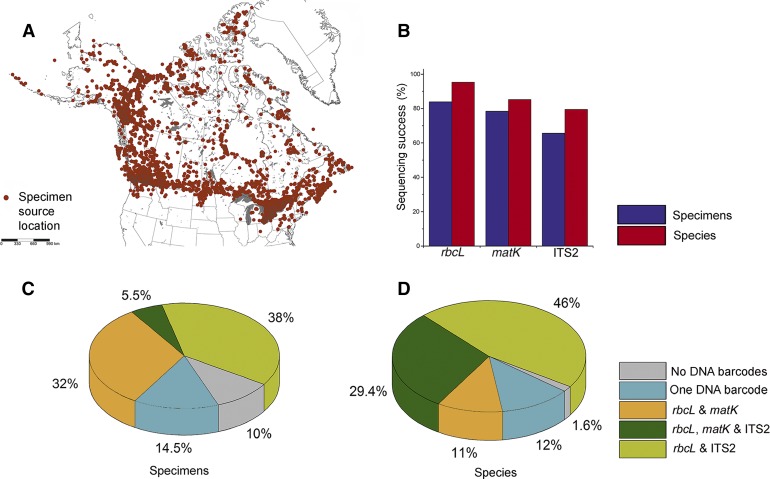
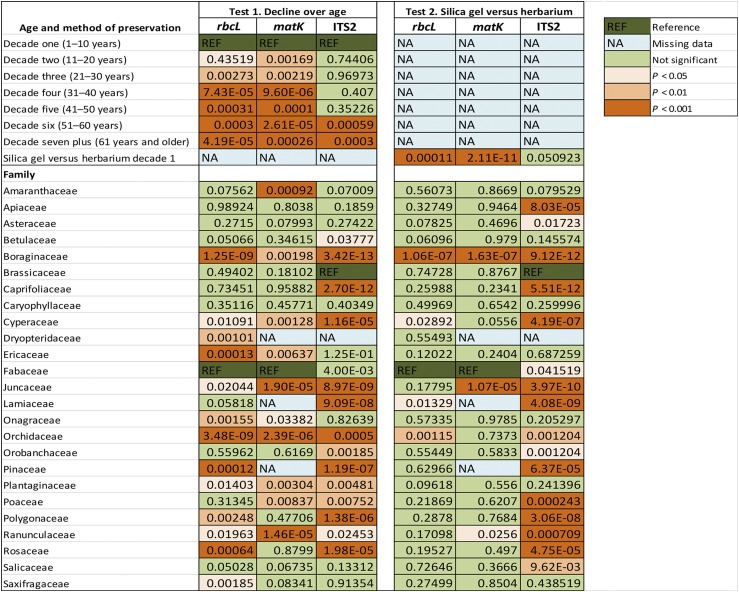
Our study examined 20,816 specimens representing 5076 of 5190 vascular plant species in Canada (98%). For 98% of the specimens, at least one of the DNA barcode regions was recovered from the plastid loci and and from the nuclear ITS2 region. We used beta regression to quantify the effects of age, type of preservation, and taxonomic affiliation (family) on DNA sequence recovery.
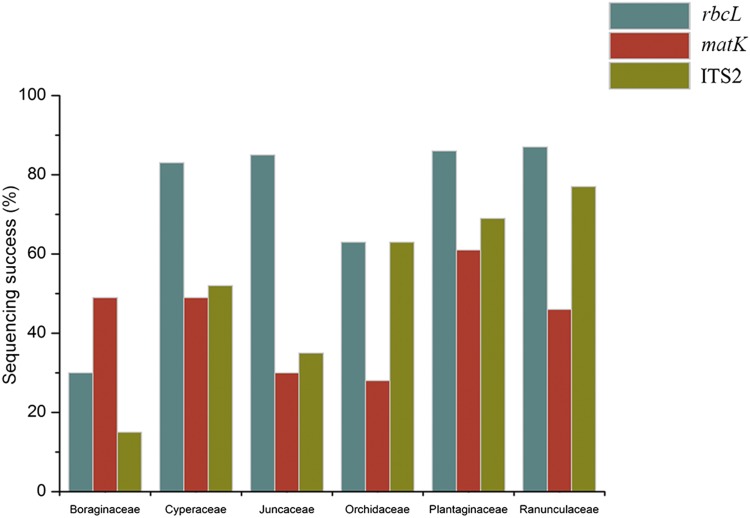
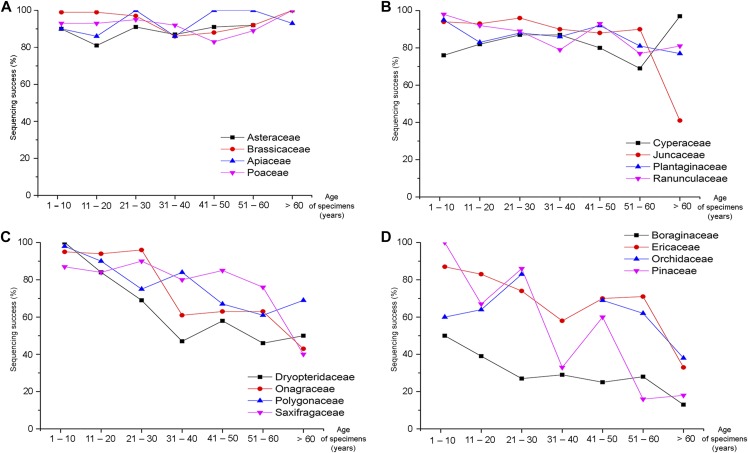
Specimen age and method of preservation had significant effects on sequence recovery for all markers, but influenced some families more (e.g., Boraginaceae) than others (e.g., Asteraceae).
Our DNA barcode library represents an unparalleled resource for metagenomic and ecological genetic research working on temperate and arctic biomes. An observed decline in sequence recovery with specimen age may be associated with poor primer matches, intragenomic variation (for ITS2), or inhibitory secondary compounds in some taxa.
对于大规模植物区系而言,构建完整、准确的植物DNA条形码参考文库在后勤保障方面可能具有挑战性。在此,我们展示了利用植物标本馆馆藏为加拿大维管植物区系构建DNA条形码参考文库的前景与挑战。
我们的研究检测了代表加拿大5190种维管植物中5076种(98%)的20816份标本。对于98%的标本,从质体基因座 和 以及核ITS2区域中至少获得了一个DNA条形码区域。我们使用贝塔回归来量化标本年龄、保存类型和分类归属(科)对DNA序列获取的影响。
标本年龄和保存方法对所有标记的序列获取均有显著影响,但对某些科(如紫草科)的影响大于其他科(如菊科)。
我们的DNA条形码文库是在温带和北极生物群落开展宏基因组学和生态遗传学研究的无与伦比的资源。观察到的序列获取率随标本年龄下降的现象可能与引物匹配不佳、基因组内变异(针对ITS2)或某些分类群中存在抑制性次生化合物有关。