a State Key Laboratory of Advanced Technology for Materials Synthesis and Processing , Wuhan University of Technology , Wuhan , China.
b Biomedical Materials and Engineering Research Center of Hubei Province , Wuhan University of Technology , Wuhan , China.
Drug Deliv. 2018 Nov;25(1):166-177. doi: 10.1080/10717544.2017.1422296.
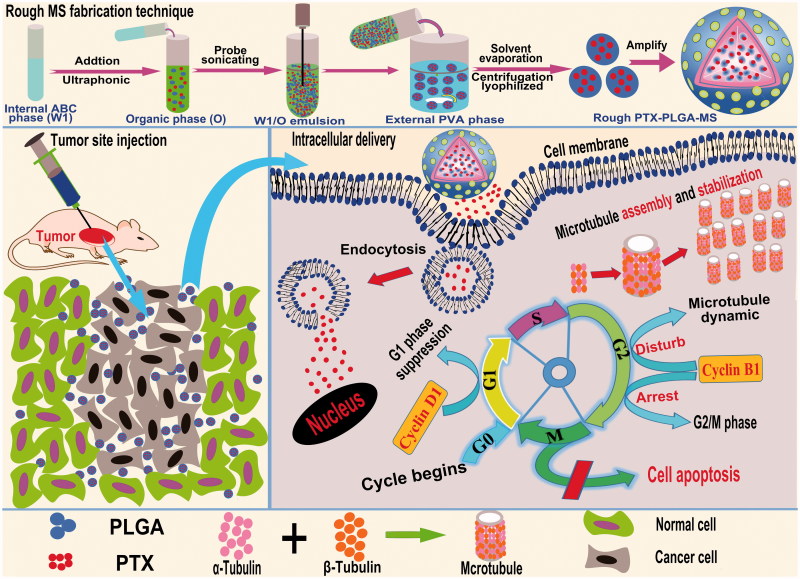
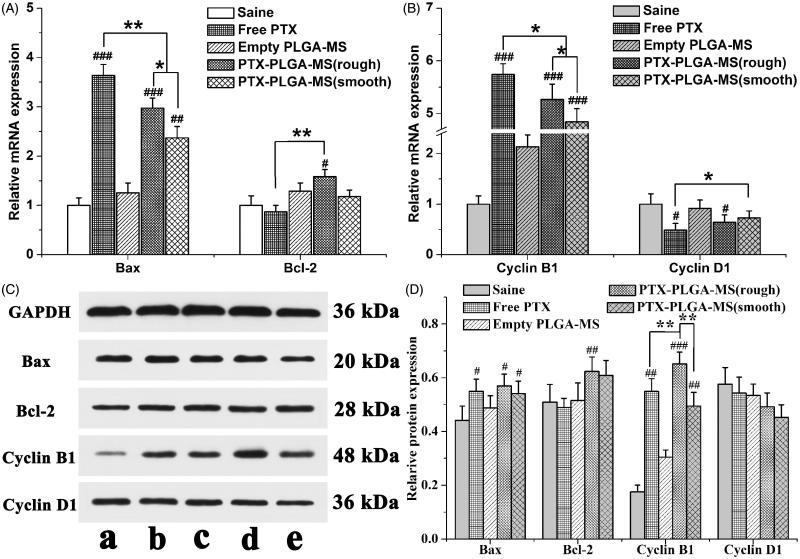
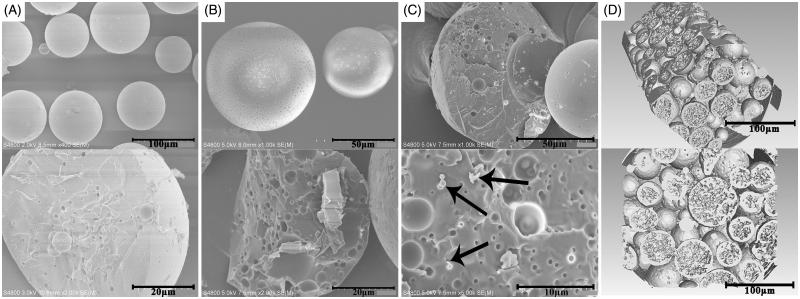
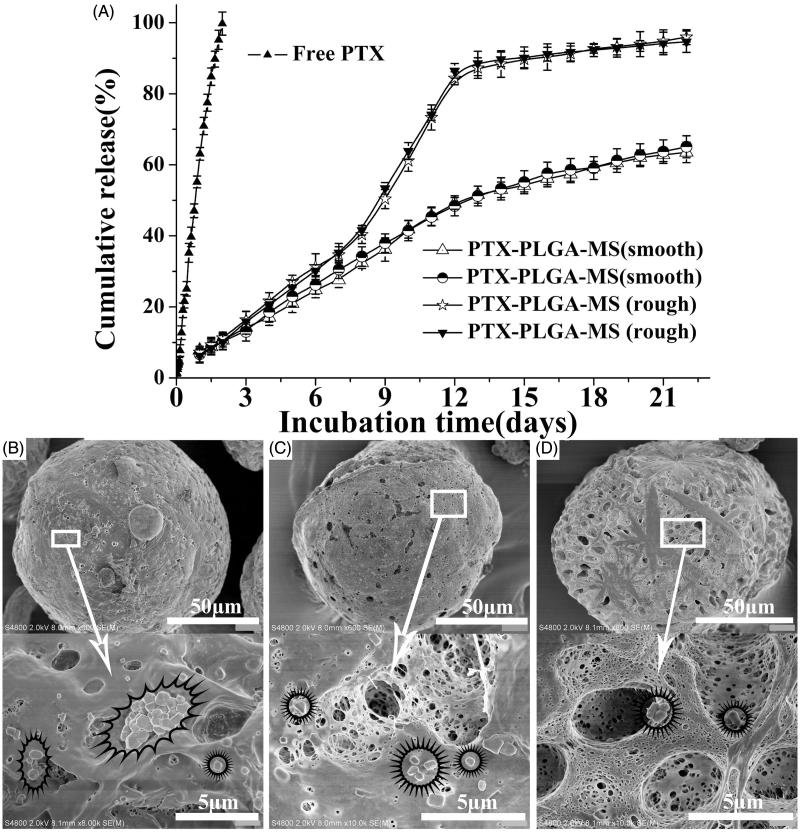
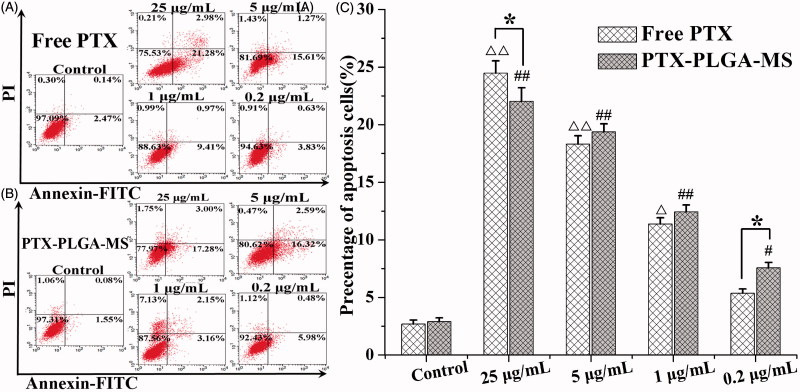
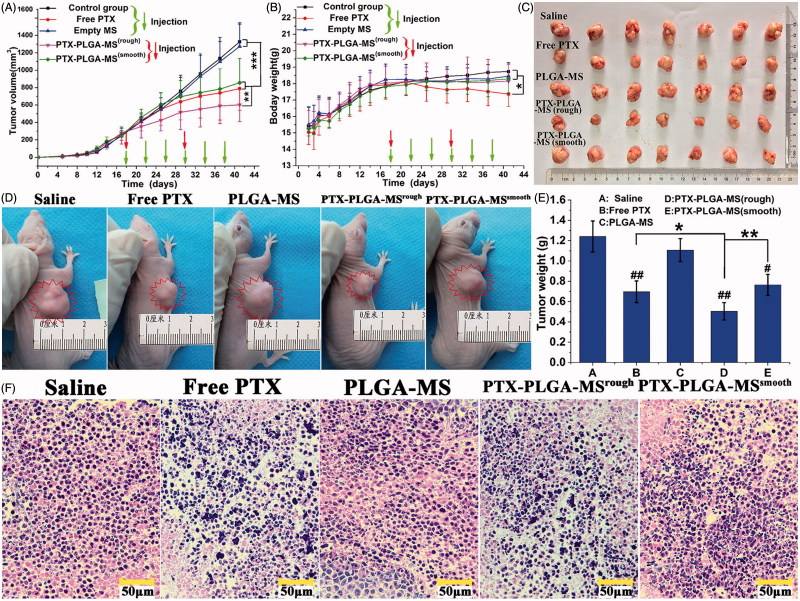
Sustained release of therapeutic agents into tumor cells is a potential approach to improve therapeutic efficacy, decrease side effects, and the drug administration frequency. Herein, we used the modified double-emulsion solvent evaporation (DSE) method to prepare a novel morphological paclitaxel (PTX) loaded poly(lactide-co-glycolide) (PLGA) microspheres (MS). The prepared rough PTX-PLGA-MS possessed microporous surface and highly porous internal structures, which significantly influenced the drug entrapment and release behaviors. The rough MS with an average particle size of 53.47 ± 2.87 μm achieved high drug loading (15.63%) and encapsulation efficiency (92.82%), and provided a favorable sustained drug release. The in vitro antitumor tests of flow cytometry and fluoroimmunoassay revealed that the rough PTX-PLGA-MS displayed effective anti-gliomas activity and enhanced the cellular PTX uptake through adsorptive endocytosis. Both in vitro and in vivo antitumor results demonstrated that the sustained-release PTX could induce the microtubules assembly and the over-expression of Bax and Cyclin B1 proteins, resulting in the microtubule dynamics disruption, G2/M phase arrest, and cell apoptosis accordingly. Furthermore, as the rough PTX-PLGA-MS could disperse and adhere throughout the tumor sites and cause extensive tumor cell apoptosis with one therapeutic course (12 days), they could reduce the system toxicity and drug administration frequency, thus achieving significant tumor inhibitory effects with rapid sustained drug release. In conclusion, our results verified that the rough PTX-PLGA-MS drug release system could serve as a promising treatment to malignant glioma.
将治疗剂持续释放到肿瘤细胞中是一种提高治疗效果、降低副作用和减少给药频率的潜在方法。在此,我们使用改良的双重乳液溶剂蒸发(DSE)法制备了一种新型形态的紫杉醇(PTX)负载聚乳酸-共-羟基乙酸(PLGA)微球(MS)。所制备的粗糙 PTX-PLGA-MS 具有微孔表面和高度多孔的内部结构,这显著影响了药物包封和释放行为。平均粒径为 53.47 ± 2.87 μm 的粗糙 MS 实现了高药物负载(15.63%)和包封效率(92.82%),并提供了良好的持续药物释放。流式细胞术和荧光免疫测定的体外抗肿瘤试验表明,粗糙 PTX-PLGA-MS 具有有效的抗神经胶质瘤活性,并通过吸附性内吞作用增强了细胞内 PTX 的摄取。体外和体内抗肿瘤结果表明,持续释放的 PTX 可以诱导微管组装和 Bax 和 Cyclin B1 蛋白的过表达,从而导致微管动力学破坏、G2/M 期停滞和细胞凋亡。此外,由于粗糙 PTX-PLGA-MS 可以在整个肿瘤部位分散和附着,并导致广泛的肿瘤细胞凋亡,只需一个疗程(12 天),它们可以降低系统毒性和给药频率,从而实现快速持续释放药物的显著肿瘤抑制作用。总之,我们的结果证实了粗糙 PTX-PLGA-MS 药物释放系统可以作为治疗恶性神经胶质瘤的一种有前途的方法。