a Department of Medical Sciences, Cardiology , Uppsala University , Uppsala , Sweden.
b Uppsala Clinical Research Center , Uppsala University , Uppsala , Sweden.
Ups J Med Sci. 2017 Nov;122(4):224-233. doi: 10.1080/03009734.2017.1407849. Epub 2018 Jan 4.
Despite improved treatment of myocardial infarction (MI), real-world patients still suffer substantial risk for subsequent cardiovascular events. Little is known about coagulation activity shortly after MI and whether coagulation activity markers may identify patients at increased risk despite contemporary treatment.
To evaluate D-dimer concentration and thrombin generation potential shortly after discharge after MI and evaluate if these markers could predict the risk of future cardiovascular and bleeding events.
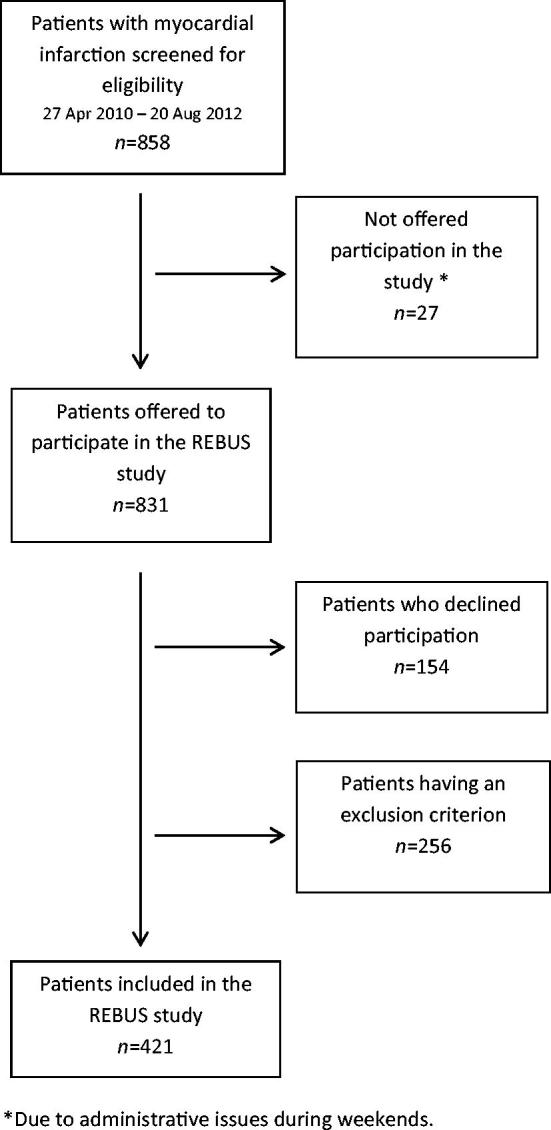
Unselected MI patients (n = 421) were included in the observational REBUS study (NCT01102933) and followed for two years. D-dimer concentrations, thrombin peak, and endogenous thrombin potential (ETP) were analyzed at inclusion (3-5 days after MI) and at early follow-up (after 2-3 weeks).
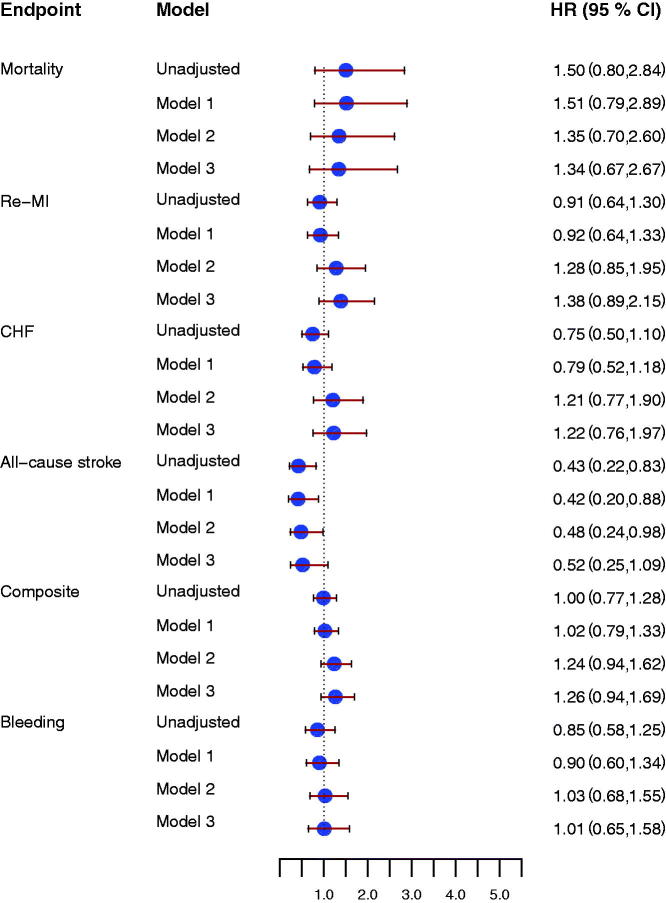
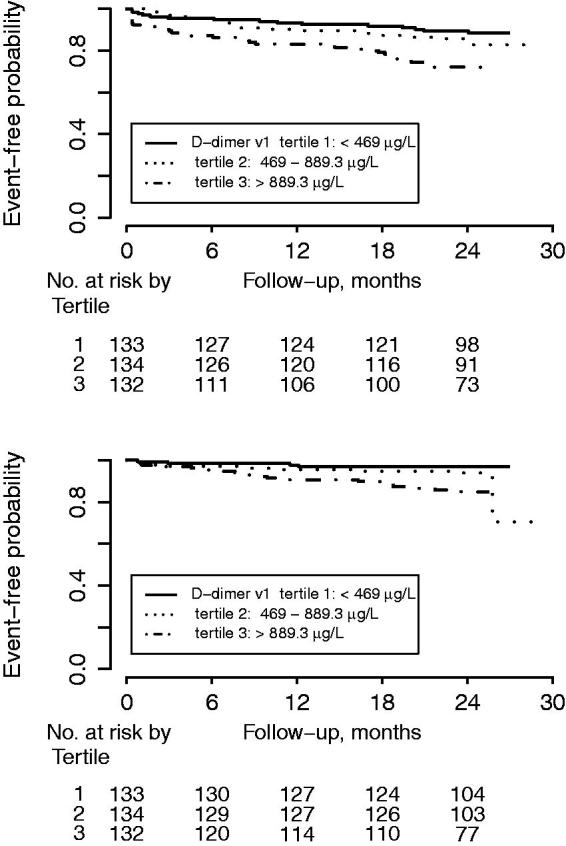
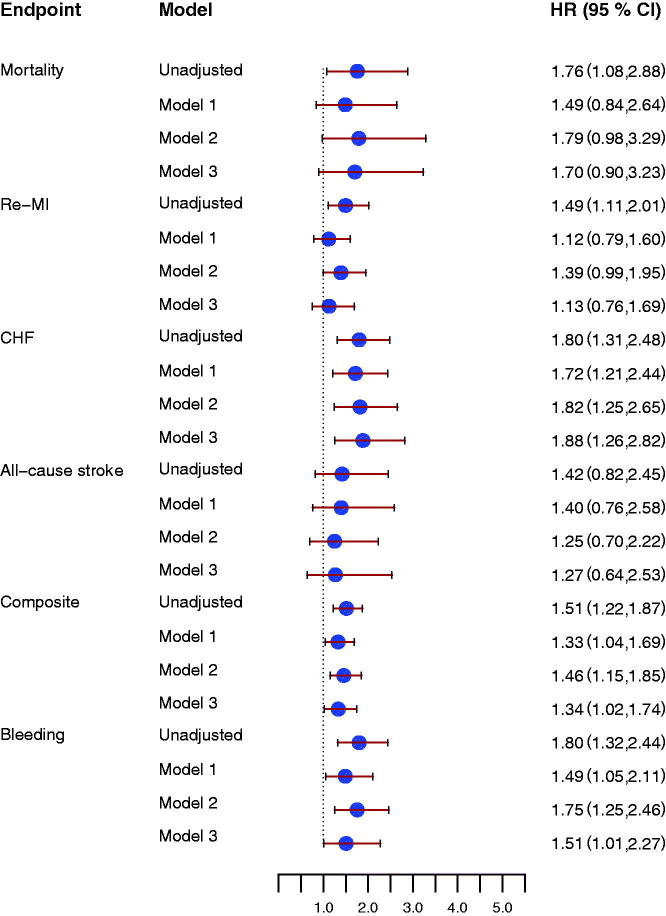
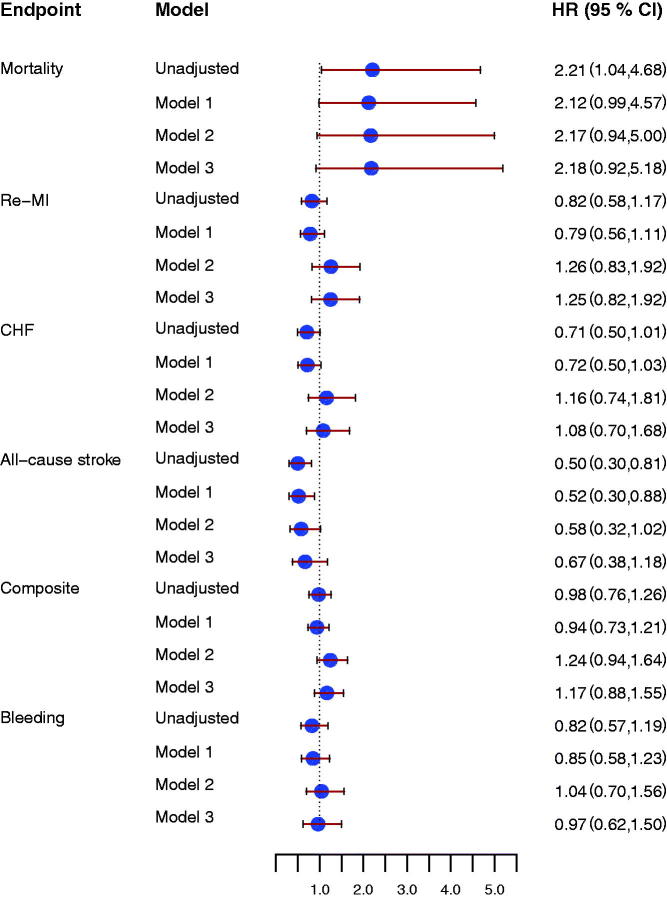
Seventy-five patients (17.8%) experienced the composite endpoint (all-cause death, MI, congestive heart failure, or all-cause stroke), and 31 patients (7.4%) experienced a clinically relevant bleeding event. D-dimer concentrations at early follow-up were associated with the composite endpoint (HR [per SD increase] 1.51 [95% CI 1.22-1.87]) and with clinically relevant bleeding (HR [per SD increase] 1.80 [95% CI 1.32-2.44]). Thrombin generation potential was not significantly associated with either the composite endpoint or with clinically relevant bleeding. Higher thrombin peak and ETP at early follow-up were both inversely associated with stroke (HR [per SD increase] 0.50 [95% CI 0.30-0.81] and 0.43 [95% CI 0.22-0.83], respectively).
In unselected MI patients treated according to contemporary guidelines, D-dimer measurements may identify patients at increased risk of new cardiovascular and bleeding events. The inverse association of thrombin generation potential and risk of stroke has to be further investigated.
尽管心肌梗死(MI)的治疗有所改善,但实际患者仍面临随后心血管事件的高风险。MI 后不久的凝血活性以及凝血活性标志物是否可以识别尽管进行了当代治疗但仍存在高风险的患者,这些方面知之甚少。
评估 MI 后出院时 D-二聚体浓度和凝血酶生成潜能,并评估这些标志物是否可以预测未来心血管和出血事件的风险。
将 421 例未选择的 MI 患者纳入观察性 REBUS 研究(NCT01102933),并随访 2 年。在入选时(MI 后 3-5 天)和早期随访时(2-3 周后)分析 D-二聚体浓度、凝血酶峰值和内源性凝血酶潜能(ETP)。
75 例患者(17.8%)发生复合终点(全因死亡、MI、充血性心力衰竭或全因中风),31 例患者(7.4%)发生临床相关出血事件。早期随访时的 D-二聚体浓度与复合终点相关(每增加一个标准差的 HR [per SD increase] 1.51 [95% CI 1.22-1.87]),与临床相关出血相关(每增加一个标准差的 HR [per SD increase] 1.80 [95% CI 1.32-2.44])。凝血酶生成潜能与复合终点或临床相关出血无显著相关性。早期随访时较高的凝血酶峰值和 ETP 与中风呈反比关系(每增加一个标准差的 HR [per SD increase] 分别为 0.50 [95% CI 0.30-0.81] 和 0.43 [95% CI 0.22-0.83])。
在根据当代指南治疗的未选择的 MI 患者中,D-二聚体测量可能识别出发生新的心血管和出血事件风险较高的患者。凝血酶生成潜能与中风风险之间的反比关系需要进一步研究。