a Chinese National Influenza Center, National Institute for Viral Disease Control and Prevention , Beijing , China CDC.
b Public Health School(Shenzhen), Sun Yat-sen University , P. R. China.
Hum Vaccin Immunother. 2018 Mar 4;14(3):532-539. doi: 10.1080/21645515.2017.1419109. Epub 2018 Feb 1.
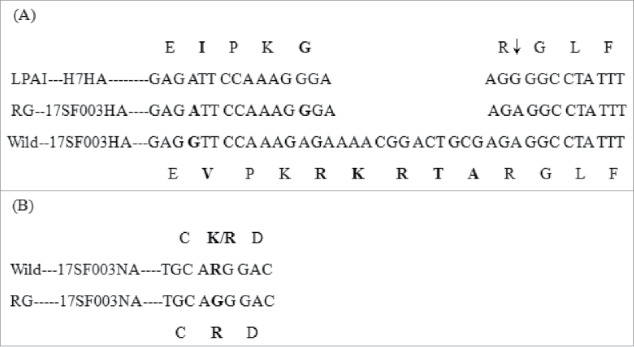
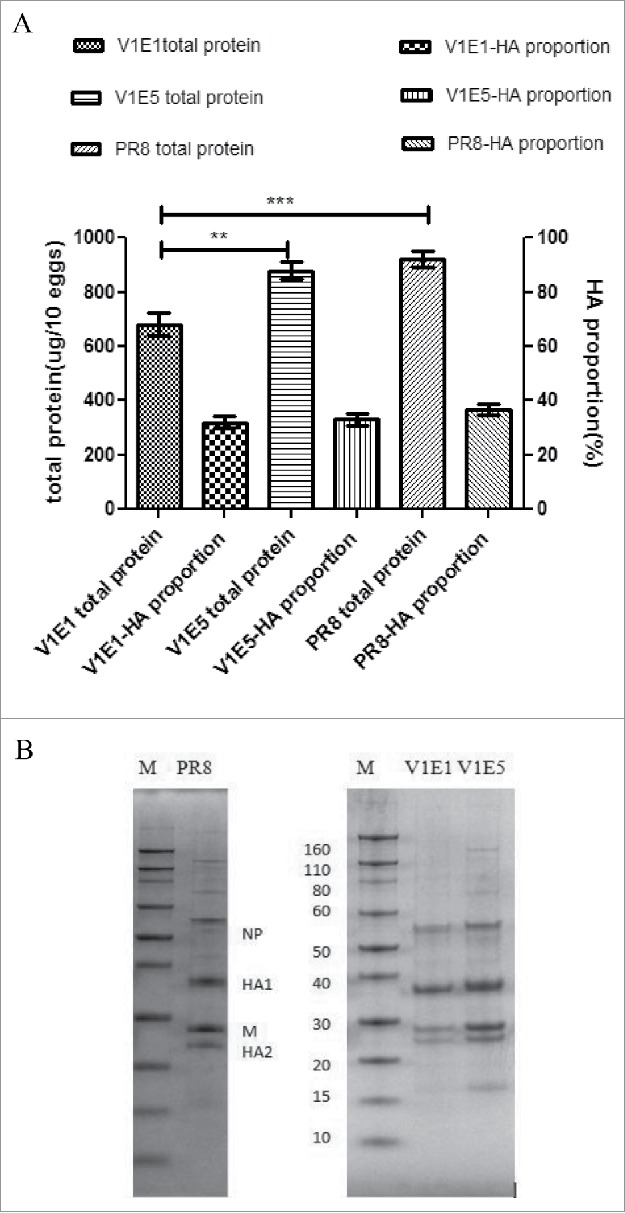
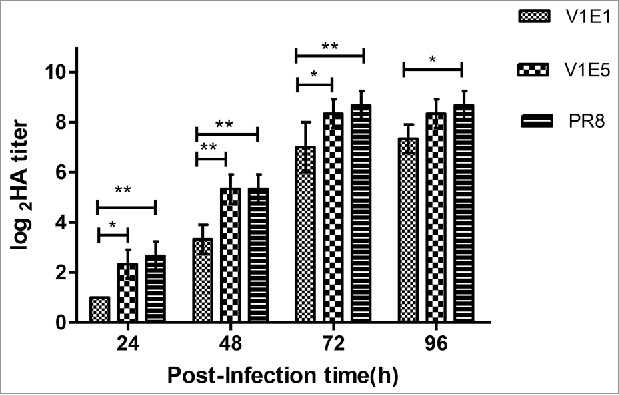
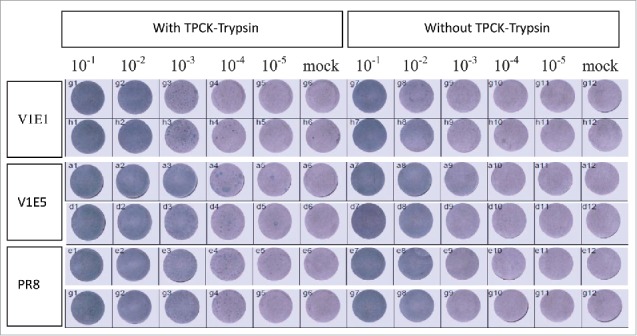
Since the first confirmed case of H7N9 infection was reported in China, there have been five epidemic waves of human H7N9 infections between 2013 and 2017. The fifth wave differed from the previous four waves in that highly pathogenic avian influenza (HPAI) H7N9 viruses with multiple basic amino acids at the cleavage site were detected in humans, poultry and environmental samples. The HPAI H7N9 viruses were genetically and antigenically distinct from previous H7N9 viruses. Therefore, a new candidate vaccine virus(CVV) derived from a HPAI A/Guangdong/17SF003/2016-like virus was proposed by the World Health Organization(WHO). According to the WHO recommendations, we constructed a new CVV using reverse genetic technology, with a (6+2) gene constitution. The (6+2) reassortant virus possessed hemagglutinin(HA) with multiple basic amino acids removed and the neuraminidase from A/Guangdong/SF003/2016 in a high-yield A/Puerto Rico/8/34 virus backbone. Sequence analysis confirmed that no mutations had occurred in the HA of V1E1(the initial CVV rescued in Vero cells and followed by passage in eggs), but a mixture of arginine (R)/glycine (G)/isoleucine (I) was detected at position 220 (H3 numbering) in the HA of V1E2 to V1E5 with different percentages. Furthermore, V1E5 showed improved growth characteristics and immunogenicity compared with V1E1, and retained low pathogenicity in chickens and chicken embryos, but the mutation changed its antigenicity. Our study indicates that antigenic changes should be closely monitored during the development of H7N9 CVV in eggs. Additionally, although V1E5 changes the antigenicity, the antisera had some reactivity to previous H7N9 CVVs.
自 2013 年至 2017 年期间,中国首次报告确诊的 H7N9 感染病例以来,已发生了五波人感染 H7N9 疫情。第五波疫情与前四波不同,在人类、家禽和环境样本中检测到了具有多个碱性氨基酸在切割位点的高致病性禽流感(HPAI)H7N9 病毒。这些 HPAI H7N9 病毒在遗传和抗原性上与以前的 H7N9 病毒不同。因此,世界卫生组织(WHO)提出了一种新的候选疫苗病毒(CVV),该病毒源自 HPAI A/广东/17SF003/2016 样病毒。根据世界卫生组织的建议,我们使用反向遗传技术构建了一种新的 CVV,其具有(6+2)基因构成。(6+2)重配病毒具有去除了多个碱性氨基酸的血凝素(HA)和来自 A/广东/SF003/2016 的神经氨酸酶,而在高产量的 A/Puerto Rico/8/34 病毒骨架上。序列分析确认在 V1E1(最初在 Vero 细胞中拯救并随后在鸡蛋中传代的初始 CVV)的 HA 中没有发生突变,但是在 V1E2 到 V1E5 的 HA 的 H3 编号 220 位检测到精氨酸(R)/甘氨酸(G)/异亮氨酸(I)的混合物,其比例不同。此外,与 V1E1 相比,V1E5 表现出更好的生长特性和免疫原性,并且在鸡和鸡胚中仍保持低致病性,但该突变改变了其抗原性。我们的研究表明,在鸡蛋中开发 H7N9 CVV 时,应密切监测抗原性变化。此外,尽管 V1E5 改变了抗原性,但抗血清对以前的 H7N9 CVV 仍具有一定的反应性。