Weis Arthur E
Department of Ecology and Evolutionary Biology University of Toronto Toronto ON Canada.
Koffler Scientific Reserve at Jokers Hill University of Toronto King City ON Canada.
Evol Appl. 2017 Sep 23;11(1):88-95. doi: 10.1111/eva.12533. eCollection 2018 Jan.
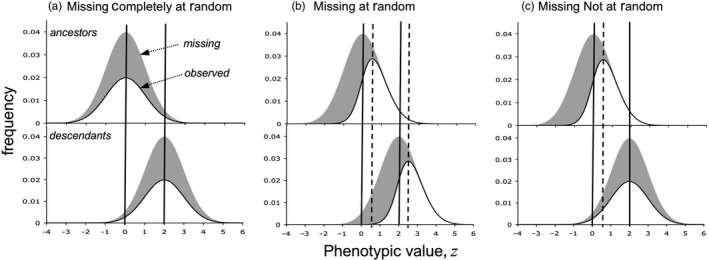
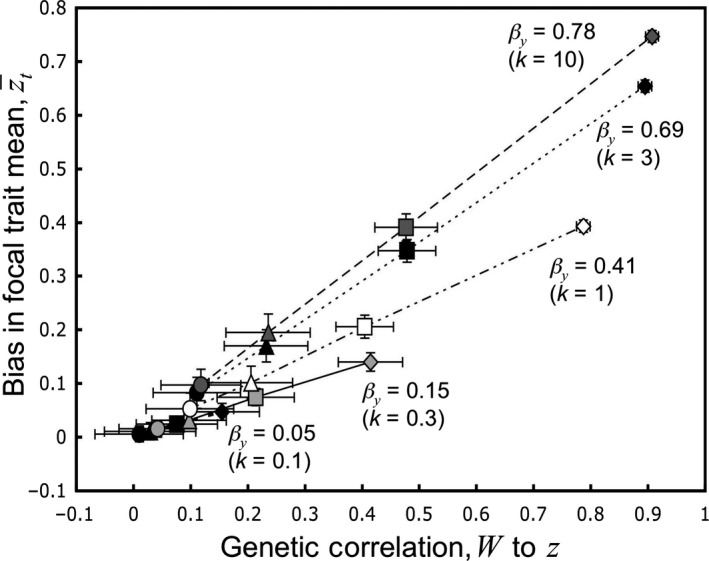
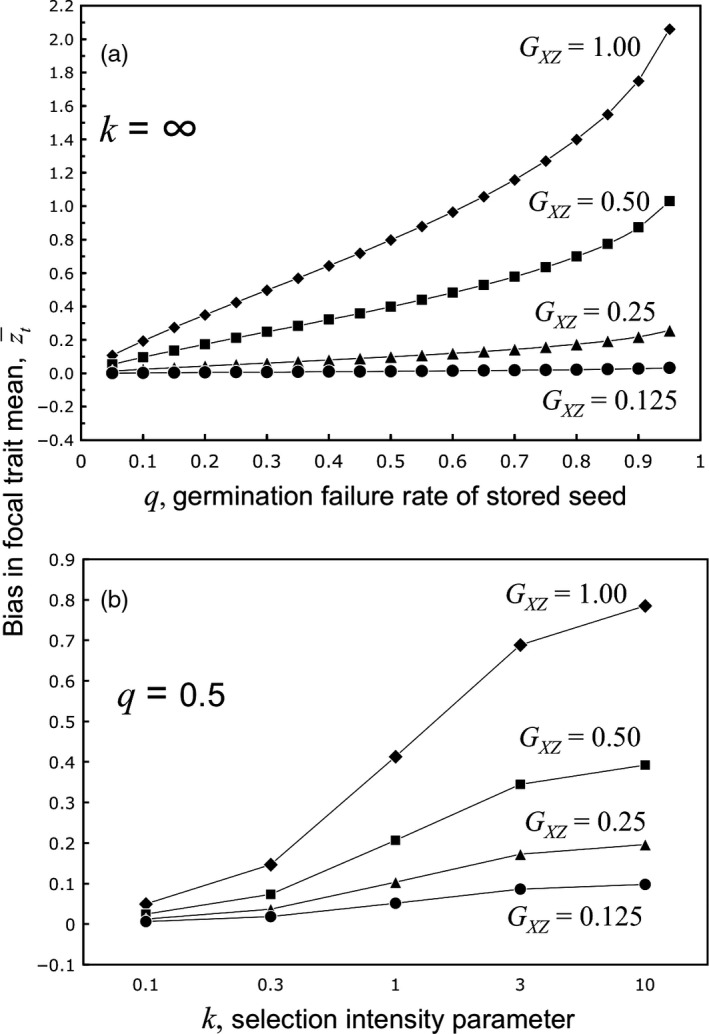
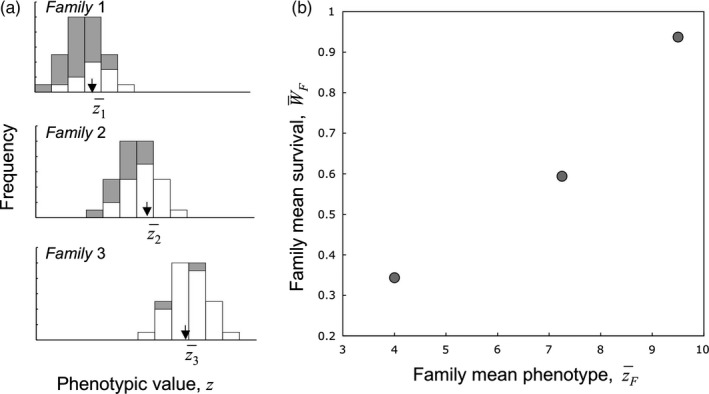
The resurrection approach is a powerful tool for estimating phenotypic evolution in response to global change. Ancestral generations, revived from dormant propagules, are grown side by side with descendent generations in the same environment. Phenotypic differences between the generations can be attributed to genetic change over time. Project Baseline was established to capitalize on this potential in flowering plants. Project participants collected, froze, and stored seed from 10 or more natural populations of 61 North American plant species. These will be made available in the future for resurrection experiments. One problem with this approach can arise if nonrandom mortality during storage biases the estimate of ancestral mean phenotype, which in turn would bias the estimate of evolutionary change. This bias-known as the "invisible fraction" problem-can arise if seed traits that affect survival during storage and revival are genetically correlated to postemergence traits of interest. The bias is trivial if seed survival is high. Here, I show that with low seed survival, bias can be either trivial or catastrophic. Serious bias arises when (i) most seeds deaths are selective with regard to the seed traits, and (ii) the genetic correlations between the seed and postemergence traits are strong. An invisible fraction bias can be diagnosed in seed collections that are family structured. A correlation between the family mean survival rate and the family mean of a focal postemergence trait indicates that seed mortality was not random with respect to genes affecting the focal trait, biasing the sample mean. Fortunately, family structure was incorporated into the sampling scheme for the Project Baseline collection, which will allow bias detection. New and developing statistical procedures that can incorporate genealogical information into the analysis of resurrection experiments may enable bias correction.
复活法是一种用于估计应对全球变化的表型进化的强大工具。从休眠繁殖体中复活的祖先世代,与后代世代在相同环境中并排生长。世代之间的表型差异可归因于随时间的遗传变化。设立基线项目就是为了利用开花植物的这一潜力。项目参与者收集、冷冻并储存了61种北美植物10个或更多自然种群的种子。这些种子未来将用于复活实验。如果储存期间的非随机死亡率使祖先平均表型的估计产生偏差,进而使进化变化的估计产生偏差,那么这种方法可能会出现一个问题。如果影响储存和复活期间存活的种子性状与感兴趣的出土后性状存在遗传相关性,就会出现这种被称为“不可见部分”的偏差。如果种子存活率高,这种偏差就微不足道。在这里,我表明在种子存活率低的情况下,偏差可能微不足道,也可能是灾难性的。当(i)大多数种子死亡对种子性状具有选择性,且(ii)种子性状与出土后性状之间的遗传相关性很强时,就会出现严重偏差。在具有家系结构的种子收集中可以诊断出不可见部分偏差。家系平均存活率与重点出土后性状的家系平均值之间的相关性表明,种子死亡率对于影响重点性状的基因而言并非随机,从而使样本平均值产生偏差。幸运的是,基线项目收集的抽样方案纳入了家系结构,这将有助于检测偏差。能够将系谱信息纳入复活实验分析的新的和正在发展的统计程序可能会实现偏差校正。