Computational, Cognitive and Clinical Neuroimaging Laboratory, Imperial College London, Division of Brain Sciences, Hammersmith Hospital, London, UK.
Brain. 2018 Mar 1;141(3):822-836. doi: 10.1093/brain/awx354.
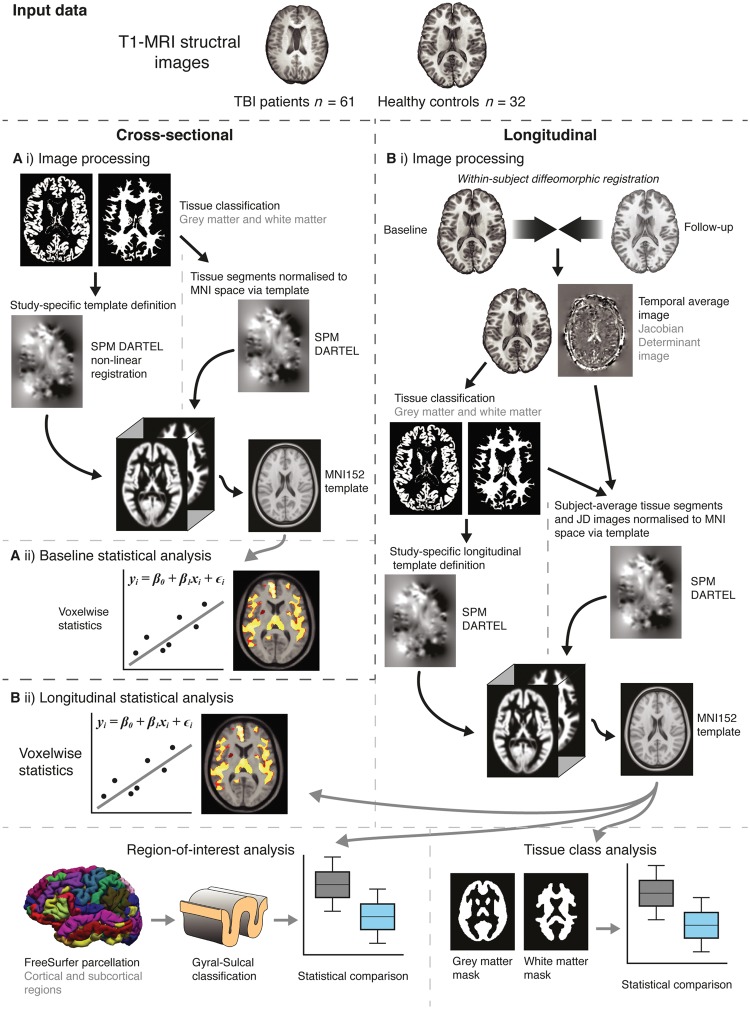
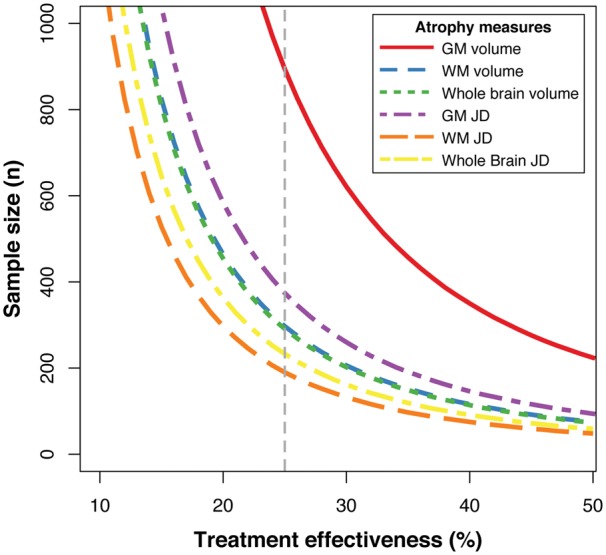
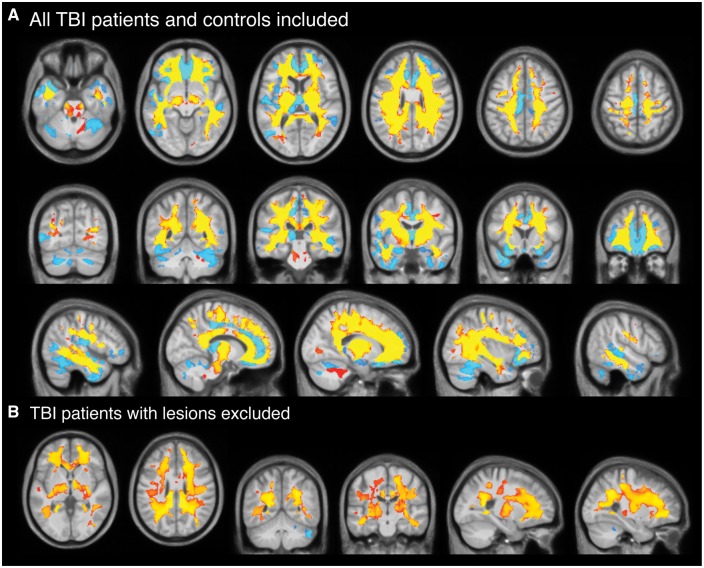
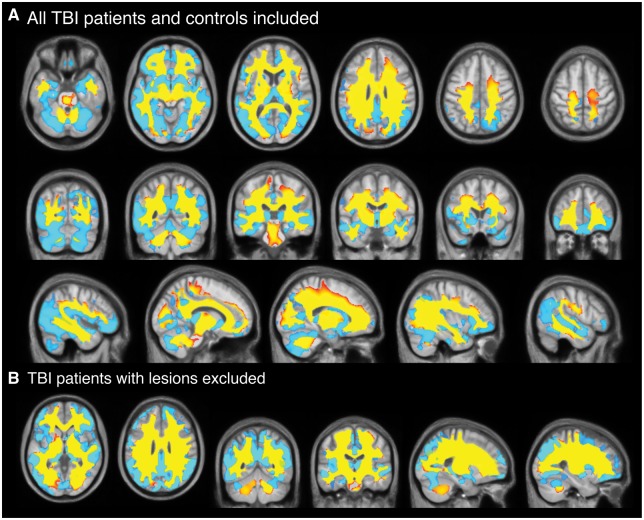
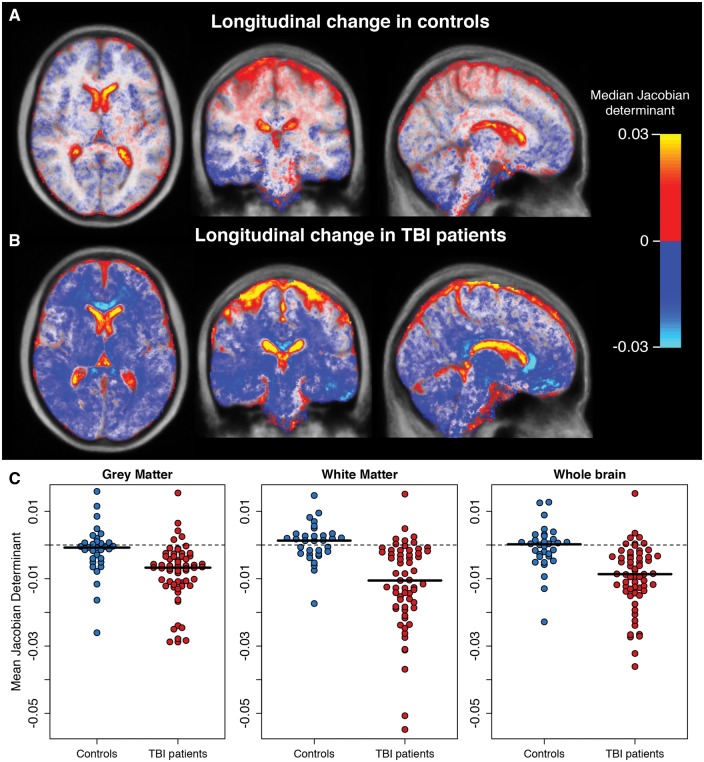
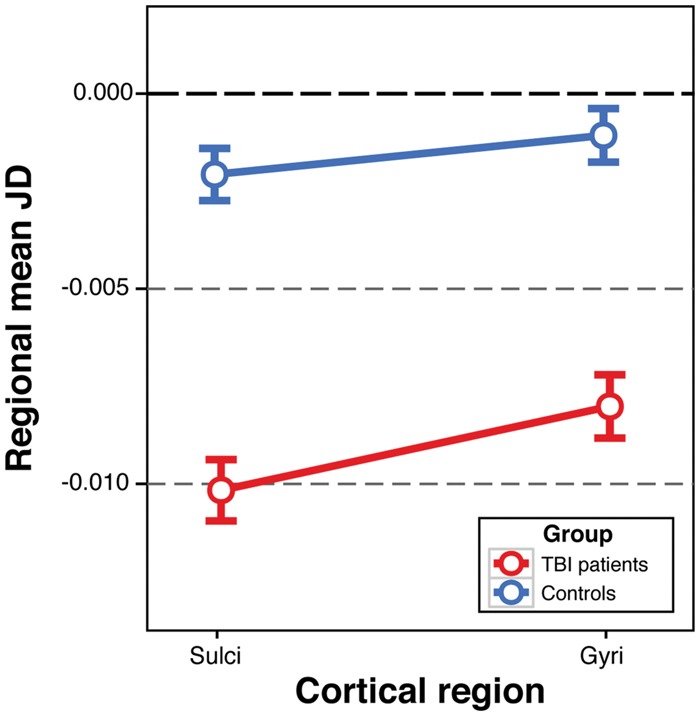
Traumatic brain injury leads to significant loss of brain volume, which continues into the chronic stage. This can be sensitively measured using volumetric analysis of MRI. Here we: (i) investigated longitudinal patterns of brain atrophy; (ii) tested whether atrophy is greatest in sulcal cortical regions; and (iii) showed how atrophy could be used to power intervention trials aimed at slowing neurodegeneration. In 61 patients with moderate-severe traumatic brain injury (mean age = 41.55 years ± 12.77) and 32 healthy controls (mean age = 34.22 years ± 10.29), cross-sectional and longitudinal (1-year follow-up) brain structure was assessed using voxel-based morphometry on T1-weighted scans. Longitudinal brain volume changes were characterized using a novel neuroimaging analysis pipeline that generates a Jacobian determinant metric, reflecting spatial warping between baseline and follow-up scans. Jacobian determinant values were summarized regionally and compared with clinical and neuropsychological measures. Patients with traumatic brain injury showed lower grey and white matter volume in multiple brain regions compared to controls at baseline. Atrophy over 1 year was pronounced following traumatic brain injury. Patients with traumatic brain injury lost a mean (± standard deviation) of 1.55% ± 2.19 of grey matter volume per year, 1.49% ± 2.20 of white matter volume or 1.51% ± 1.60 of whole brain volume. Healthy controls lost 0.55% ± 1.13 of grey matter volume and gained 0.26% ± 1.11 of white matter volume; equating to a 0.22% ± 0.83 reduction in whole brain volume. Atrophy was greatest in white matter, where the majority (84%) of regions were affected. This effect was independent of and substantially greater than that of ageing. Increased atrophy was also seen in cortical sulci compared to gyri. There was no relationship between atrophy and time since injury or age at baseline. Atrophy rates were related to memory performance at the end of the follow-up period, as well as to changes in memory performance, prior to multiple comparison correction. In conclusion, traumatic brain injury results in progressive loss of brain tissue volume, which continues for many years post-injury. Atrophy is most prominent in the white matter, but is also more pronounced in cortical sulci compared to gyri. These findings suggest the Jacobian determinant provides a method of quantifying brain atrophy following a traumatic brain injury and is informative in determining the long-term neurodegenerative effects after injury. Power calculations indicate that Jacobian determinant images are an efficient surrogate marker in clinical trials of neuroprotective therapeutics.
创伤性脑损伤导致大脑体积显著丧失,这种情况会持续到慢性阶段。这可以通过 MRI 的容积分析进行敏感测量。在这里,我们:(i) 研究了脑萎缩的纵向模式;(ii) 测试了萎缩是否在脑沟皮质区域最为严重;(iii) 展示了萎缩如何用于为旨在减缓神经退行性变的干预试验提供动力。在 61 名中度至重度创伤性脑损伤患者(平均年龄=41.55 岁±12.77 岁)和 32 名健康对照者(平均年龄=34.22 岁±10.29 岁)中,使用基于体素的形态测量学对 T1 加权扫描进行了横断面和纵向(1 年随访)脑结构评估。使用一种新的神经影像学分析管道对纵向脑体积变化进行了特征描述,该管道生成了雅可比行列式度量,反映了基线和随访扫描之间的空间变形。雅可比行列式值在区域上进行了总结,并与临床和神经心理学测量进行了比较。与基线相比,创伤性脑损伤患者在多个脑区的灰质和白质体积均较低。创伤性脑损伤后 1 年的萎缩明显。创伤性脑损伤患者每年平均损失 1.55%±2.19%的灰质体积、1.49%±2.20%的白质体积或 1.51%±1.60%的全脑体积。健康对照者每年损失 0.55%±1.13%的灰质体积,增加 0.26%±1.11%的白质体积;相当于全脑体积减少 0.22%±0.83%。萎缩最严重的是白质,其中 84%的区域受到影响。这种影响独立于且大大超过了年龄的影响。与脑回相比,皮质脑沟也出现了更多的萎缩。萎缩与损伤后时间或基线时的年龄无关。萎缩率与随访结束时的记忆表现有关,也与记忆表现的变化有关,这是在进行多次比较校正之前。总之,创伤性脑损伤会导致脑组织体积的进行性丧失,这种情况会持续多年。萎缩最明显的是白质,但与脑回相比,皮质脑沟更为明显。这些发现表明,雅可比行列式提供了一种量化创伤性脑损伤后脑萎缩的方法,对于确定损伤后的长期神经退行性效应具有信息性。功效计算表明,雅可比行列式图像是神经保护治疗临床试验中有效的替代标志物。