Division of Molecular Radiation Biology, Department of Radiation Oncology, University of Texas Southwestern Medical Center at Dallas, Dallas, TX 75390, USA.
Department of Life Science, National Taiwan University, Taipei 10617, Taiwan, Republic of China.
Nucleic Acids Res. 2018 Feb 28;46(4):1847-1859. doi: 10.1093/nar/gkx1298.
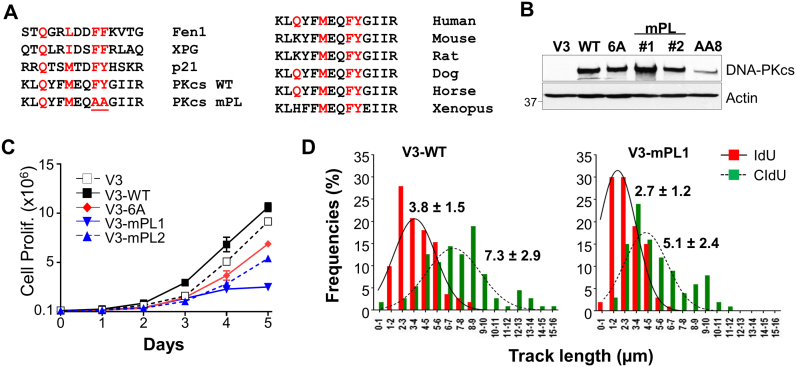
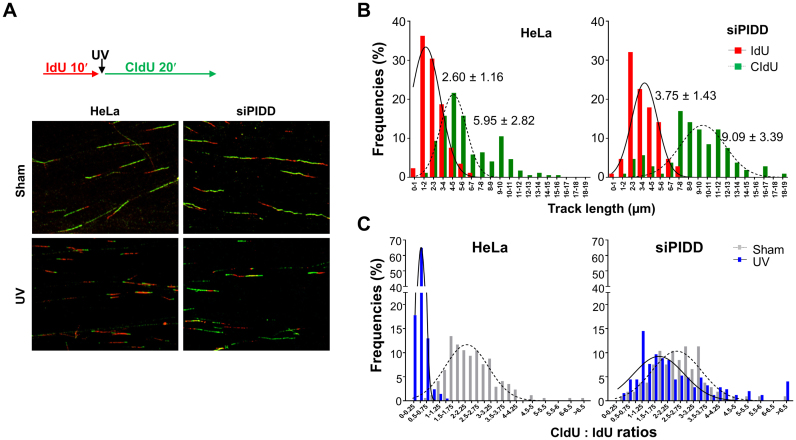
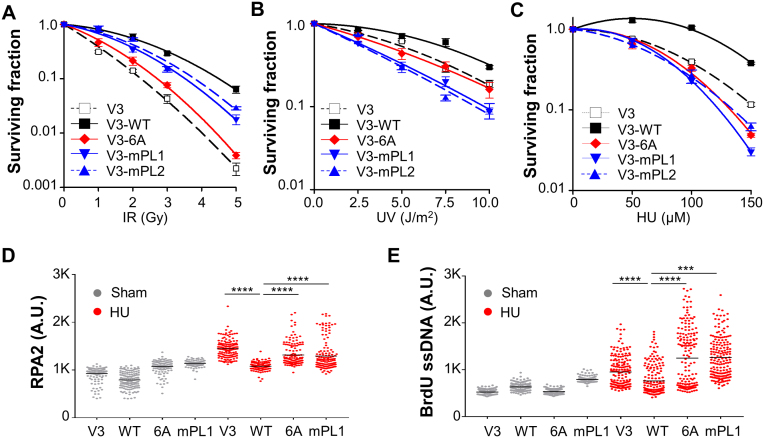
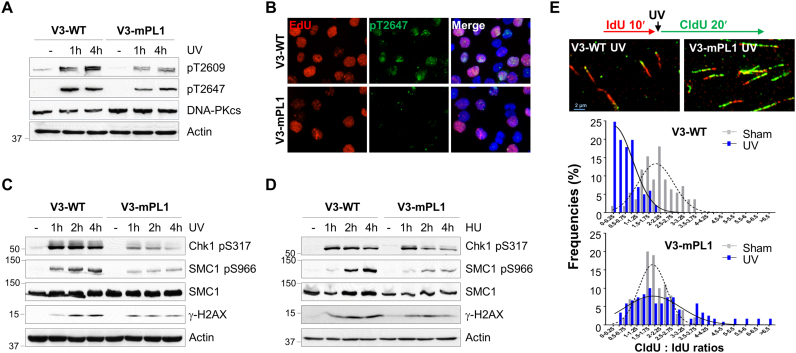
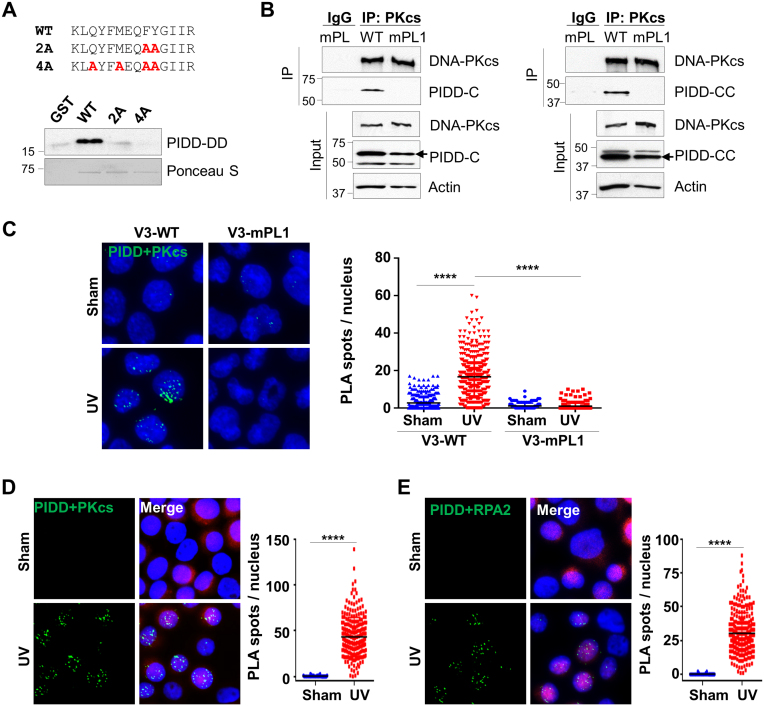
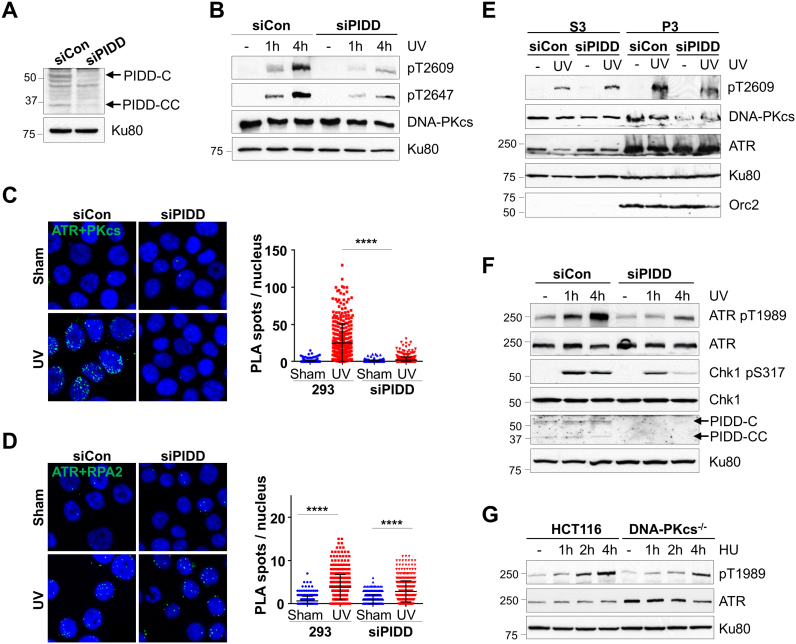
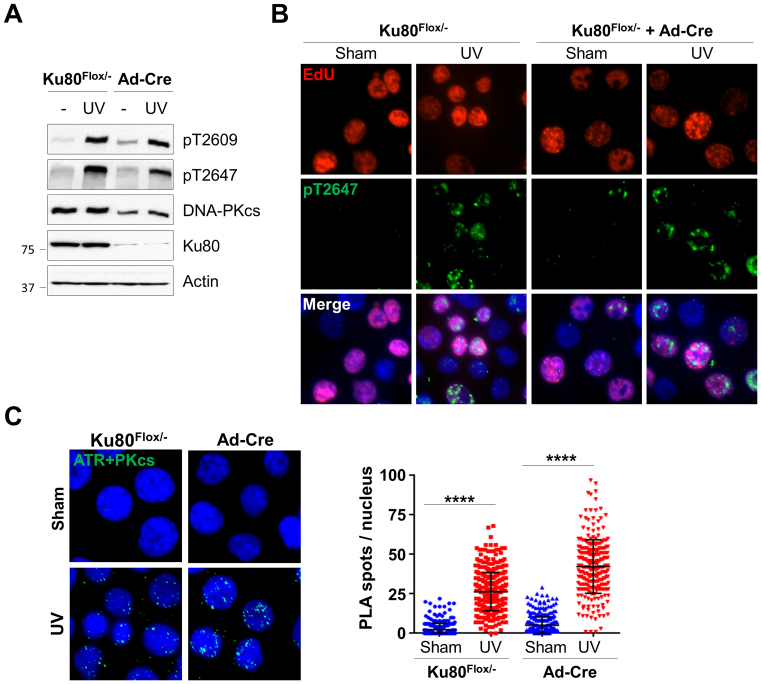
The DNA-dependent protein kinase (DNA-PK), consisting of the DNA binding Ku70/80 heterodimer and the catalytic subunit DNA-PKcs, has been well characterized in the non-homologous end-joining mechanism for DNA double strand break (DSB) repair and radiation resistance. Besides playing a role in DSB repair, DNA-PKcs is required for the cellular response to replication stress and participates in the ATR-Chk1 signaling pathway. However, the mechanism through which DNA-PKcs is recruited to stalled replication forks is still unclear. Here, we report that the apoptosis mediator p53-induced protein with a death domain (PIDD) is required to promote DNA-PKcs activity in response to replication stress. PIDD is known to interact with PCNA upon UV-induced replication stress. Our results demonstrate that PIDD is required to recruit DNA-PKcs to stalled replication forks through direct binding to DNA-PKcs at the N' terminal region. Disruption of the interaction between DNA-PKcs and PIDD not only compromises the ATR association and regulation of DNA-PKcs, but also the ATR signaling pathway, intra-S-phase checkpoint and cellular resistance to replication stress. Taken together, our results indicate that PIDD, but not the Ku heterodimer, mediates the DNA-PKcs activity at stalled replication forks and facilitates the ATR signaling pathway in the cellular response to replication stress.
DNA 依赖性蛋白激酶(DNA-PK)由 DNA 结合 Ku70/80 异二聚体和催化亚基 DNA-PKcs 组成,在 DNA 双链断裂(DSB)修复和辐射抗性的非同源末端连接机制中得到了很好的研究。除了在 DSB 修复中发挥作用外,DNA-PKcs 还需要参与细胞对复制应激的反应,并参与 ATR-Chk1 信号通路。然而,DNA-PKcs 被招募到停滞复制叉的机制尚不清楚。在这里,我们报告凋亡介体 p53 诱导的具有死亡结构域的蛋白(PIDD)需要促进 DNA-PKcs 活性以响应复制应激。已知 PIDD 在 UV 诱导的复制应激时与 PCNA 相互作用。我们的结果表明,PIDD 通过与 DNA-PKcs 在 N'末端区域的直接结合,将 DNA-PKcs 招募到停滞的复制叉上。破坏 DNA-PKcs 和 PIDD 之间的相互作用不仅会损害 ATR 与 DNA-PKcs 的关联和调节,还会损害 ATR 信号通路、细胞内 S 期检验点和细胞对复制应激的抗性。总之,我们的结果表明,PIDD 而不是 Ku 异二聚体,介导了停滞复制叉上的 DNA-PKcs 活性,并促进了细胞对复制应激的 ATR 信号通路。