Kearns Patrick J, Fischer Sarah, Fernández-Beaskoetxea Saioa, Gabor Caitlin R, Bosch Jaime, Bowen Jennifer L, Tlusty Michael F, Woodhams Douglas C
Department of Marine and Environmental Sciences, Northeastern University, Nahant, MA, United States.
Department of Biology, University of Massachusetts Boston, Boston, MA, United States.
Front Microbiol. 2017 Dec 14;8:2494. doi: 10.3389/fmicb.2017.02494. eCollection 2017.
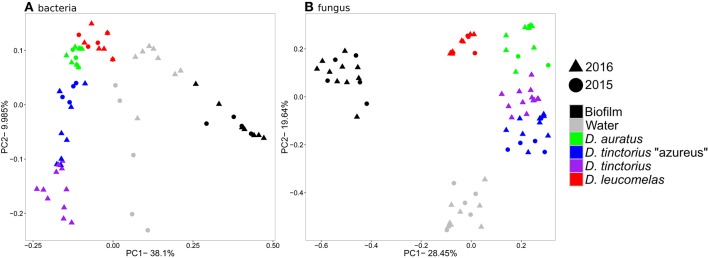
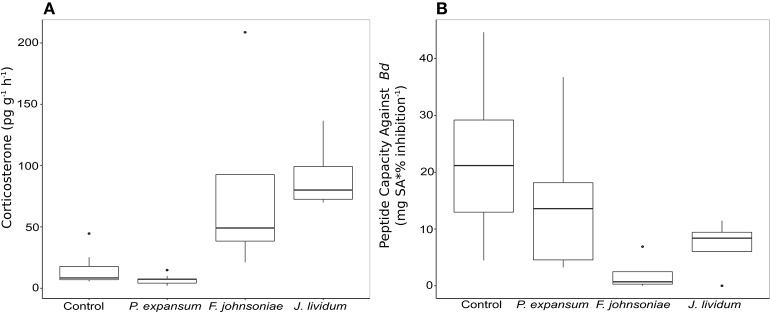
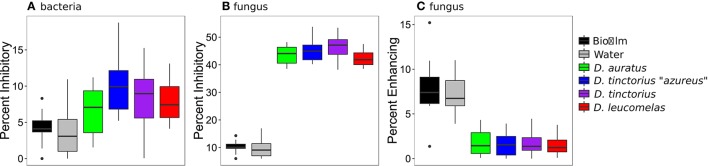
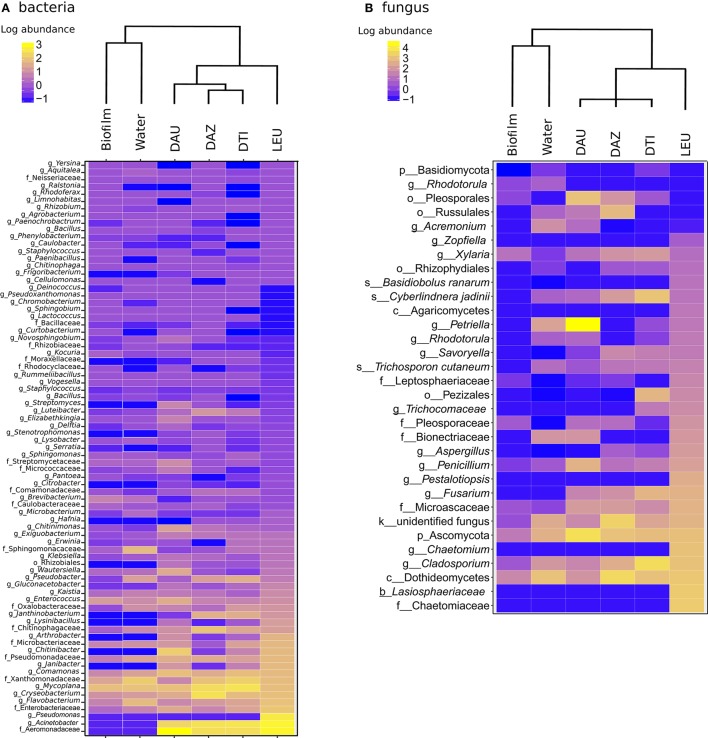
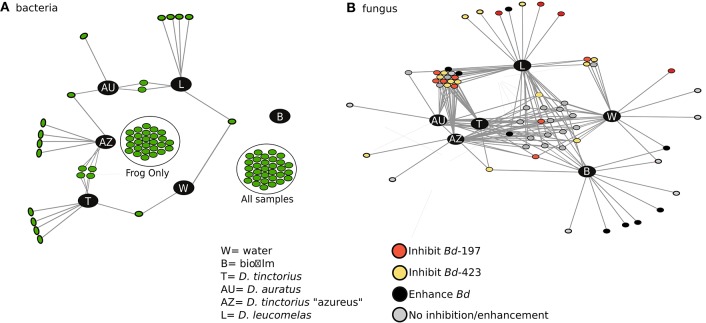
Emerging infectious diseases caused by fungal taxa are increasing and are placing a substantial burden on economies and ecosystems worldwide. Of the emerging fungal diseases, chytridomycosis caused by the fungus (hereafter ) is linked to global amphibian declines. Amphibians have innate immunity, as well as additional resistance through cutaneous microbial communities. Despite the targeting of bacteria as potential probiotics, the role of fungi in the protection against infection in unknown. We used a four-part approach, including high-throughput sequencing of bacterial and fungal communities, cultivation of fungi, challenge assays, and experimental additions of probiotic to Midwife Toads (), to examine the overlapping roles of bacterial and fungal microbiota in pathogen defense in captive bred poison arrow frogs ( sp.). Our results revealed that cutaneous fungal taxa differed from environmental microbiota across three species and a subspecies of spp. frogs. Cultivation of host-associated and environmental fungi realved numerous taxa with the ability to inhibit or facilitate the growth of . The abundance of cutaneous fungi contributed more to defense (45% of the fungal community), than did bacteria (10%) and frog species harbored distinct inhibitory communities that were distinct from the environment. Further, we demonstrated that a fungal probiotic therapy did not induce an endocrine-immune reaction, in contrast to bacterial probiotics that stressed amphibian hosts and suppressed antimicrobial peptide responses, limiting their long-term colonization potential. Our results suggest that probiotic strategies against amphibian fungal pathogens should, in addition to bacterial probiotics, focus on host-associated and environmental fungi such as and members of the families Chaetomiaceae and Lasiosphaeriaceae.
由真菌类群引起的新发传染病正在增加,给全球经济和生态系统带来了沉重负担。在这些新发真菌病中,由真菌(以下简称)引起的壶菌病与全球两栖动物数量减少有关。两栖动物具有先天免疫力,以及通过皮肤微生物群落产生的额外抵抗力。尽管细菌被作为潜在的益生菌进行研究,但真菌在抵御感染中的作用尚不清楚。我们采用了四部分方法,包括对细菌和真菌群落进行高通量测序、真菌培养、挑战试验以及向产婆蟾()实验性添加益生菌,以研究细菌和真菌微生物群落在圈养繁殖的箭毒蛙(属)病原体防御中的重叠作用。我们的结果显示,在属蛙的三个物种和一个亚种中,皮肤真菌类群与环境微生物群不同。对宿主相关真菌和环境真菌的培养揭示了许多具有抑制或促进生长能力的类群。皮肤真菌的丰度对防御的贡献(约占真菌群落的45%)比细菌(约10%)更大,并且蛙类物种具有与环境不同的独特抑制群落。此外,我们证明,与会给两栖动物宿主带来压力并抑制抗菌肽反应、限制其长期定殖潜力的细菌益生菌不同,真菌益生菌疗法不会引发内分泌 - 免疫反应。我们的结果表明,针对两栖动物真菌病原体的益生菌策略除了细菌益生菌外,还应关注宿主相关真菌和环境真菌,如以及毛壳菌科和球壳孢科的成员。