Center for Conservation Genomics, Smithsonian National Zoological Park and Conservation Biology Institute, Washington, DC, USA.
Department of Chemistry and Biochemistry, George Mason Universitygrid.22448.38, Manassas, Virginia, USA.
Appl Environ Microbiol. 2022 Apr 26;88(8):e0181821. doi: 10.1128/aem.01818-21. Epub 2022 Mar 29.
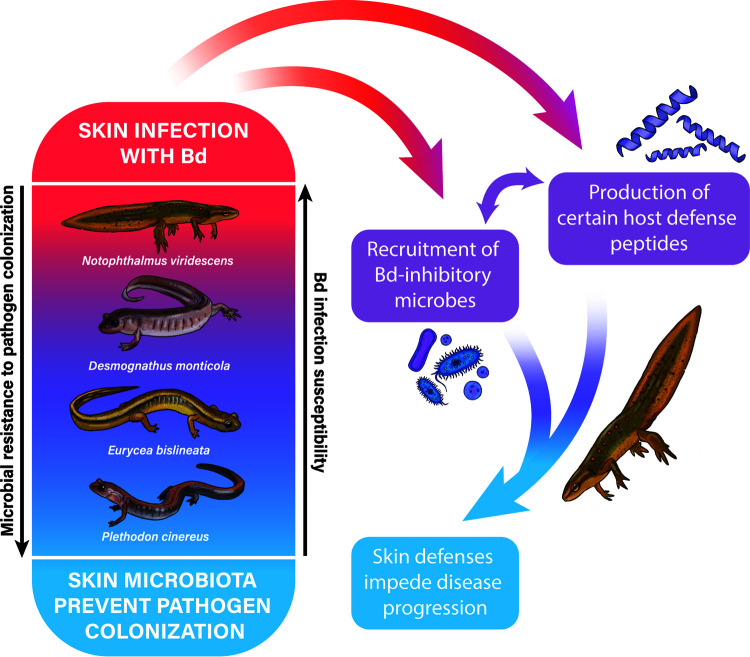
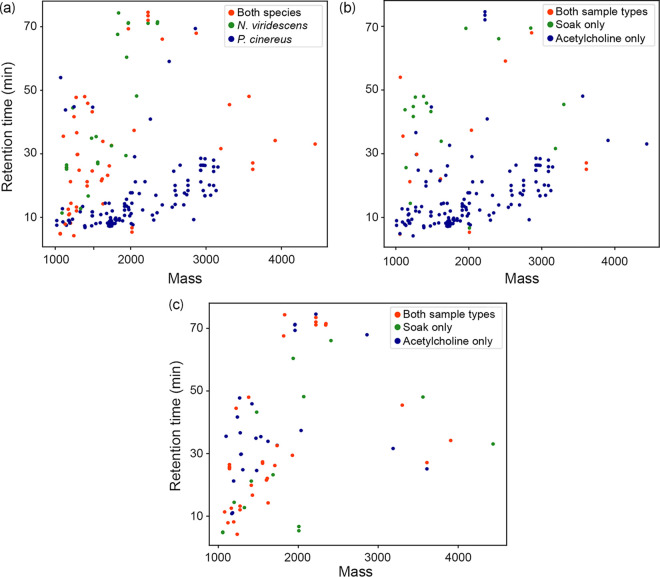
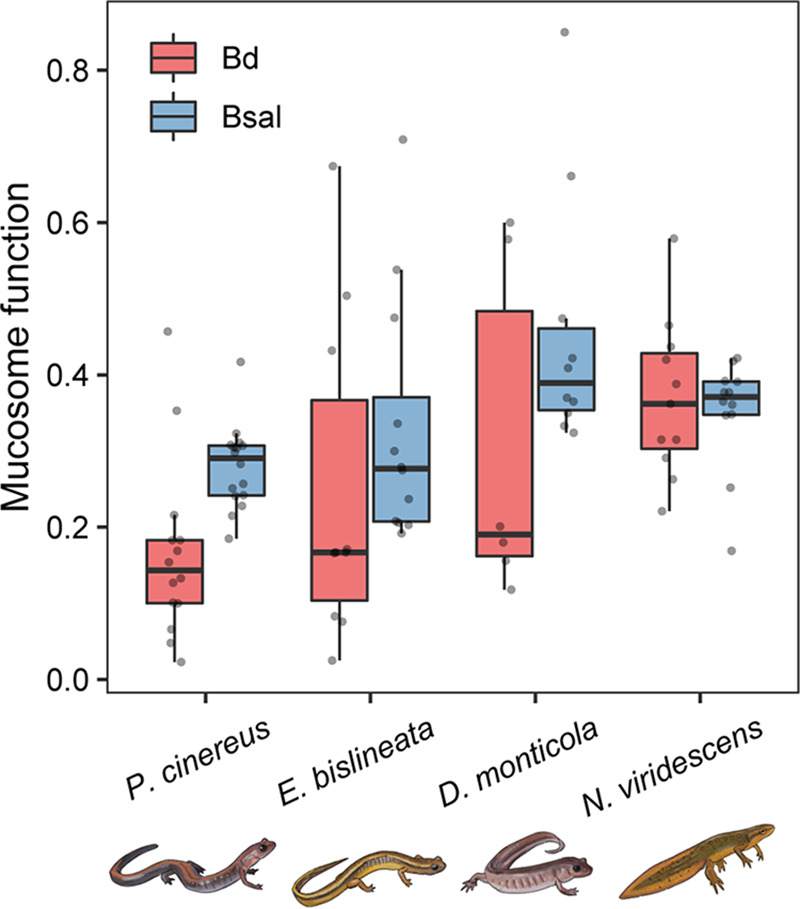
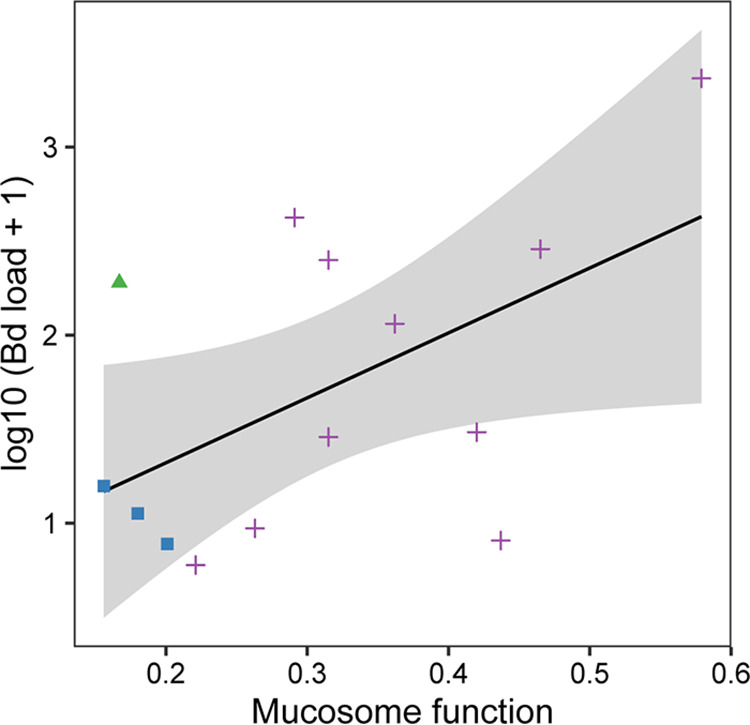
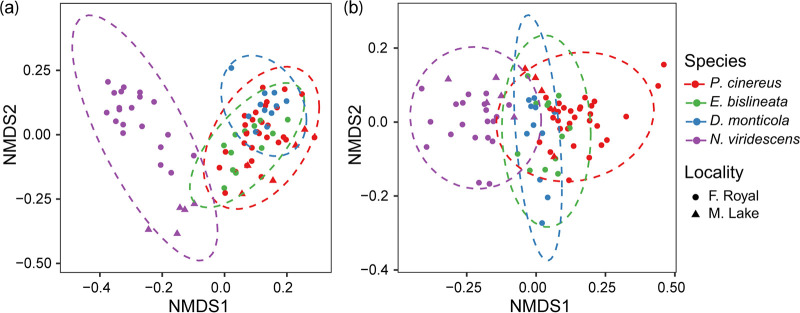
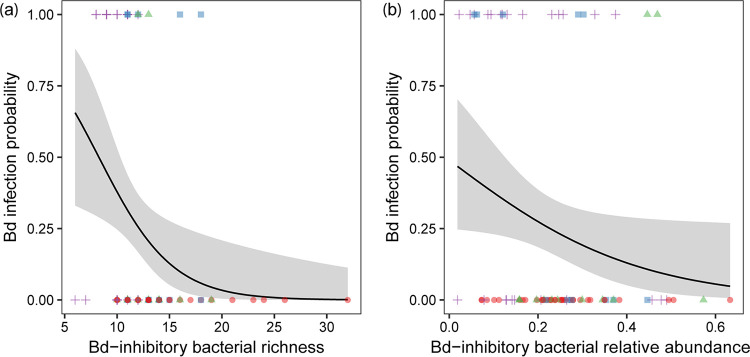
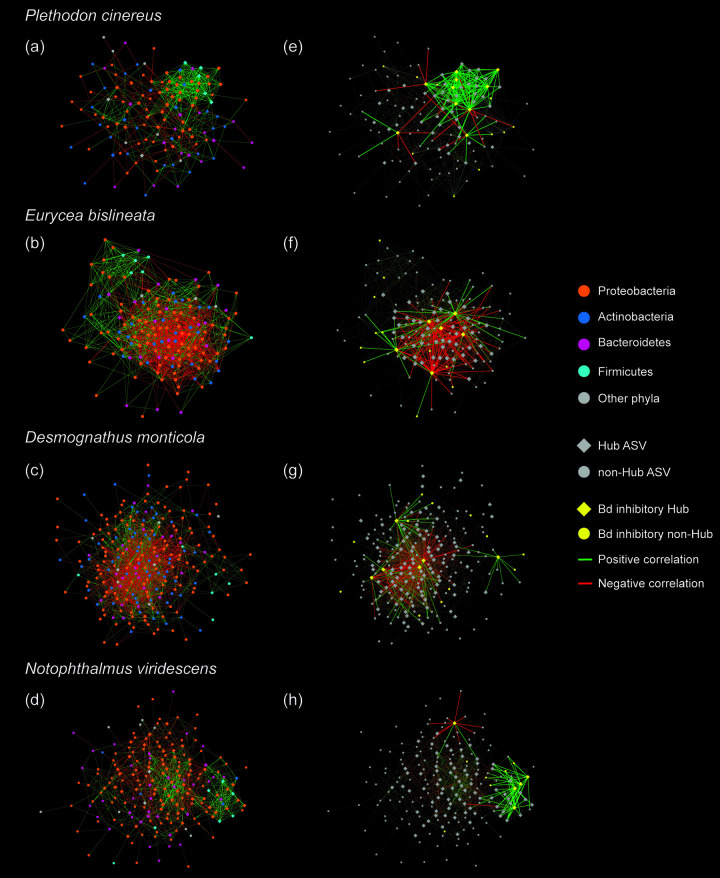
Mucosal defenses are crucial in animals for protection against pathogens and predators. Host defense peptides (antimicrobial peptides, AMPs) as well as skin-associated microbes are key components of mucosal immunity, particularly in amphibians. We integrate microbiology, molecular biology, network-thinking, and proteomics to understand how host and microbially derived products on amphibian skin (referred to as the mucosome) serve as pathogen defenses. We studied defense mechanisms against chytrid pathogens, (Bd) and (Bsal), in four salamander species with different susceptibilities. Bd infection was quantified using qPCR, mucosome function (i.e., ability to kill Bd or Bsal zoospores ), skin bacterial communities using 16S rRNA gene amplicon sequencing, and the role of Bd-inhibitory bacteria in microbial networks across all species. We explored the presence of candidate-AMPs in eastern newts and red-backed salamanders. Eastern newts had the highest Bd prevalence and mucosome function, while red-back salamanders had the lowest Bd prevalence and mucosome function, and two-lined salamanders and seal salamanders were intermediates. Salamanders with highest Bd infection intensity showed greater mucosome function. Bd infection prevalence significantly decreased as putative Bd-inhibitory bacterial richness and relative abundance increased on hosts. In co-occurrence networks, some putative Bd-inhibitory bacteria were found as hub-taxa, with red-backs having the highest proportion of protective hubs and positive associations related to putative Bd-inhibitory hub bacteria. We found more AMP candidates on salamanders with lower Bd susceptibility. These findings suggest that salamanders possess distinct innate mechanisms that affect chytrid fungi. How host mucosal defenses interact, and influence disease outcome is critical in understanding host defenses against pathogens. A more detailed understanding is needed of the interactions between the host and the functioning of its mucosal defenses in pathogen defense. This study investigates the variability of chytrid susceptibility in salamanders and the innate defenses each species possesses to mediate pathogens, thus advancing the knowledge toward a deeper understanding of the microbial ecology of skin-associated bacteria and contributing to the development of bioaugmentation strategies to mediate pathogen infection and disease. This study improves the understanding of complex immune defense mechanisms in salamanders and highlights the potential role of the mucosome to reduce the probability of Bd disease development and that putative protective bacteria may reduce likelihood of Bd infecting skin.
黏膜防御在动物中对于抵御病原体和捕食者至关重要。宿主防御肽(抗菌肽,AMPs)以及皮肤相关微生物是黏膜免疫的关键组成部分,特别是在两栖动物中。我们整合了微生物学、分子生物学、网络思维和蛋白质组学,以了解两栖动物皮肤(称为黏膜体)上的宿主和微生物衍生产物如何作为病原体防御。我们研究了针对两种壶菌病原体(Bd 和 Bsal)的防御机制,这两种病原体在易感性不同的四个蝾螈物种中进行了研究。使用 qPCR 量化 Bd 感染,使用 16S rRNA 基因扩增子测序研究黏膜体功能(即杀死 Bd 或 Bsal 游动孢子的能力),以及在所有物种中研究 Bd 抑制细菌在微生物网络中的作用。我们探索了东部蝾螈和红背蝾螈中候选 AMP 的存在。东部蝾螈的 Bd 流行率和黏膜体功能最高,而红背蝾螈的 Bd 流行率和黏膜体功能最低,双线蝾螈和海豹蝾螈则处于中间水平。Bd 感染强度最高的蝾螈具有更强的黏膜体功能。随着宿主上推定的 Bd 抑制性细菌丰富度和相对丰度的增加,Bd 感染的流行率显著降低。在共现网络中,一些推定的 Bd 抑制性细菌被发现为枢纽类群,红背蝾螈具有最高比例的保护枢纽和与推定的 Bd 抑制性枢纽细菌相关的正关联。我们在 Bd 易感性较低的蝾螈上发现了更多的 AMP 候选物。这些发现表明,蝾螈具有影响壶菌真菌的独特先天机制。宿主黏膜防御如何相互作用以及影响疾病结果对于理解宿主对病原体的防御至关重要。需要更详细地了解宿主与其黏膜防御功能之间的相互作用,以促进对皮肤相关细菌的微生物生态的深入了解,并为介导病原体感染和疾病的生物增强策略的发展做出贡献。本研究调查了蝾螈中壶菌易感性的变异性以及每种物种所具有的先天防御能力,以介导病原体,从而提高对蝾螈复杂免疫防御机制的理解,并强调黏膜体减少 Bd 疾病发展可能性的潜力,以及推定的保护性细菌可能降低 Bd 感染皮肤的可能性。