Center for Integrative Brain Research, Seattle Children's Research Institute, Seattle, WA, USA.
Neuroscience Graduate Program University of Washington, Seattle, WA, USA.
Addict Biol. 2019 Mar;24(2):251-264. doi: 10.1111/adb.12594. Epub 2018 Jan 5.
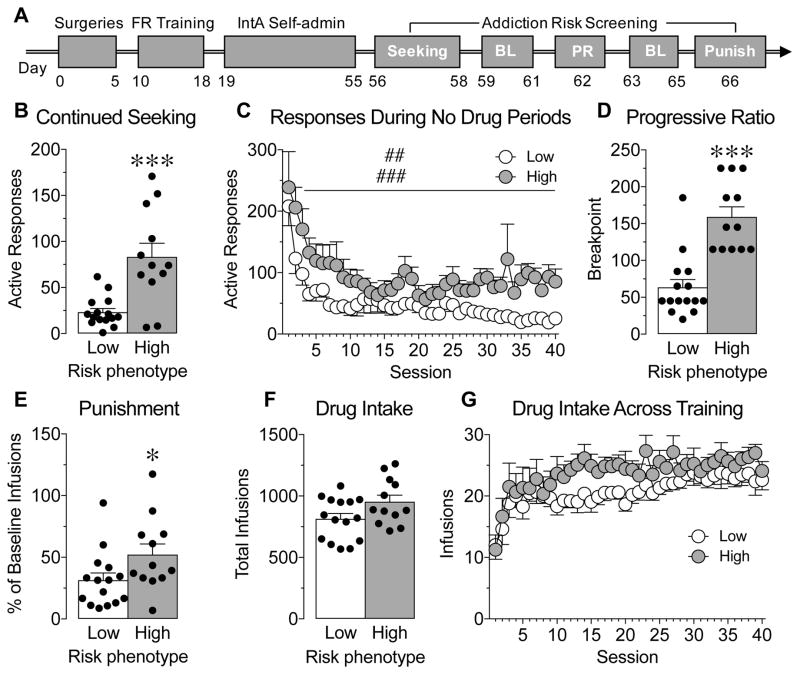
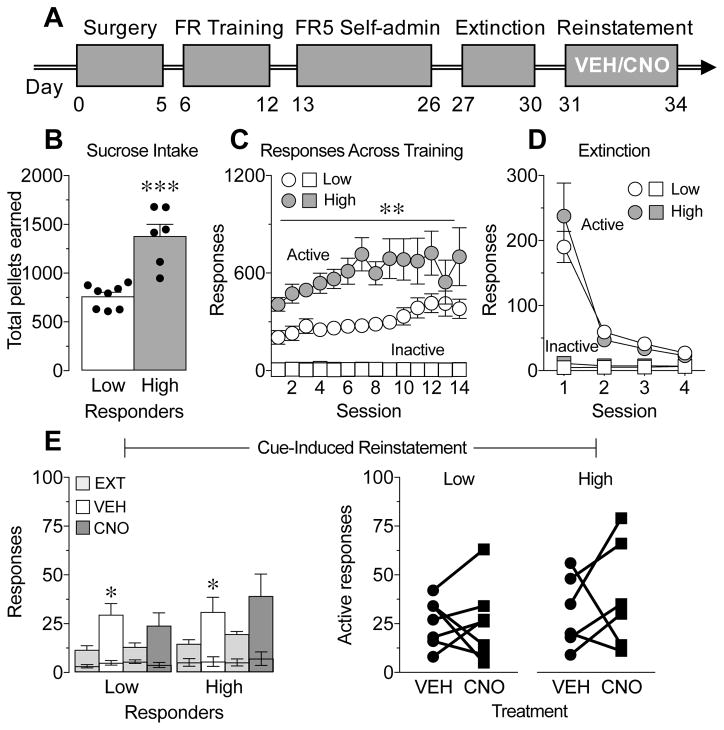
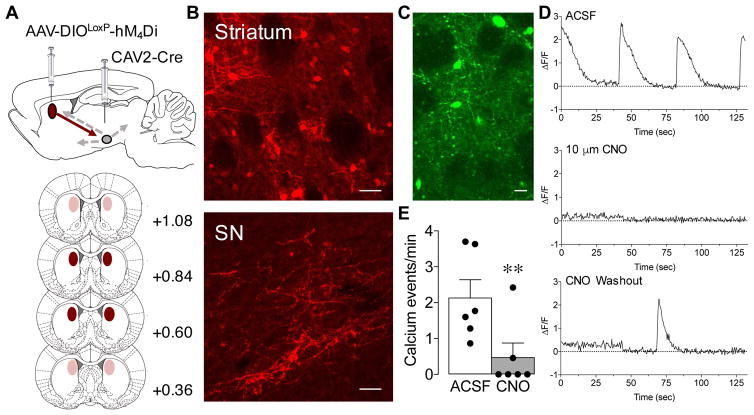
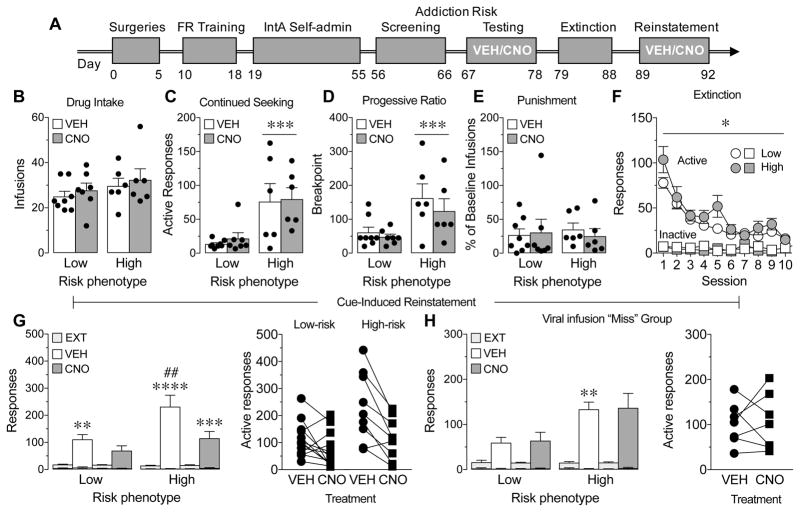
Addiction to drugs such as cocaine is marked by cycles of compulsive drug-taking and drug-seeking behavior. Although the transition to addiction is thought to recruit neural processes in dorsal striatum, little is known regarding the role of dorsal striatal projections to the substantia nigra (i.e. the direct pathway) in regulating these behaviors. Combining a Cre-recombinase-dependent chemogenetic approach with a cocaine self-administration paradigm that produces both low-risk and high-risk addiction phenotypes, we examined the effect of transiently decreasing direct pathway activity in the dorsomedial striatum on drug-taking and drug-seeking under conditions of normal and pathological drug use. Surprisingly, transient inhibition of direct pathway striatal neurons had no effect on several measures of addictive behavior during ongoing drug use, including loss of control over drug intake, high motivation to obtain drug and drug use despite negative consequences (i.e. drug use paired with foot shock). However, chemogenetic inhibition of these neurons during reinstatement reduced cue-induced drug-seeking, but only in the high-risk addiction phenotype group. Cue-induced reinstatement was relatively normal in the low-risk addiction phenotype group, as well as following reinstatement to cues associated with sucrose pellet consumption. These results demonstrate that dorsomedial direct pathway striatal neurons play a very specific role in addictive behaviors, which is to regulate the pathological drug-seeking that accompanies relapse.
药物成瘾,如可卡因成瘾,其特征是强迫性药物滥用和觅药行为的循环。尽管人们认为向成瘾的转变会招募背侧纹状体中的神经过程,但对于背侧纹状体投射到黑质(即直接通路)在调节这些行为中的作用知之甚少。我们结合 Cre 重组酶依赖性化学遗传学方法和可卡因自我给药范式,该范式产生低风险和高风险成瘾表型,研究了短暂降低背侧纹状体中直接通路活性对正常和病理性药物使用条件下药物摄取和觅药的影响。令人惊讶的是,直接通路纹状体神经元的短暂抑制对几种药物成瘾行为的测量值没有影响,包括对药物摄入的控制丧失、对药物的高动机以及尽管有负面后果(即与足部电击相关的药物使用)仍继续使用药物。然而,在重新激发期间,这些神经元的化学遗传抑制减少了线索诱导的觅药行为,但仅在高风险成瘾表型组中。在低风险成瘾表型组中,线索诱导的重新激发相对正常,以及重新激发与蔗糖丸消耗相关的线索时也是如此。这些结果表明,背侧直接通路纹状体神经元在成瘾行为中发挥着非常特定的作用,即调节伴随复发的病理性觅药。