Department of Orthopaedic Surgery, Kanazawa Medical University, Daigaku 1-1, Uchinada, Kahoku-gun, Ishikawa 920-0293, Japan.
Department of Pathology, Kanazawa Medical University, Daigaku 1-1, Uchinada, Kahoku-gun, Ishikawa 920-0293, Japan.
Int J Mol Sci. 2018 Jan 9;19(1):203. doi: 10.3390/ijms19010203.
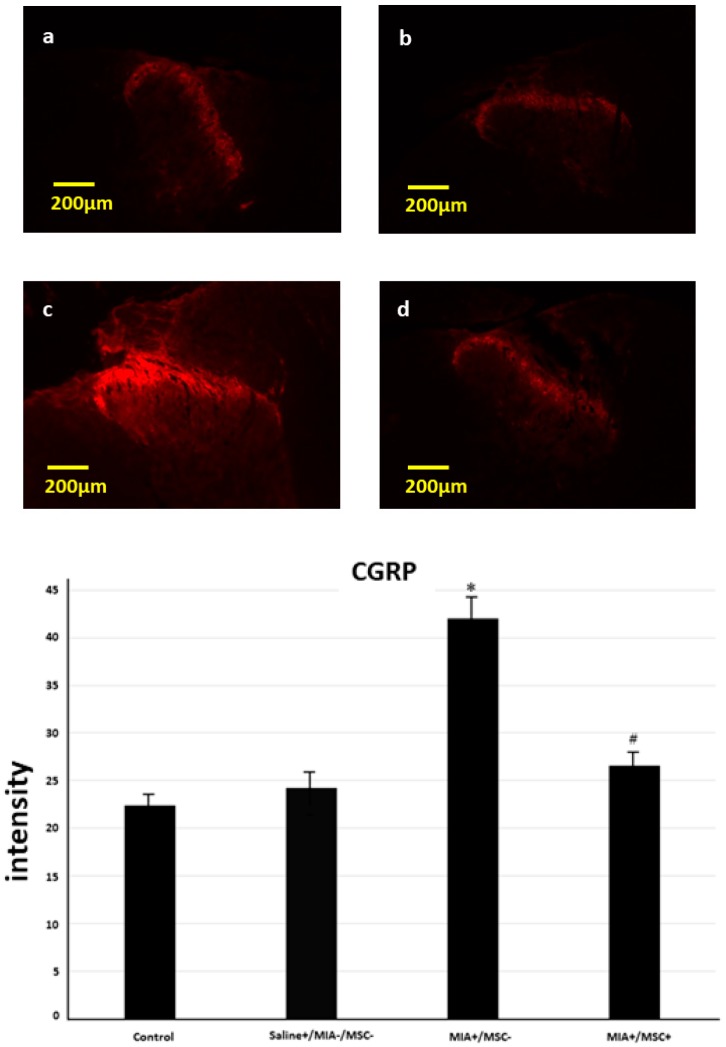
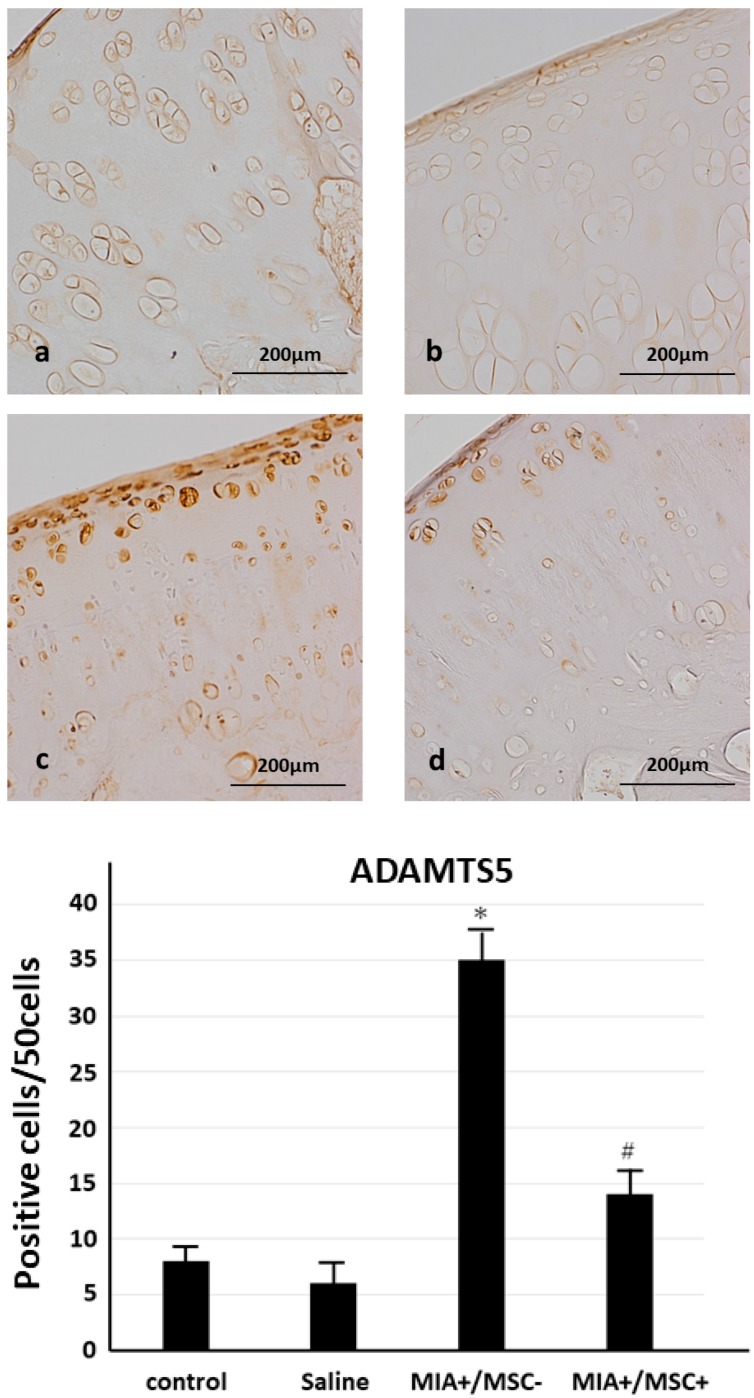
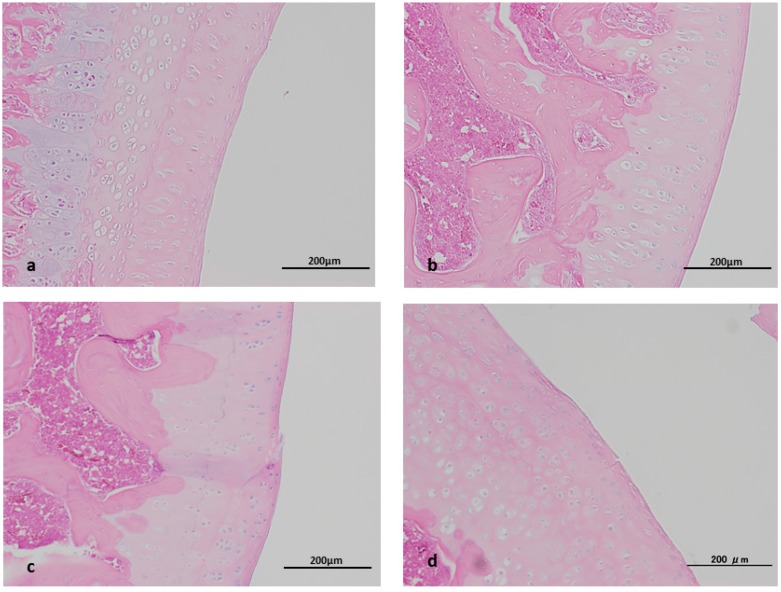
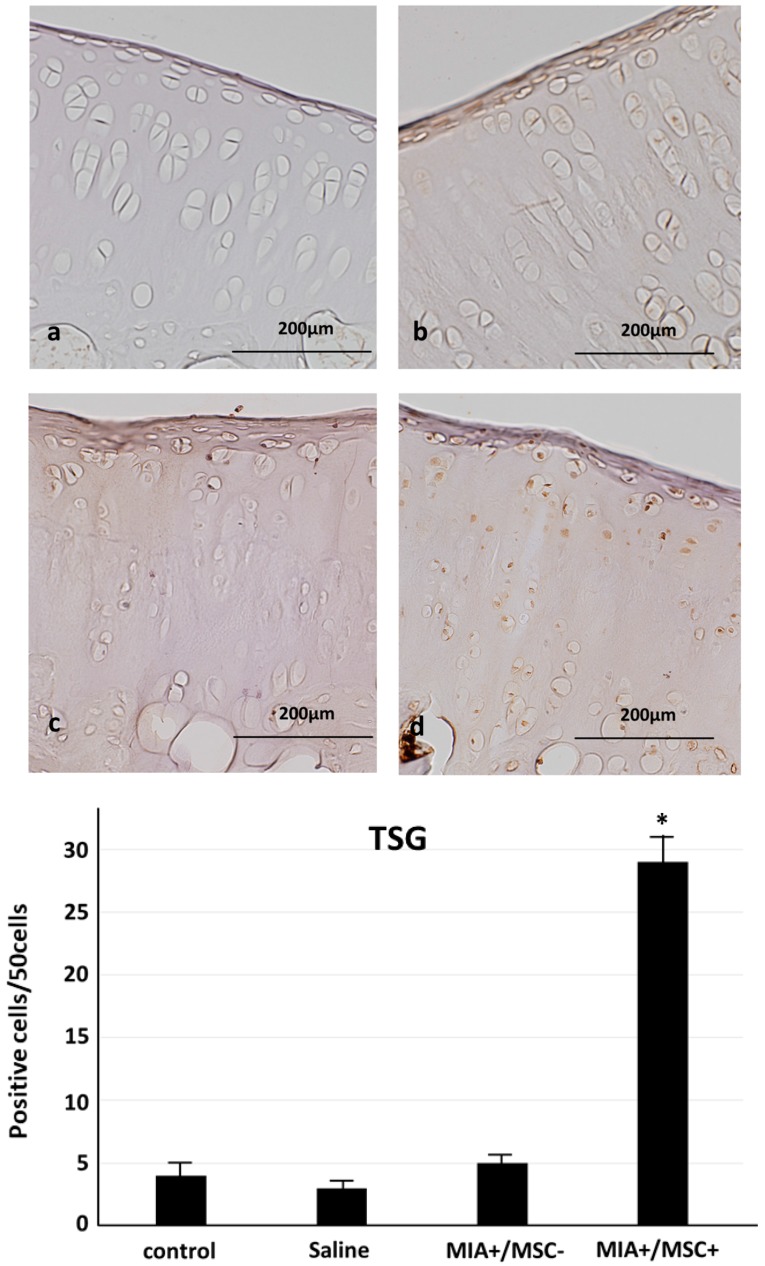
Persistent inflammation is well known to promote the progression of arthropathy. mesenchymal stem cells (MSCs) have been shown to possess anti-inflammatory properties and tissue differentiation potency. Although the experience so far with the intraarticular administration of mesenchymal stem cell (MSC) to induce cartilage regeneration has been disappointing, MSC implantation is now being attempted using various surgical techniques. Meanwhile, prevention of osteoarthritis (OA) progression and pain control remain important components of the treatment of early-stage OA. We prepared a shoulder arthritis model by injecting monoiodoacetate (MIA) into a rat shoulder, and then investigated the intraarticular administration of MSC from the aspects of the cartilage protective effect associated with their anti-inflammatory property and inhibitory effect on central sensitization of pain. When MIA was administered in this rat shoulder arthritis model, anti-Calcitonin Gene Related Peptide (CGRP) was expressed in the joint and C5 spinal dorsal horn. Moreover, expression of A disintegrin and metalloproteinase with thrombospondin motifs 5 (ADAMTS5), a marker of joint cartilage injury, was similarly elevated following MIA administration. When MSC were injected intraarticularly after MIA, the expression of CGRP in the spinal dorsal horn was significantly deceased, indicating suppression of the central sensitization of pain. The expression of ADAMTS 5 in joint cartilage was also significantly inhibited by MSC administration. In contrast, a significant increase in the expression of TNF-α stimulated gene/protein 6 (TSG-6), an anti-inflammatory and cartilage protective factor shown to be produced and secreted by MSC intraarticularly, was found to extend to the cartilage tissue following MSC administration. In this way, the intraarticular injection of MSC inhibited the central sensitization of pain and increased the expression of the anti-inflammatory and cartilage protective factor TSG-6. As the least invasive conservative strategies possible are desirable in the actual clinical setting, the intraarticular administration of MSC, which appears to be effective for the treatment of pain and cartilage protection in early-stage arthritis, may achieve these aims.
持续的炎症是众所周知的促进关节病的进展。间充质干细胞(MSCs)已被证明具有抗炎特性和组织分化能力。虽然目前通过关节内注射间充质干细胞(MSC)来诱导软骨再生的经验令人失望,但现在正在尝试使用各种手术技术进行 MSC 植入。同时,预防骨关节炎(OA)进展和控制疼痛仍然是早期 OA 治疗的重要组成部分。我们通过向大鼠肩部注射单碘乙酸(MIA)制备了肩部关节炎模型,然后从与抗炎特性相关的软骨保护作用以及对疼痛中枢敏化的抑制作用两个方面研究了 MSC 的关节内给药。当在这种大鼠肩部关节炎模型中给予 MIA 时,降钙素基因相关肽(CGRP)在关节和 C5 脊髓背角中表达。此外,在给予 MIA 后,关节软骨损伤的标志物 A 型分解素和金属蛋白酶与血小板反应蛋白 5(ADAMTS5)的表达也同样升高。当 MSC 在给予 MIA 后关节内注射时,脊髓背角中 CGRP 的表达显著降低,表明疼痛的中枢敏化受到抑制。关节软骨中 ADAMTS 5 的表达也被 MSC 给药显著抑制。相比之下,MSC 给药后发现关节软骨组织中 TNF-α 刺激基因/蛋白 6(TSG-6)的表达显著增加,TSG-6 是一种已知由 MSC 产生和分泌的抗炎和软骨保护因子。通过这种方式,关节内注射 MSC 抑制了疼痛的中枢敏化并增加了抗炎和软骨保护因子 TSG-6 的表达。由于在实际临床环境中,尽可能采用微创的保守策略是可取的,因此,关节内注射 MSC 可能会实现这些目标,因为它对早期关节炎的疼痛和软骨保护具有治疗作用。