Ghodrati Mehdi, Spotin Adel, Hazratian Teimour, Mahami-Oskouei Mahmoud, Bordbar Ali, Ebrahimi Sahar, Fallahi Shirzad, Parvizi Parviz
Immunology Research Center, Tabriz University of Medical Sciences, Tabriz, Iran.
Dept. of Parasitology and Mycology, Faculty of Medicine, Tabriz University of Medical Sciences, Tabriz, Iran.
Iran J Parasitol. 2017 Oct-Dec;12(4):506-515.
We employed a highly sensitive loop-mediated isothermal amplification (LAMP) by targeting 18S rRNA gene to identify the rapid mass screening of infections in captured sand flies of southwest Iran and In vitro culture.
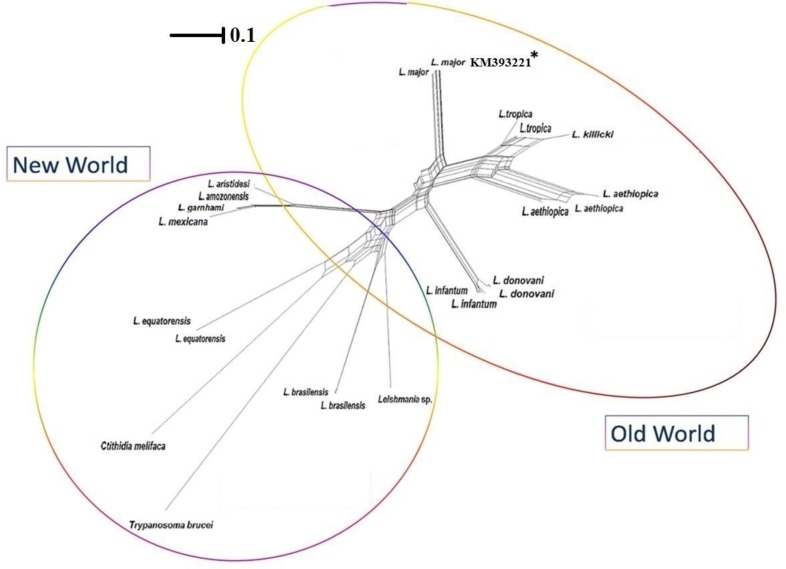
One hundred fifty sand flies were collected from 11 sites adjacent to Iraqi's borders in southern parts of Khuzestan Province by using sticky sheets of paper and CDC miniature light traps during late May 2014 to Nov 2015. Following morphological identification of sand flies species, the DNA of infected samples was extracted and amplified by PCR and LAMP assays by targeting ITS-rDNA and 18S rRNA genes. The PCR amplicons were directly sequenced to conduct the phylogenetic analysis.
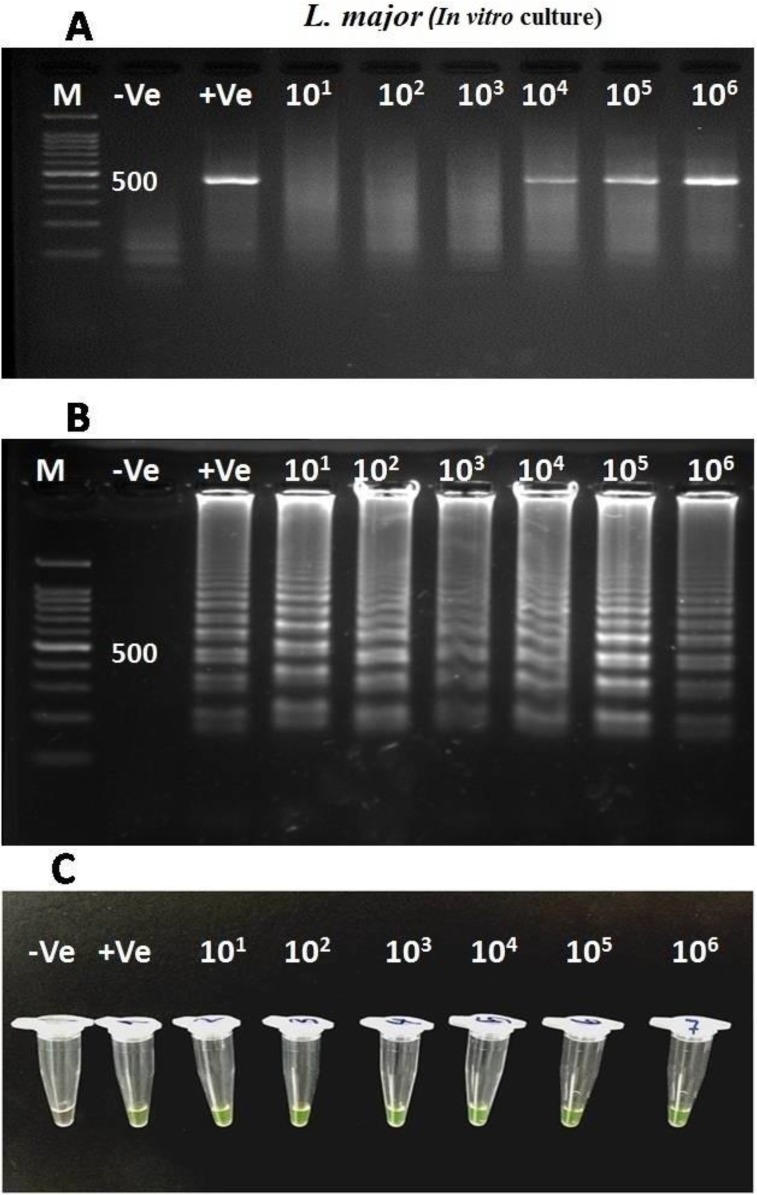
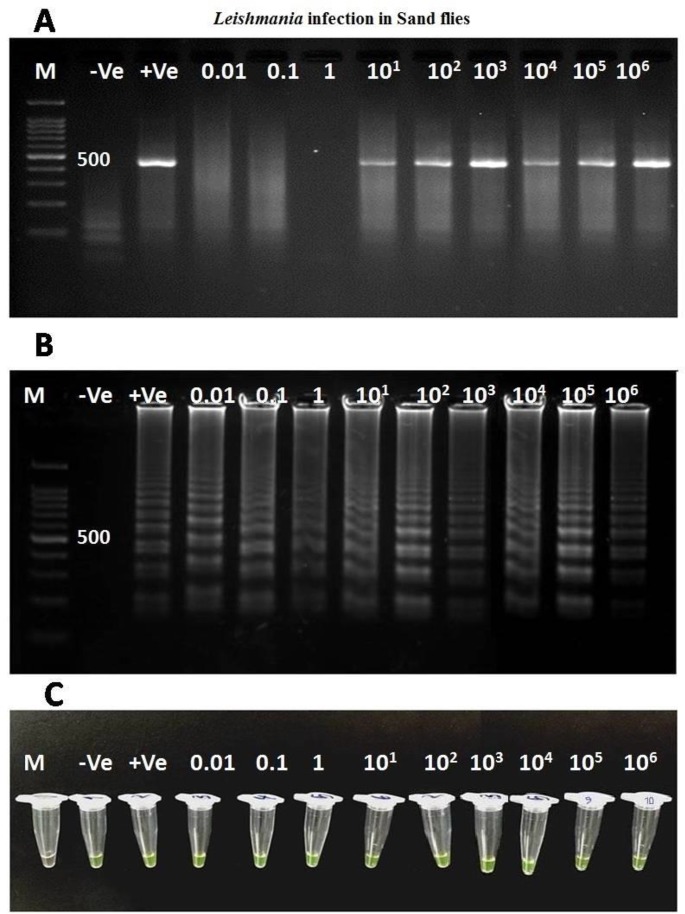
Ten (6.6%) infections were identified by LAMP assay (detection limit 0.01 parasites DNA) among infected , and sand flies that was more sensitive than PCR (n=6.4%; (detection limit 10 parasites DNA). LAMP can identify 10-10 promastigotes/100 μl RPMI 1640 while PCR recognized 10-10 promastigotes. The majority infection rate of sand flies was confirmed to inferred by phylogenetic analysis.
This is the first exploration characterized the Old World Leishmania infections by LAMP technique in both infected sand flies and In vitro conditions. The LAMP method because of its shorter reaction time, robustness, more sensitivity, lack of requirement of complicated equipment and visual discriminatory of positivity can be appeared a promising tool instead of PCR to identify low loads and entomological monitoring of leishmaniasis in resource-limited endemic of the world.
我们采用了一种针对18S rRNA基因的高灵敏度环介导等温扩增(LAMP)技术,以快速大规模筛查伊朗西南部捕获的白蛉中的感染情况以及进行体外培养。
2014年5月下旬至2015年11月期间,使用粘纸和疾控中心微型诱虫灯在胡齐斯坦省南部与伊拉克接壤的11个地点收集了150只白蛉。在对白蛉物种进行形态学鉴定后,提取感染样本的DNA,并通过针对ITS-rDNA和18S rRNA基因的PCR和LAMP检测进行扩增。对PCR扩增产物进行直接测序以进行系统发育分析。
在感染的白蛉中,通过LAMP检测(检测限为0.01寄生虫DNA)鉴定出10例(6.6%)感染,其比PCR(n = 6.4%;检测限为10寄生虫DNA)更敏感。LAMP可识别10-10前鞭毛体/100μl RPMI 1640,而PCR可识别10-10前鞭毛体。通过系统发育分析证实了白蛉的大多数感染率。
这是首次利用LAMP技术在感染的白蛉和体外条件下对旧世界利什曼原虫感染进行特征描述。LAMP方法因其反应时间短、稳健性强、灵敏度更高、无需复杂设备且阳性结果可目视判别,有望成为一种替代PCR的工具,用于在世界资源有限的流行地区识别低负荷利什曼原虫以及进行利什曼病的昆虫学监测。