Departamento de Química, PPGQ/CCEN, Universidade Federal da Paraíba, João Pessoa 58051-970, Brazil.
Departamento de Engenharia Química/CT, Universidade Federal da Paraíba, João Pessoa 58051-900, Brazil.
Biomolecules. 2018 Jan 10;8(1):2. doi: 10.3390/biom8010002.
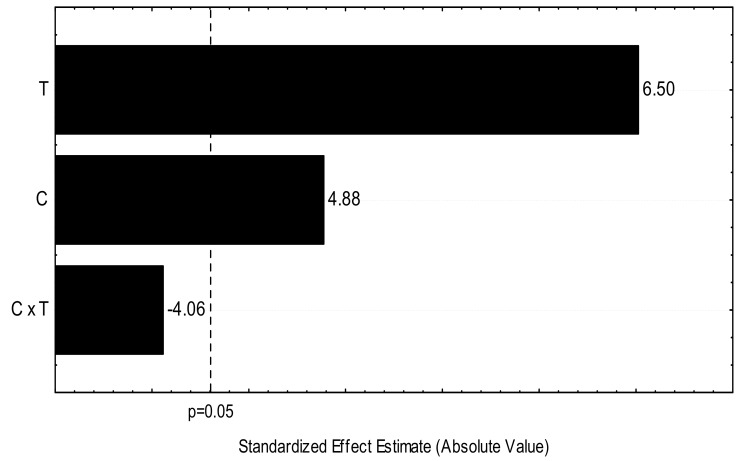
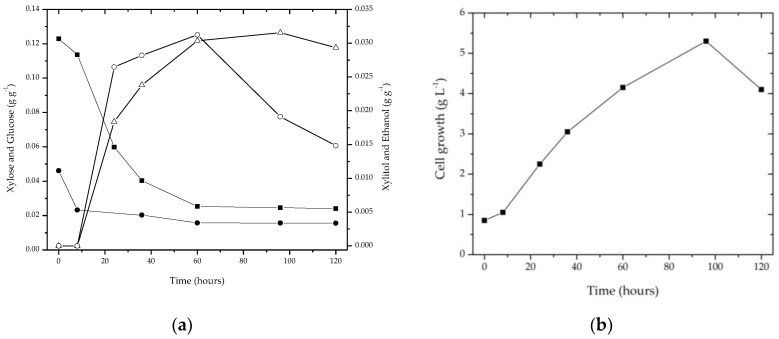
Recent years have seen an increase in the use of lignocellulosic materials in the development of bioproducts. Because sisal fiber is a low cost raw material and is readily available, this work aimed to evaluate its hemicellulose fraction for the simultaneous production of xylitol and ethanol. The sisal fiber presented a higher hemicellulose content than other frequently-employed biomasses, such as sugarcane bagasse. A pretreatment with dilute acid and low temperatures was conducted in order to obtain the hemicellulose fraction. The highest xylose contents (0.132 g·g of sisal fiber) were obtained at 120 °C with 2.5% (/) of sulfuric acid. The yeast CCT 1516 was used in the fermentation. In the sisal fiber hemicellulose hydrolysate, the maximum production of xylitol (0.32 g·g) and of ethanol (0.27 g·g) was achieved in 60 h. Thus, sisal fiber presents as a potential biomass for the production of ethanol and xylitol, creating value with the use of hemicellulosic liquor without detoxification and without the additional steps of alkaline pretreatment.
近年来,木质纤维素材料在生物制品的开发中得到了越来越多的应用。由于剑麻纤维是一种低成本的原料,且易于获得,因此本工作旨在评估其半纤维素部分,以同时生产木糖醇和乙醇。剑麻纤维的半纤维素含量高于其他常用生物质,如甘蔗渣。采用稀酸和低温预处理来获得半纤维素部分。在 120°C 下,用 2.5%(/)硫酸处理,可获得最高的木糖含量(0.132 g·g 的剑麻纤维)。使用酵母 CCT 1516 进行发酵。在剑麻纤维半纤维素水解物中,在 60 h 内可实现木糖醇(0.32 g·g)和乙醇(0.27 g·g)的最大产量。因此,剑麻纤维是生产乙醇和木糖醇的潜在生物质,利用未经解毒的半纤维素液和无需进行碱性预处理的额外步骤来创造价值。