Department of Microbiology and Immunology, Chicago Medical School, Rosalind Franklin University of Medicine and Science, North Chicago, IL, USA.
Department of Respiratory Virology, Vallabhbhai Patel Chest Institute, University of Delhi, Delhi, India.
Arch Virol. 2018 Apr;163(4):831-844. doi: 10.1007/s00705-018-3708-y. Epub 2018 Jan 10.
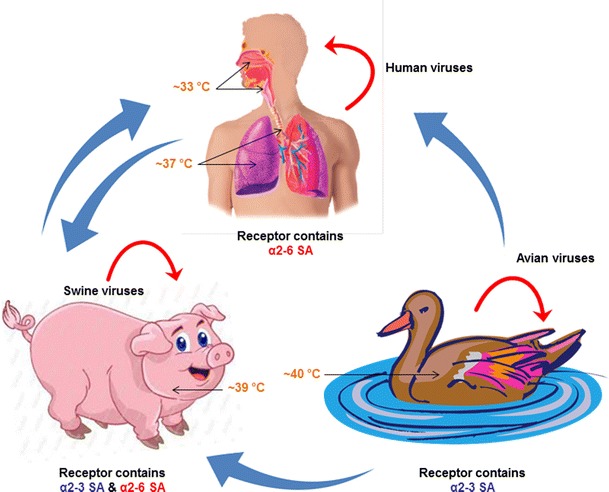
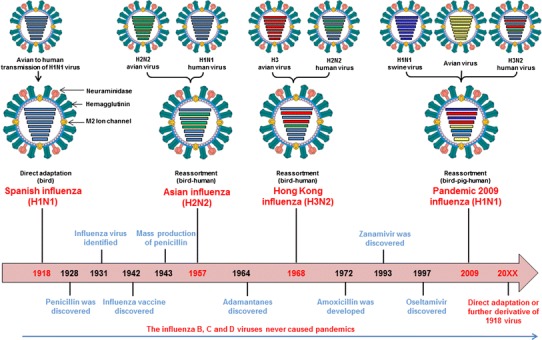
Influenza A viruses (IAVs) are zoonotic pathogens that cause yearly outbreaks with high rates of morbidity and fatality. The virus continuously acquires point mutations while circulating in several hosts, ranging from aquatic birds to mammals, including humans. The wide range of hosts provides influenza A viruses greater chances of genetic re-assortment, leading to the emergence of zoonotic strains and occasional pandemics that have a severe impact on human life. Four major influenza pandemics have been reported to date, and health authorities worldwide have shown tremendous progress in efforts to control epidemics and pandemics. Here, we primarily discuss the pathogenesis of influenza virus type A, its epidemiology, pandemic potential, current status of antiviral drugs and vaccines, and ways to effectively manage the disease during a crisis.
甲型流感病毒(IAV)是一种人畜共患病病原体,可导致高发病率和死亡率的年度暴发。该病毒在包括人类在内的多种宿主中不断获得点突变,在从水生鸟类到哺乳动物的各种宿主中循环。宿主的广泛范围为甲型流感病毒提供了更大的遗传重配机会,导致了人畜共患病株的出现和偶尔的大流行,对人类生活造成了严重影响。迄今为止,已经报告了四起大流行,全世界的卫生当局在控制传染病和大流行方面取得了巨大进展。在这里,我们主要讨论甲型流感病毒的发病机制、流行病学、大流行潜力、当前抗病毒药物和疫苗的状况以及在危机期间有效管理疾病的方法。