School of Biomedical Sciences, Faculty of Medicine, The Chinese University of Hong Kong, Shatin, N.T., Hong Kong SAR, China.
Department of Ophthalmology and Visual Sciences, Faculty of Medicine, The Chinese University of Hong Kong, Kowloon, Hong Kong SAR, China.
Sci Rep. 2018 Jan 11;8(1):429. doi: 10.1038/s41598-017-18888-5.
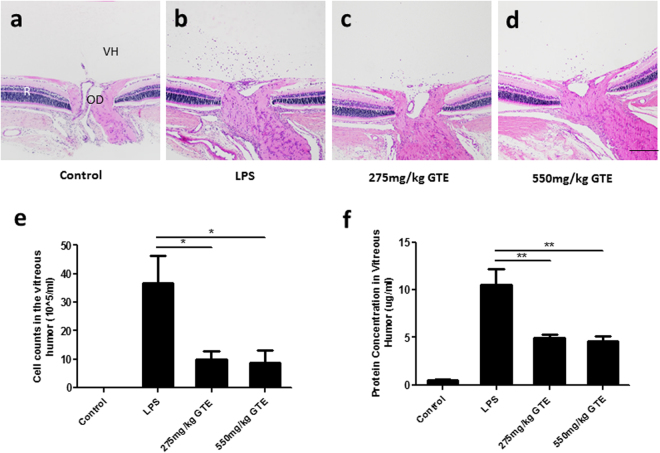
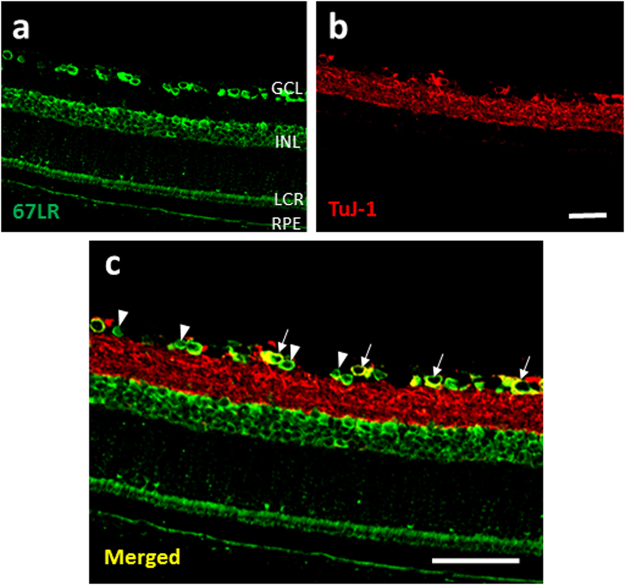
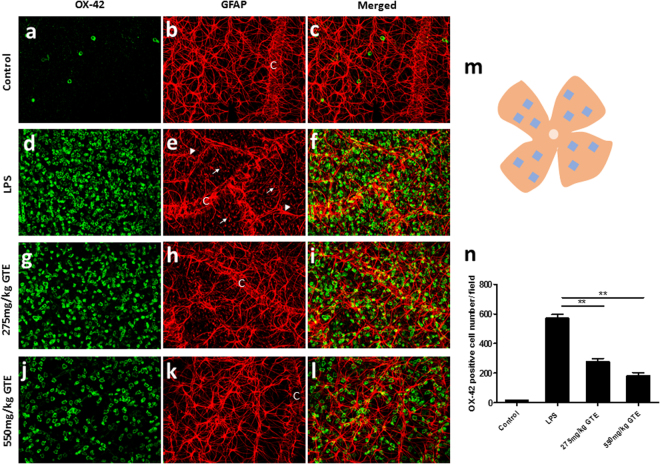
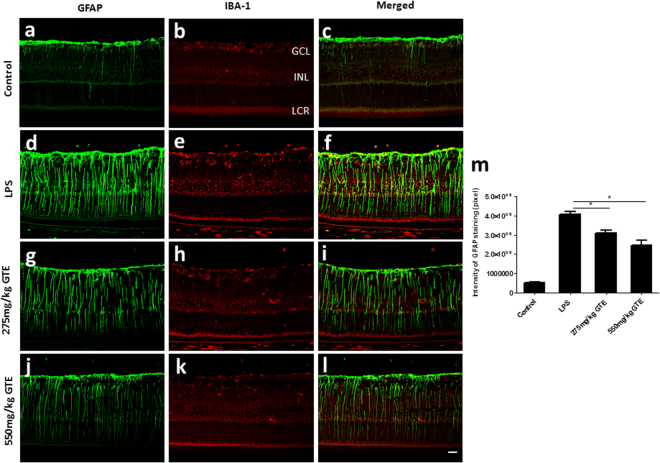
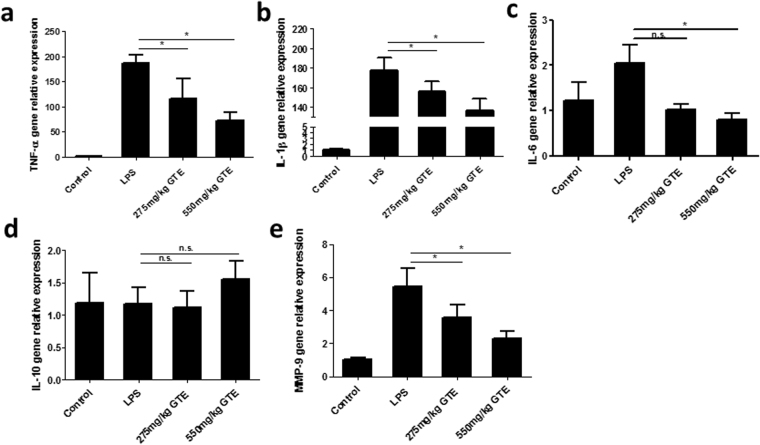
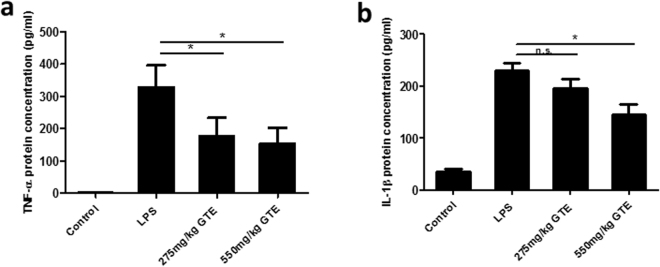
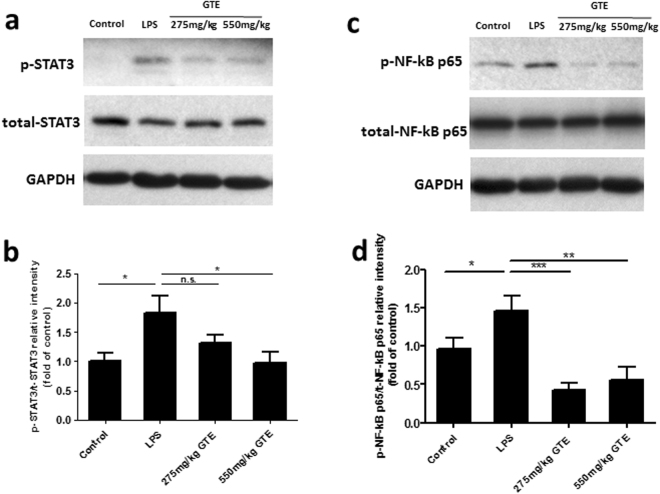
Inflammation is in a wide spectrum of retinal diseases, causing irreversible blindness and visual impairment. We have previously demonstrated that Green Tea Extract (GTE) is a potent anti-inflammatory agent for anterior uveitis. Here we investigated the anti-inflammatory effect of GTE on lipopolysaccharides (LPS)-induced retinal inflammation in rats and explored the underlying mechanism. Adult rats were injected with LPS and GTE was administered intra-gastrically at 2, 8, 26 and 32 hours post-injection. Staining of whole-mount retina showed that the number of activated microglia cells was significantly increased at 48 hours post-injection, which was suppressed after GTE treatment in a dose-dependent manner. Activation of astrocytes and Müller glia in the retina was also suppressed after GTE treatment. Meanwhile, GTE reduced the expression of pro-inflammatory cytokines including IL-1β, TNF-α and IL-6 in retina and vitreous humor. These anti-inflammatory effects were associated with a reduced phosphorylation of STAT3 and NF-κB in the retina. Furthermore, the surface receptor of EGCG, 67LR, was localized on the neurons and glia in the retina. These findings demonstrate that GTE is an effective agent in suppressing LPS-induced retinal inflammation, probably through its potent anti-oxidative property and a receptor-mediated action on transcription factors that regulate production of pro-inflammatory cytokines.
炎症存在于广泛的视网膜疾病谱中,导致不可逆的失明和视力损害。我们之前已经证明绿茶提取物(GTE)是一种有效的前葡萄膜炎抗炎剂。在这里,我们研究了 GTE 对 LPS 诱导的大鼠视网膜炎症的抗炎作用,并探讨了其潜在机制。成年大鼠注射 LPS,GTE 于注射后 2、8、26 和 32 小时经胃内给药。全视网膜铺片染色显示,注射后 48 小时活化的小胶质细胞数量明显增加,GTE 以剂量依赖的方式抑制其活化。GTE 处理后视网膜中星形胶质细胞和 Müller 胶质细胞的激活也受到抑制。同时,GTE 降低了视网膜和玻璃体液中促炎细胞因子(包括 IL-1β、TNF-α 和 IL-6)的表达。这些抗炎作用与视网膜中 STAT3 和 NF-κB 的磷酸化减少有关。此外,EGCG 的表面受体 67LR 定位于视网膜中的神经元和神经胶质细胞上。这些发现表明 GTE 是一种有效的抑制 LPS 诱导的视网膜炎症的药物,可能通过其强大的抗氧化特性和对调节促炎细胞因子产生的转录因子的受体介导作用。