Department of Orthopaedic Surgery, Northwestern University Feinberg School of Medicine, Chicago, IL 60611, USA.
Simpson Querrey Institute for BioNanotechnology, Northwestern University, Chicago, IL 60611, USA.
Int J Mol Sci. 2018 Jan 11;19(1):225. doi: 10.3390/ijms19010225.
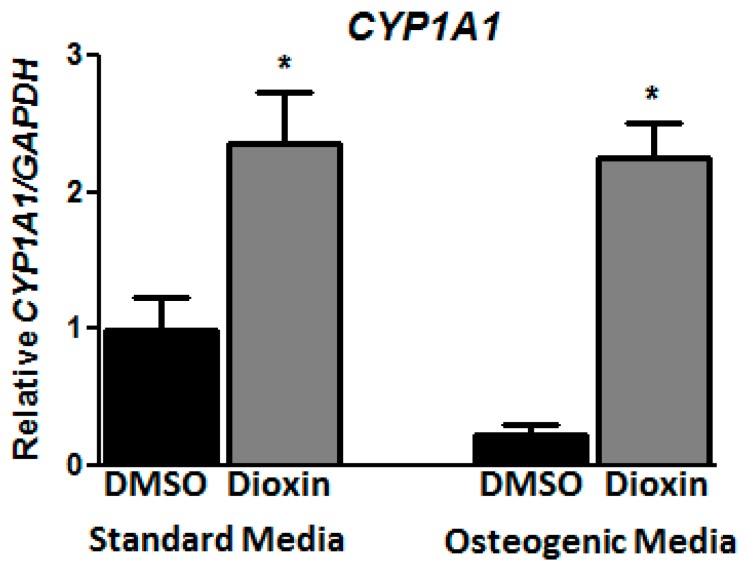
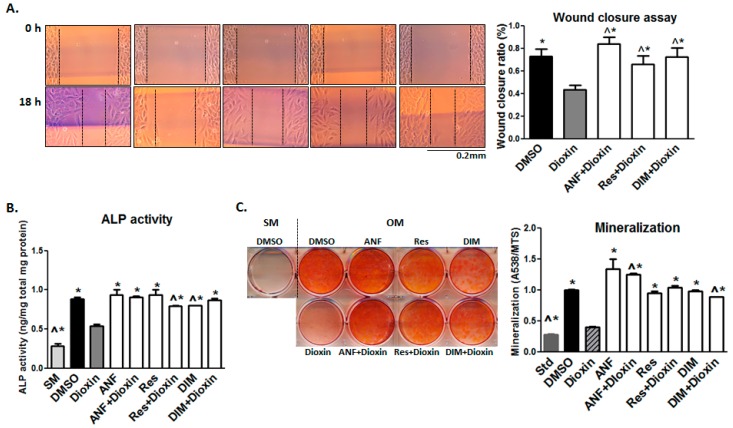
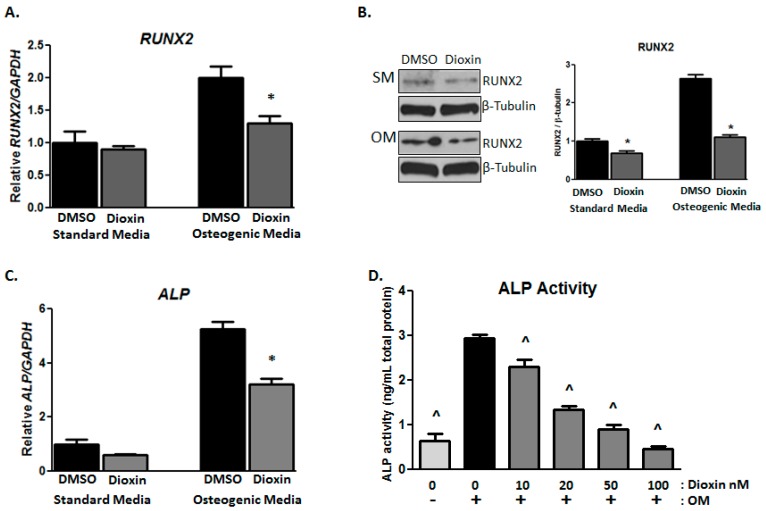
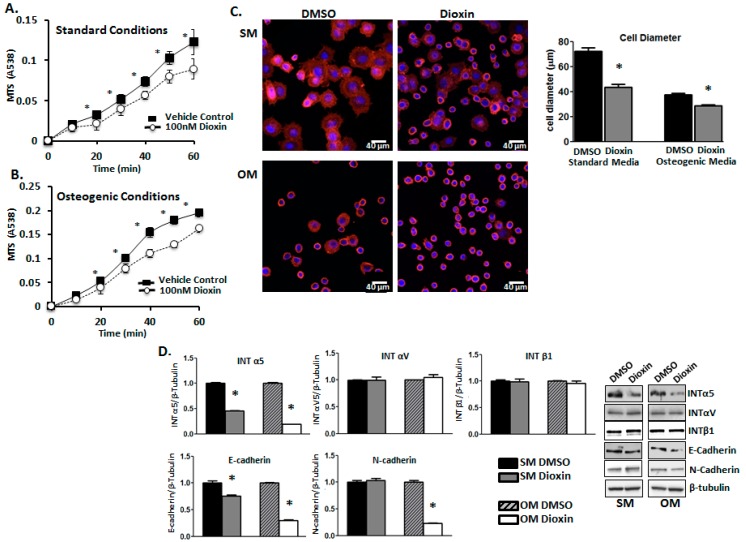
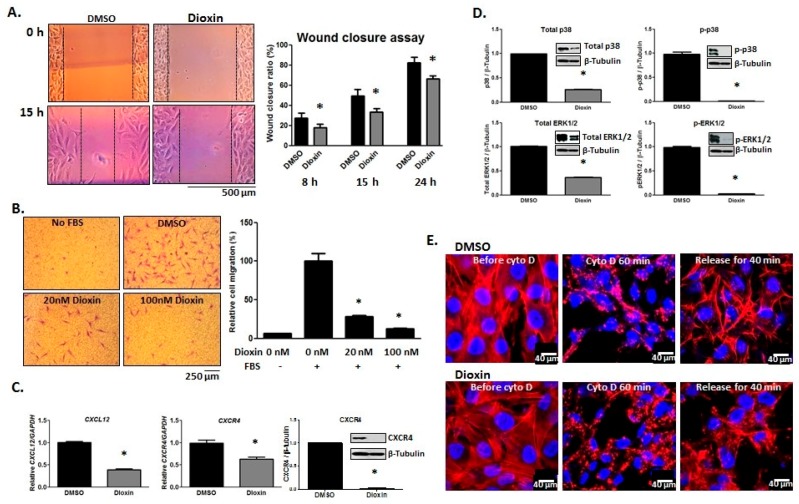
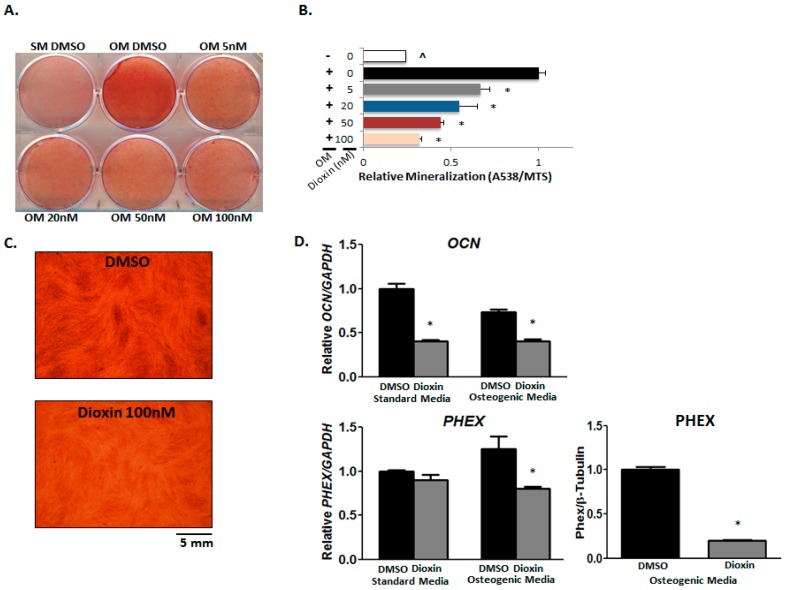
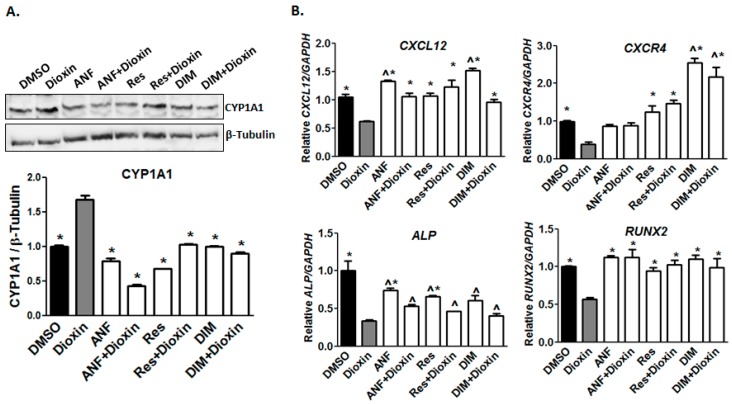
The inhibition of bone healing in humans is a well-established effect associated with cigarette smoking, but the underlying mechanisms are still unclear. Recent work using animal cell lines have implicated the aryl hydrocarbon receptor (AhR) as a mediator of the anti-osteogenic effects of cigarette smoke, but the complexity of cigarette smoke mixtures makes understanding the mechanisms of action a major challenge. 2,3,7,8-Tetrachlorodibenzo--dioxin (TCDD, dioxin) is a high-affinity AhR ligand that is frequently used to investigate biological processes impacted by AhR activation. Since there are dozens of AhR ligands present in cigarette smoke, we utilized dioxin as a prototype ligand to activate the receptor and explore its effects on pro-osteogenic biomarkers and other factors critical to osteogenesis using a human osteoblast-like cell line. We also explored the capacity for AhR antagonists to protect against dioxin action in this context. We found dioxin to inhibit osteogenic differentiation, whereas co-treatment with various AhR antagonists protected against dioxin action. Dioxin also negatively impacted cell adhesion with a corresponding reduction in the expression of integrin and cadherin proteins, which are known to be involved in this process. Similarly, the dioxin-mediated inhibition of cell migration correlated with reduced expression of the chemokine receptor and its ligand, , and co-treatment with antagonists restored migratory capacity. Our results suggest that AhR activation may play a role in the bone regenerative response in humans exposed to AhR activators, such as those present in cigarette smoke. Given the similarity of our results using a human cell line to previous work done in murine cells, animal models may yield data relevant to the human setting. In addition, the AhR may represent a potential therapeutic target for orthopedic patients who smoke cigarettes, or those who are exposed to secondhand smoke or other environmental sources of aryl hydrocarbons.
人类骨愈合的抑制是与吸烟有关的已确立的效应,但潜在机制仍不清楚。最近使用动物细胞系的工作表明芳香烃受体(AhR)是香烟烟雾抗成骨作用的介质,但香烟烟雾混合物的复杂性使得理解作用机制成为一个主要挑战。2,3,7,8-四氯二苯并-对-二恶英(TCDD,二恶英)是 AhR 的高亲和力配体,常用于研究受 AhR 激活影响的生物过程。由于香烟烟雾中存在数十种 AhR 配体,我们利用二恶英作为原型配体激活受体,并使用人成骨样细胞系探索其对促成骨生物标志物和其他对成骨至关重要的因素的影响。我们还探索了 AhR 拮抗剂在这种情况下对抗二恶英作用的能力。我们发现二恶英抑制成骨分化,而用各种 AhR 拮抗剂共同处理则可以防止二恶英的作用。二恶英还会对细胞黏附产生负面影响,导致整合素和钙黏蛋白等已知参与该过程的蛋白表达减少。同样,二恶英介导的细胞迁移抑制与趋化因子受体 和其配体 的表达减少相关,而拮抗剂共同处理则恢复了迁移能力。我们的结果表明,AhR 激活可能在接触 AhR 激活剂(如香烟烟雾中存在的激活剂)的人类骨再生反应中发挥作用。鉴于我们使用人细胞系获得的结果与先前在鼠细胞中进行的工作相似,动物模型可能会产生与人类环境相关的数据。此外,AhR 可能代表了吸烟或接触二手烟或其他环境芳香烃来源的骨科患者的潜在治疗靶点。