Ailes Elizabeth C, Summers April D, Tran Emmy L, Gilboa Suzanne M, Arnold Kathryn E, Meaney-Delman Dana, Reefhuis Jennita
MMWR Morb Mortal Wkly Rep. 2018 Jan 12;67(1):18-22. doi: 10.15585/mmwr.mm6701a4.
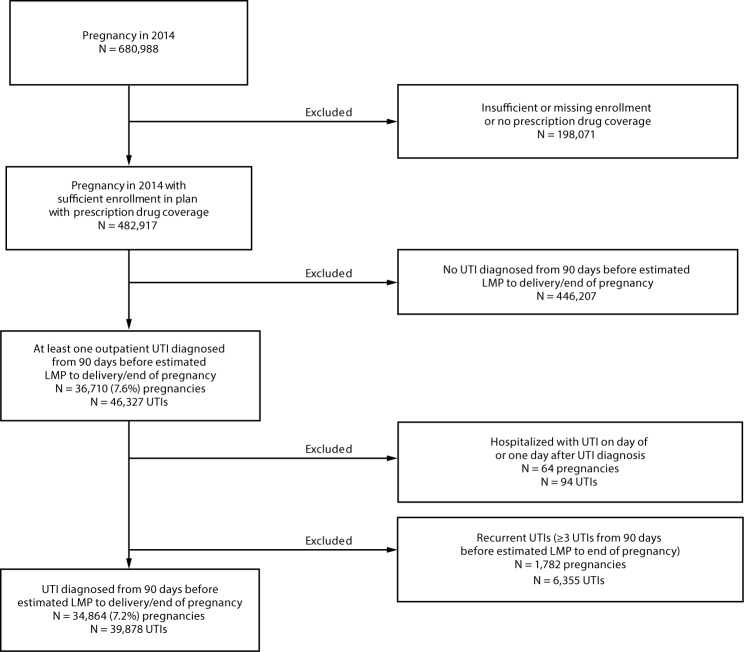
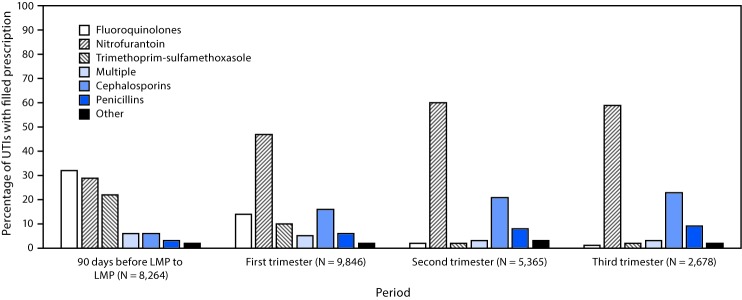
Urinary tract infections (UTIs) occur in about 8% of pregnant women, and untreated UTIs can have serious consequences, including pyelonephritis, preterm labor, low birth weight, and sepsis (1). Pregnant women are typically screened for UTIs during early pregnancy, and those with bacteriuria are treated with antibiotics (1,2). Antibiotic stewardship is critical to improving patient safety and to combating antibiotic resistance. Because of the potential risk for birth defects, including anencephaly, heart defects, and orofacial clefts, associated with use of sulfonamides and nitrofurantoin during pregnancy (3), a 2011 committee opinion from the American College of Obstetricians and Gynecologists (ACOG) recommended that sulfonamides and nitrofurantoin may be prescribed in the first trimester of pregnancy only when other antimicrobial therapies are deemed clinically inappropriate (4). To assess the effects of these recommendations, CDC analyzed the Truven Health MarketScan Commercial Database* to examine antibiotic prescriptions filled by pregnant women with UTIs. Among 482,917 pregnancies in 2014, 7.2% of women had an outpatient UTI diagnosis during the 90 days before the date of last menstrual period (LMP) or during pregnancy. Among pregnant women with UTIs, the most frequently prescribed antibiotics during the first trimester were nitrofurantoin, ciprofloxacin, cephalexin, and trimethoprim-sulfamethoxazole. Given the potential risks associated with use of some of these antibiotics in early pregnancy and the potential for unrecognized pregnancy, women's health care providers should be familiar with the ACOG recommendations and consider the possibility of early pregnancy when treating women of reproductive age.
尿路感染(UTIs)在约8%的孕妇中发生,未经治疗的尿路感染可能会产生严重后果,包括肾盂肾炎、早产、低出生体重和败血症(1)。孕妇通常在孕早期接受尿路感染筛查,菌尿症患者会接受抗生素治疗(1,2)。抗生素管理对于提高患者安全性和对抗抗生素耐药性至关重要。由于孕期使用磺胺类药物和呋喃妥因存在与出生缺陷相关的潜在风险,包括无脑儿、心脏缺陷和口面部裂(3),美国妇产科医师学会(ACOG)2011年的委员会意见建议,仅在其他抗菌治疗被认为临床不适用时,才可在妊娠早期开具磺胺类药物和呋喃妥因的处方(4)。为评估这些建议的效果,美国疾病控制与预防中心(CDC)分析了Truven Health MarketScan商业数据库*,以检查患有尿路感染的孕妇所开具的抗生素处方。在2014年的482,917例妊娠中,7.2%的女性在末次月经日期(LMP)前90天内或孕期有门诊尿路感染诊断。在患有尿路感染的孕妇中,孕早期最常开具的抗生素是呋喃妥因、环丙沙星、头孢氨苄和甲氧苄啶 - 磺胺甲恶唑。鉴于孕早期使用其中一些抗生素存在潜在风险以及存在未被识别的妊娠可能性,女性医疗保健提供者应熟悉ACOG的建议,并在治疗育龄女性时考虑早期妊娠的可能性。