Aiken Linda H, Sloane Douglas M, Ball Jane, Bruyneel Luk, Rafferty Anne Marie, Griffiths Peter
School of Nursing, University of Pennsylvania, Center for Health Outcomes and Policy Research, Philadelphia, Pennsylvania, USA.
Faculty of Health Sciences, University of Southampton, Southampton, UK.
BMJ Open. 2018 Jan 11;8(1):e019189. doi: 10.1136/bmjopen-2017-019189.
To inform healthcare workforce policy decisions by showing how patient perceptions of hospital care are associated with confidence in nurses and doctors, nurse staffing levels and hospital work environments.
Cross-sectional surveys of 66 348 hospital patients and 2963 inpatient nurses.
Patients surveyed were discharged in 2010 from 161 National Health Service (NHS) trusts in England. Inpatient nurses were surveyed in 2010 in a sample of 46 hospitals in 31 of the same 161 trusts.
The 2010 NHS Survey of Inpatients obtained information from 50% of all patients discharged between June and August. The 2010 RN4CAST England Nurse Survey gathered information from inpatient medical and surgical nurses.
Patient ratings of their hospital care, their confidence in nurses and doctors and other indicators of their satisfaction. Missed nursing care was treated as both an outcome measure and explanatory factor.
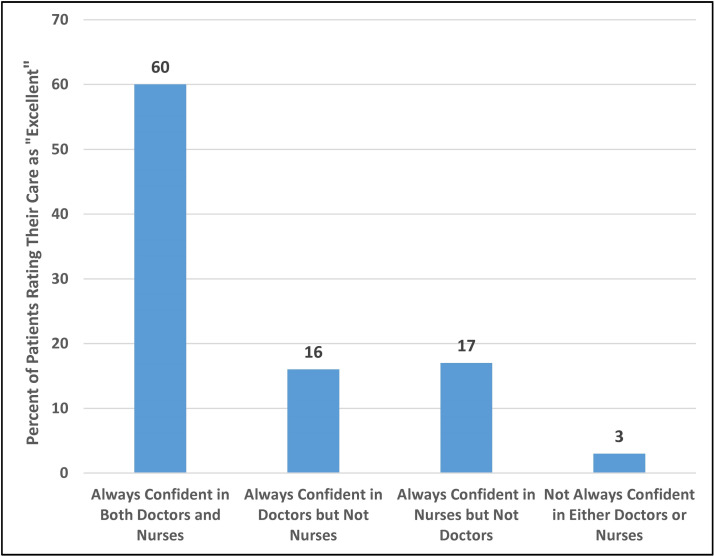
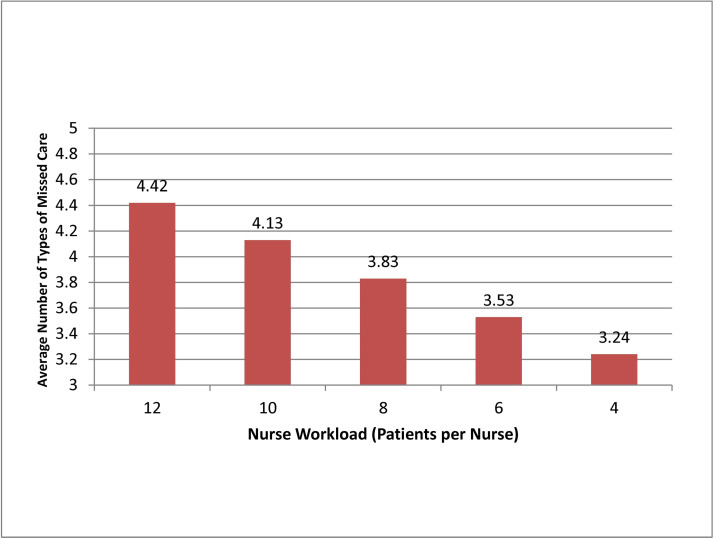
Patients' perceptions of care are significantly eroded by lack of confidence in either nurses or doctors, and by increases in missed nursing care. The average number of types of missed care was negatively related to six of the eight outcomes-ORs ranged from 0.78 (95% CI 0.68 to 0.90) for excellent care ratings to 0.86 (95% CI 0.77 to 0.95) for medications completely explained-positively associated with higher patient-to-nurse ratios (b=0.15, 95% CI 0.10 to 0.19), and negatively associated with better work environments (b=-0.26, 95% CI -0.48 to -0.04).
Patients' perceptions of hospital care are strongly associated with missed nursing care, which in turn is related to poor professional nurse (RN) staffing and poor hospital work environments. Improving RN staffing in NHS hospitals holds promise for enhancing patient satisfaction.
通过展示患者对医院护理的看法如何与对护士和医生的信心、护士人员配备水平及医院工作环境相关联,为医疗劳动力政策决策提供信息。
对66348名医院患者和2963名住院护士进行横断面调查。
接受调查的患者于2010年从英格兰161家国民健康服务(NHS)信托机构出院。2010年,在上述161家信托机构中31家的46所医院抽样调查了住院护士。
2010年NHS住院患者调查从6月至8月间出院的所有患者中抽取50%获取信息。2010年英格兰RN4CAST护士调查收集了内科和外科住院护士的信息。
患者对医院护理的评分、对护士和医生的信心以及其他满意度指标。漏护被视为观察指标和解释因素。
对护士或医生缺乏信心以及漏护增加会显著削弱患者对护理的看法。漏护类型的平均数量与八项结果中的六项呈负相关——优秀护理评分的比值比为0.78(95%可信区间0.68至0.90),药物完全解释的比值比为0.86(95%可信区间0.77至0.95)——与较高的护患比呈正相关(b = 0.15,95%可信区间0.10至0.19),与更好的工作环境呈负相关(b = -0.26,95%可信区间-0.48至-0.04)。
患者对医院护理的看法与漏护密切相关,而漏护又与专业护士(RN)人员配备不足和医院工作环境不佳有关。改善NHS医院的RN人员配备有望提高患者满意度。