Golonka Krystyna, Mojsa-Kaja Justyna, Popiel Katarzyna, Marek Tadeusz, Gawlowska Magda
Institute of Applied Psychology, Jagiellonian University, Krakow, Poland.
Department of Cognitive Neuroscience and Neuroergonomics, Institute of Applied Psychology, Jagiellonian University, Krakow, Poland.
Front Psychol. 2017 Dec 13;8:2155. doi: 10.3389/fpsyg.2017.02155. eCollection 2017.
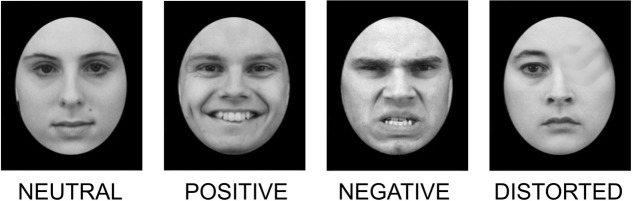
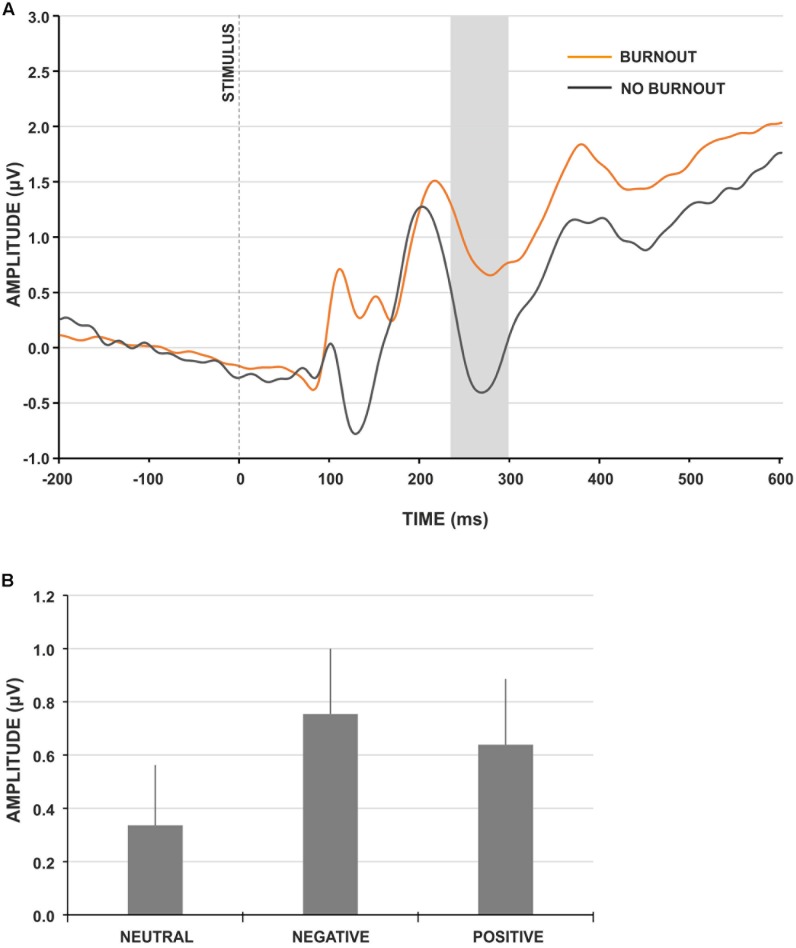
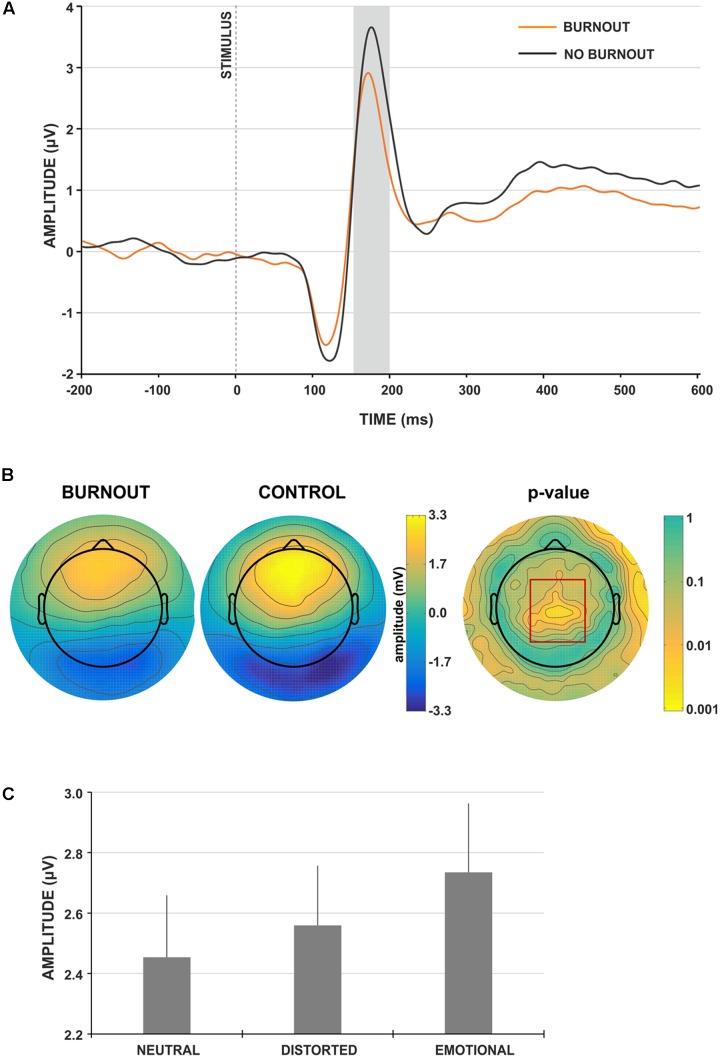
The substantial body of research employing subjective measures indicates that burnout syndrome is associated with cognitive and emotional dysfunctions. The growing amount of neurophysiological and neuroimaging research helps in broadening existing knowledge of the neural mechanisms underlying core burnout components (emotional exhaustion and depersonalization/cynicism) that are inextricably associated with emotional processing. In the presented EEG study, a group of 93 participants (55 women; mean age = 35.8) were selected for the burnout group or the demographically matched control group on the basis of the results of the Maslach Burnout Inventory - General Survey (MBI-GS) and the Areas of Worklife Survey (AWS). Subjects then participated in an EEG experiment using two experimental procedures: a facial recognition task and viewing of passive pictures. The study focuses on analyzing event-related potentials (ERPs): N170, VPP, EPN, and LPP, as indicators of emotional information processing. Our results show that burnout subjects, as compared to the control group, demonstrate significantly weaker response to affect-evoking stimuli, indexed by a decline in VPP amplitude to emotional faces and decreased EPN amplitude in processing emotional scenes. The analysis of N170 and LPP showed no significant between-group difference. The correlation analyses revealed that VPP and EPN, which are ERP components related to emotional processing, are associated with two core burnout symptoms: emotional exhaustion and cynicism. To our knowledge, we are one of the first research groups to use ERPs to demonstrate such a relationship between neurophysiological activity and burnout syndrome in the context of emotional processing. Thus, in conclusion we emphasized that the decreased amplitude of VPP and EPN components in the burnout group may be a neurophysiological manifestation of emotional blunting and may be considered as neurophysiological markers of emotional exhaustion and cynicism. Additionally, we did not observe a decrease in LPP, which may be considered as a marker that significantly differentiates burnout from depression.
大量采用主观测量方法的研究表明,倦怠综合征与认知和情绪功能障碍有关。越来越多的神经生理学和神经影像学研究有助于拓宽我们对倦怠核心成分(情感耗竭和去个性化/玩世不恭)背后神经机制的现有认识,这些成分与情绪处理有着千丝万缕的联系。在本脑电图研究中,根据马氏倦怠量表-一般调查(MBI-GS)和工作生活领域调查(AWS)的结果,从93名参与者(55名女性;平均年龄 = 35.8岁)中选取了倦怠组或人口统计学匹配的对照组。受试者随后使用两种实验程序参与了一项脑电图实验:面部识别任务和观看静态图片。该研究重点分析事件相关电位(ERP):N170、VPP、EPN和LPP,作为情绪信息处理的指标。我们的结果表明,与对照组相比,倦怠组受试者对诱发情感刺激的反应明显较弱,表现为对情感面孔的VPP波幅下降以及处理情感场景时EPN波幅降低。N170和LPP的分析显示组间无显著差异。相关性分析表明,与情绪处理相关的ERP成分VPP和EPN与两种核心倦怠症状:情感耗竭和玩世不恭有关。据我们所知,我们是首批使用ERP在情绪处理背景下证明神经生理活动与倦怠综合征之间存在这种关系的研究团队之一。因此,我们强调,倦怠组中VPP和EPN成分波幅降低可能是情绪迟钝的神经生理表现,可被视为情感耗竭和玩世不恭的神经生理标志物。此外,我们没有观察到LPP下降,这可能被视为将倦怠与抑郁显著区分开来的一个标志物。