Altamirano-Diaz Luis, Rombeek Meghan, De Jesus Stefanie, Welisch Eva, Prapavessis Harry, Dempsey Adam A, Fraser Douglas, Miller Michael R, Norozi Kambiz
Department of Paediatrics, Western University, London, ON, Canada.
Paediatric Cardiopulmonary Research Laboratory, London Health Science Centre, London, ON, Canada.
Front Pediatr. 2017 Dec 18;5:269. doi: 10.3389/fped.2017.00269. eCollection 2017.
Children with overweight/obesity and congenital heart disease (CHD) are at increased cardiovascular risk. A lifestyle intervention may help reduce these risks. We sought to determine the feasibility of a smartphone-based lifestyle intervention to improve cardiovascular health outcomes in children with overweight/obesity and CHD.
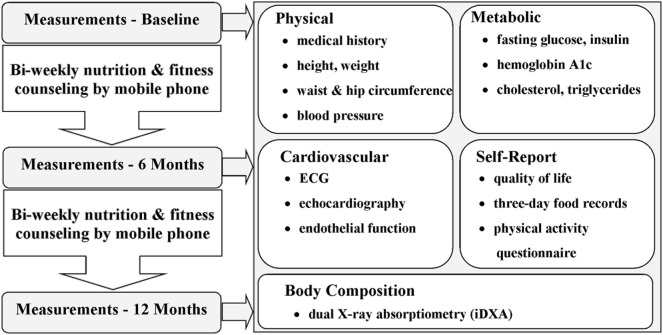
We examined the effect of bi-weekly nutrition and fitness counseling delivered smartphone over 12 months. Thirty-four youth, previously diagnosed with CHD and with overweight or obesity, participated in the intervention. They were divided into two groups depending on whether the heart disease required surgical correction (operated, = 19) or not (non-operated, = 15). Anthropometry, body composition cardiorespiratory exercise capacity, and cardio-metabolic risk factors were assessed at baseline, 6 months, and 12 months.
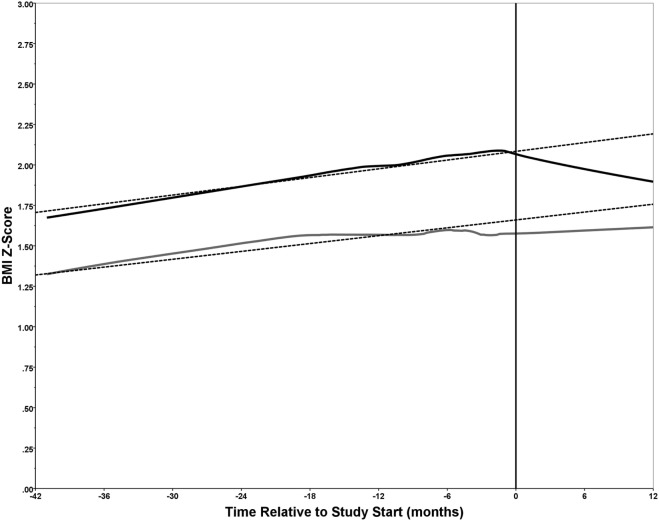
Statistically significant decreases in waist circumference (WC), body mass index -score, WC -score, and waist to height ratio -score were observed at 6 and 12 months in the operated group. A significant linear increase in lean body mass was observed in both groups. The study also had a high retention rate and a low attrition rate.
The observed changes in anthropometry were positive with significant improvement to some cardiovascular and metabolic risk indicators. However, this was only observed in the operated group suggesting that other factors, such as perception of condition and self-efficacy, may influence lifestyle behaviors. The results from this pilot study clearly demonstrate the feasibility to perform a larger controlled study on remote lifestyle intervention in children with congenital heart defects and overweight or obesity.
超重/肥胖且患有先天性心脏病(CHD)的儿童心血管疾病风险增加。生活方式干预可能有助于降低这些风险。我们试图确定基于智能手机的生活方式干预对改善超重/肥胖且患有CHD儿童心血管健康结局的可行性。
我们研究了通过智能手机每两周提供一次营养和健身咨询,为期12个月的效果。34名先前被诊断患有CHD且超重或肥胖的青少年参与了干预。根据心脏病是否需要手术矫正,他们被分为两组(手术组,n = 19;非手术组,n = 15)。在基线、6个月和12个月时评估人体测量学、身体成分、心肺运动能力和心血管代谢风险因素。
手术组在6个月和12个月时,腰围(WC)、体重指数得分、WC得分和腰高比得分均有统计学意义的显著下降。两组的瘦体重均有显著线性增加。该研究还具有高保留率和低损耗率。
观察到的人体测量学变化是积极的,一些心血管和代谢风险指标有显著改善。然而,这仅在手术组中观察到,表明其他因素,如对病情的认知和自我效能感,可能会影响生活方式行为。这项初步研究的结果清楚地证明了对患有先天性心脏病和超重或肥胖的儿童进行更大规模远程生活方式干预对照研究的可行性。