Department of Pharmacology and Center for Biomedical Neuroscience, University of Texas Health Science Center at San Antonio, Texas.
Int J Neuropsychopharmacol. 2018 Apr 1;21(4):393-403. doi: 10.1093/ijnp/pyy003.
Epidemiological studies recognize cannabis intake as a risk factor for schizophrenia, yet the majority of adolescents who use marijuana do not develop psychosis. Similarly, the abuse of synthetic cannabinoids poses a risk for psychosis. For these reasons, it is imperative to understand the effects of adolescent cannabinoid exposure in susceptible individuals.
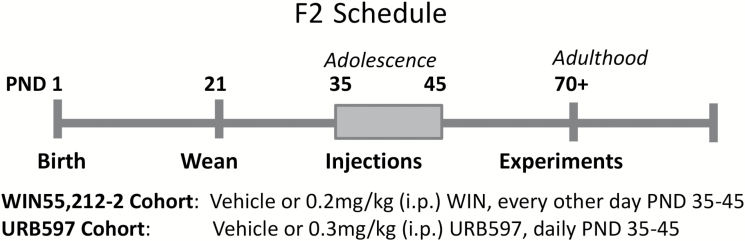
We recently developed a novel rodent model of schizophrenia susceptibility, the F2 methylazoxymethanol acetate rat, where only a proportion (~40%) of rats display a schizophrenia-like phenotype. Using this model, we examined the effects of adolescent synthetic cannabinoid exposure (0.2 mg/kg WIN55, 212-2, i.p.) or adolescent endocannabinoid upregulation (0.3 mg/kg URB597, i.p.) on dopamine neuron activity and amphetamine sensitivity in adulthood.
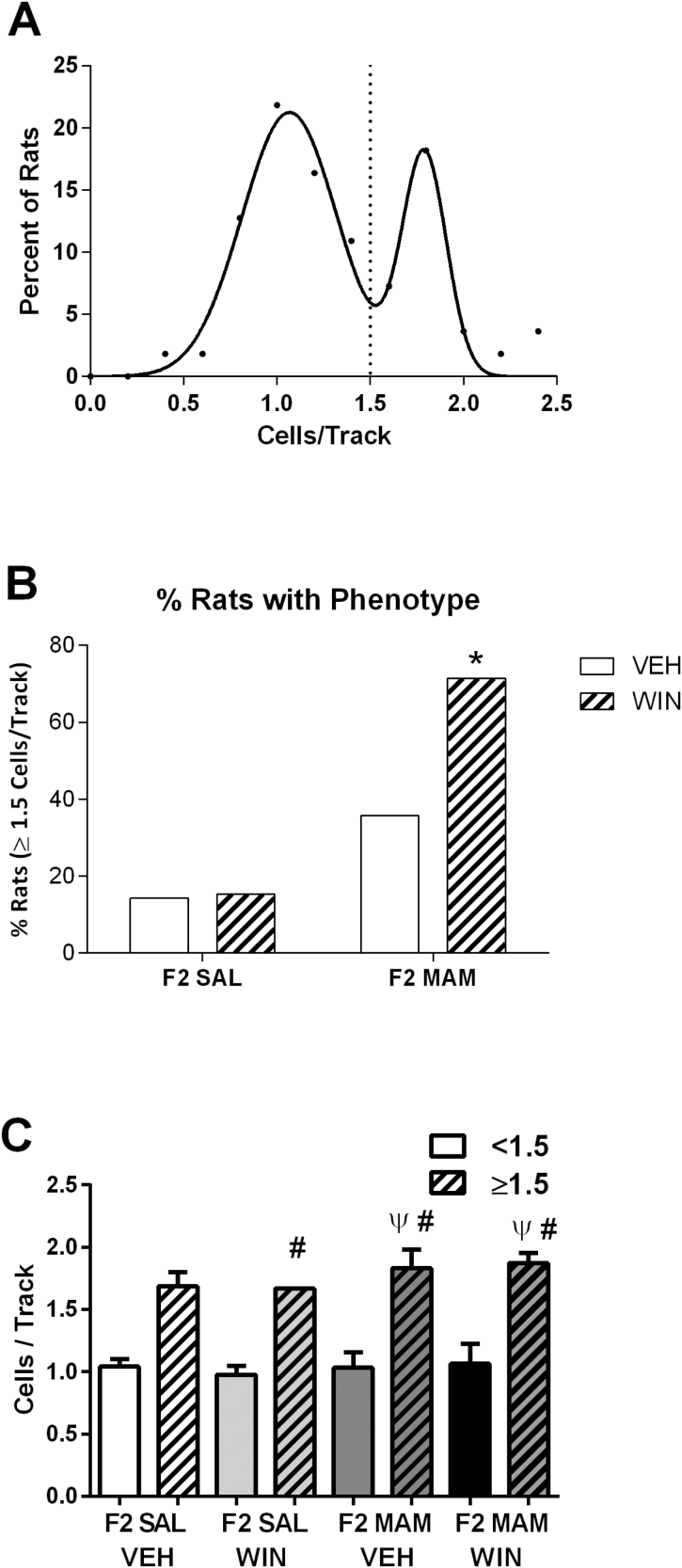
Adolescent synthetic cannabinoid exposure significantly increased the proportion of susceptible rats displaying a schizophrenia-like hyperdopaminergic phenotype after puberty without producing any observable alterations in control rats. Furthermore, this acquired phenotype appears to correspond with alterations in parvalbumin interneuron function within the hippocampus. Endocannabinoid upregulation during adolescence also increased the proportion of susceptible rats developing an increase in dopamine neuron activity; however, it did not alter the behavioral response to amphetamine, further emphasizing differences between exogenous and endogenous cannabinoids.
Taken together, these studies provide experimental evidence that adolescent synthetic cannabinoid exposure may contribute to psychosis in susceptible individuals.
流行病学研究认为大麻摄入是精神分裂症的一个风险因素,但大多数使用大麻的青少年并没有发展为精神病。同样,合成大麻素的滥用也会导致精神病。出于这些原因,了解易患个体青少年时期接触大麻素的影响至关重要。
我们最近开发了一种新的精神分裂症易感性啮齿动物模型,即 F2 甲基苯并环丙胺乙酸酯大鼠,只有一部分(约 40%)大鼠表现出类似精神分裂症的表型。使用这种模型,我们研究了青少年合成大麻素暴露(0.2mg/kgWIN55,212-2,腹腔注射)或青少年内源性大麻素上调(0.3mg/kgURB597,腹腔注射)对成年后多巴胺神经元活性和安非他命敏感性的影响。
青少年合成大麻素暴露显著增加了青春期后表现出类似精神分裂症的多巴胺神经元过度兴奋表型的易感大鼠的比例,而对对照大鼠没有产生任何可观察到的改变。此外,这种获得的表型似乎与海马内钙蛋白酶神经元功能的改变有关。青少年时期内源性大麻素的上调也增加了易感大鼠多巴胺神经元活性增加的比例;然而,它并没有改变对安非他命的行为反应,进一步强调了外源性和内源性大麻素之间的差异。
总之,这些研究提供了实验证据,表明青少年合成大麻素暴露可能导致易感个体的精神病。