Department of Biomedical Informatics, Cincinnati Children's Hospital Medical Center, Cincinnati, OH, USA.
Department of Pediatrics, College of Medicine, University of Cincinnati, Cincinnati, OH, USA.
J Am Med Inform Assoc. 2018 May 1;25(5):555-563. doi: 10.1093/jamia/ocx156.
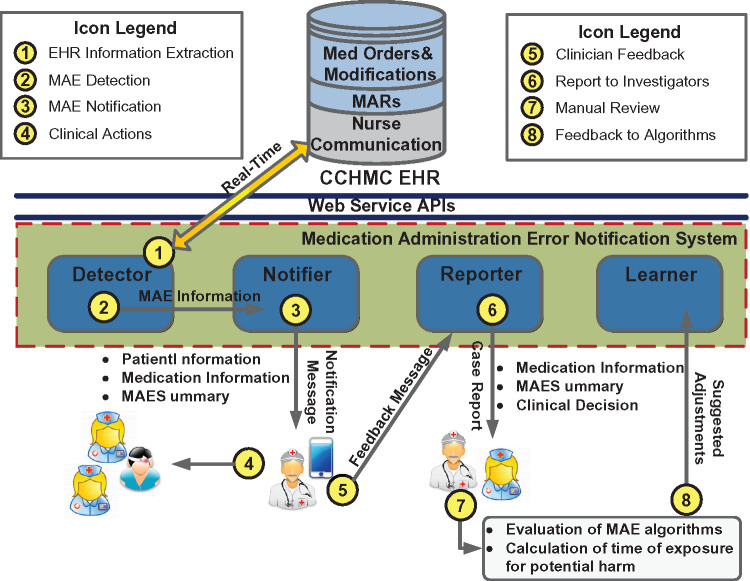
Timely identification of medication administration errors (MAEs) promises great benefits for mitigating medication errors and associated harm. Despite previous efforts utilizing computerized methods to monitor medication errors, sustaining effective and accurate detection of MAEs remains challenging. In this study, we developed a real-time MAE detection system and evaluated its performance prior to system integration into institutional workflows.
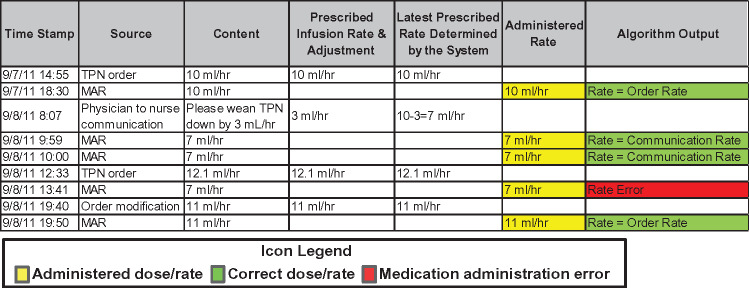
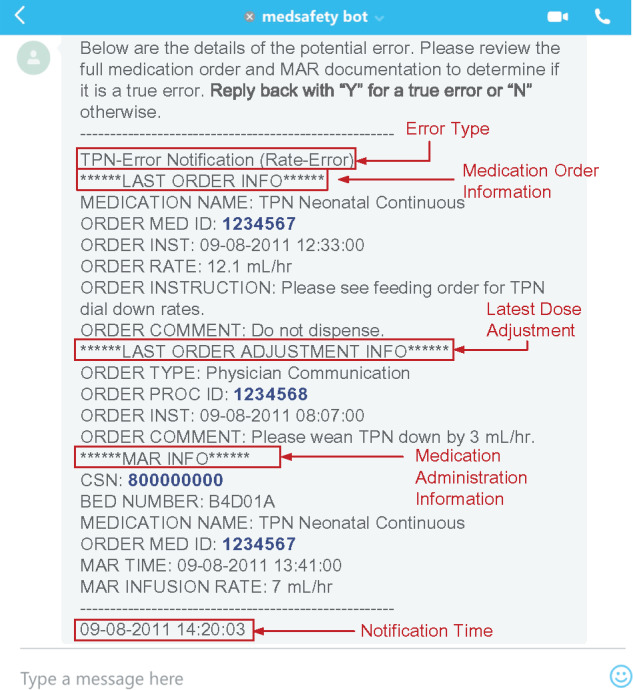
Our prospective observational study included automated MAE detection of 10 high-risk medications and fluids for patients admitted to the neonatal intensive care unit at Cincinnati Children's Hospital Medical Center during a 4-month period. The automated system extracted real-time medication use information from the institutional electronic health records and identified MAEs using logic-based rules and natural language processing techniques. The MAE summary was delivered via a real-time messaging platform to promote reduction of patient exposure to potential harm. System performance was validated using a physician-generated gold standard of MAE events, and results were compared with those of current practice (incident reporting and trigger tools).
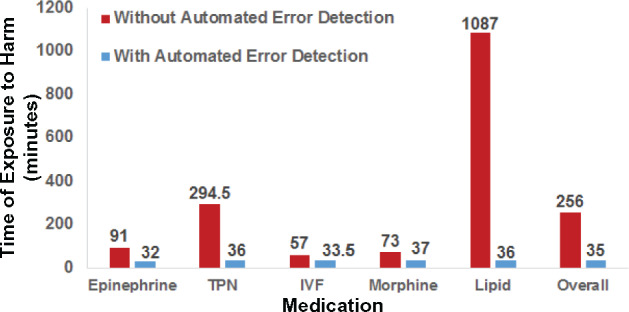
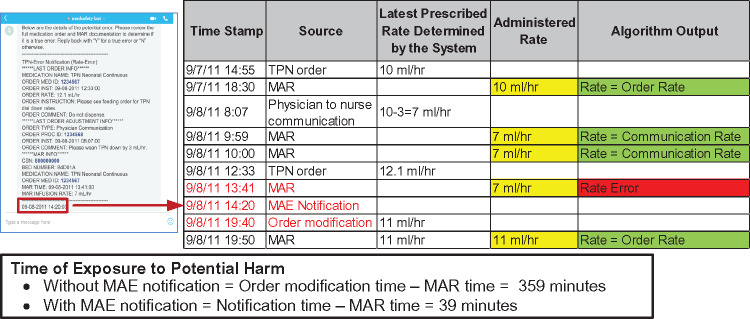
Physicians identified 116 MAEs from 10 104 medication administrations during the study period. Compared to current practice, the sensitivity with automated MAE detection was improved significantly from 4.3% to 85.3% (P = .009), with a positive predictive value of 78.0%. Furthermore, the system showed potential to reduce patient exposure to harm, from 256 min to 35 min (P < .001).
The automated system demonstrated improved capacity for identifying MAEs while guarding against alert fatigue. It also showed promise for reducing patient exposure to potential harm following MAE events.
及时识别用药错误(MAE)对于减轻用药错误和相关危害有很大的好处。尽管之前已经利用计算机化方法来监测用药错误,但要持续有效地准确检测 MAE 仍然具有挑战性。在这项研究中,我们开发了一个实时 MAE 检测系统,并在将其整合到机构工作流程之前评估了其性能。
我们的前瞻性观察性研究包括对辛辛那提儿童医院医疗中心新生儿重症监护病房的 10 种高危药物和液体进行自动 MAE 检测,时间为 4 个月。自动化系统从机构电子健康记录中提取实时用药信息,并使用基于逻辑的规则和自然语言处理技术识别 MAE。MAE 摘要通过实时消息传递平台提供,以促进减少患者暴露于潜在伤害的风险。使用医生生成的 MAE 事件黄金标准验证系统性能,并将结果与当前实践(事件报告和触发工具)进行比较。
在研究期间,医生从 10104 次用药中确定了 116 次 MAE。与当前实践相比,自动 MAE 检测的灵敏度从 4.3%显著提高到 85.3%(P=0.009),阳性预测值为 78.0%。此外,该系统还有可能减少患者暴露于伤害的风险,从 256 分钟减少到 35 分钟(P<0.001)。
该自动化系统在防止警报疲劳的同时,显示出更好的识别 MAE 的能力。它还有望减少 MAE 事件后患者暴露于潜在伤害的风险。