Moyen N, Ahmed G, Gupta S, Tenzin T, Khan R, Khan T, Debnath N, Yamage M, Pfeiffer D U, Fournie G
Department of Pathobiology and Population Sciences, Royal Veterinary College, University of London, Hatfield, Hertfordshire, AL9 7TA, UK.
Emergency Centre for Transboundary Animal Diseases, Food and Agriculture Organisation of the United Nations, Dhaka, Bangladesh.
BMC Vet Res. 2018 Jan 12;14(1):12. doi: 10.1186/s12917-018-1331-5.
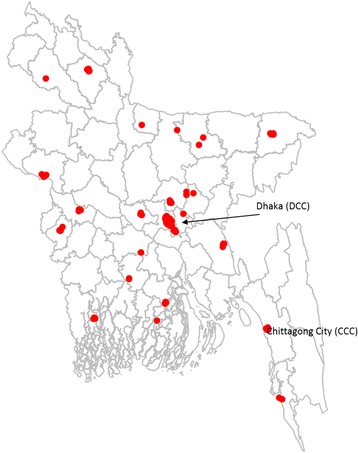
Since its first report in 2007, avian influenza (AI) has been endemic in Bangladesh. While live poultry marketing is widespread throughout the country and known to influence AI dissemination and persistence, trading patterns have not been described. The aim of this study is to assess poultry trading practices and features of the poultry trading networks which could promote AI spread, and their potential implications for disease control and surveillance. Data on poultry trading practices was collected from 849 poultry traders during a cross-sectional survey in 138 live bird markets (LBMs) across 17 different districts of Bangladesh. The quantity and origins of traded poultry were assessed for each poultry type in surveyed LBMs. The network of contacts between farms and LBMs resulting from commercial movements of live poultry was constructed to assess its connectivity and to identify the key premises influencing it.
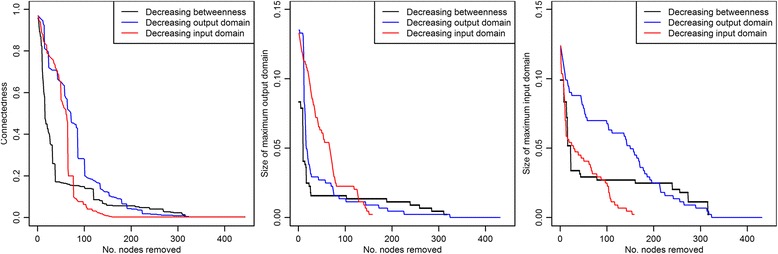
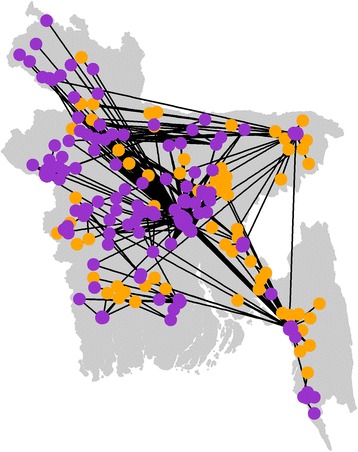
Poultry trading practices varied according to the size of the LBMs and to the type of poultry traded. Industrial broiler chickens, the most commonly traded poultry, were generally sold in LBMs close to their production areas, whereas ducks and backyard chickens were moved over longer distances, and their transport involved several intermediates. The poultry trading network composed of 445 nodes (73.2% were LBMs) was highly connected and disassortative. However, the removal of only 5.6% of the nodes (25 LBMs with the highest betweenness scores), reduced the network's connectedness, and the maximum size of output and input domains by more than 50%.
Poultry types need to be discriminated in order to understand the way in which poultry trading networks are shaped, and the level of risk of disease spread that these networks may promote. Knowledge of the network structure could be used to target control and surveillance interventions to a small number of LBMs.
自2007年首次报告以来,禽流感(AI)在孟加拉国一直呈地方流行状态。虽然活禽交易在该国广泛存在,且已知会影响禽流感的传播和持续存在,但交易模式尚未得到描述。本研究的目的是评估家禽交易行为以及可能促进禽流感传播的家禽交易网络特征,及其对疾病控制和监测的潜在影响。在孟加拉国17个不同地区的138个活禽市场(LBM)进行横断面调查期间,收集了849名家禽交易商的家禽交易行为数据。对调查的活禽市场中每种家禽类型的交易数量和来源进行了评估。构建了由活禽商业流动导致的农场与活禽市场之间的联系网络,以评估其连通性并确定影响该网络的关键场所。
家禽交易行为因活禽市场的规模和交易的家禽类型而异。工业肉鸡是最常交易的家禽,通常在靠近其生产区的活禽市场销售,而鸭子和后院鸡的运输距离更长,且其运输涉及多个中间环节。由445个节点组成的家禽交易网络(73.2%为活禽市场)具有高度连通性且是非同类混合的。然而,仅移除5.6%的节点(25个中介中心性得分最高的活禽市场),就会使网络的连通性以及输出和输入域的最大规模减少50%以上。
需要区分家禽类型,以便了解家禽交易网络的形成方式以及这些网络可能促进的疾病传播风险水平。了解网络结构可用于将控制和监测干预措施针对少数活禽市场。