Erdei Annamaria, Steiber Zita, Molnar Csaba, Berenyi Ervin, Nagy Endre V
Division of Endocrinology, Department of Medicine, Faculty of Medicine, University of Debrecen, Nagyerdei krt 98, Debrecen, 4032, Hungary.
Department of Ophthalmology, Faculty of Medicine, University of Debrecen, Nagyerdei krt 98, Debrecen, 4032, Hungary.
BMC Ophthalmol. 2018 Jan 12;18(1):5. doi: 10.1186/s12886-018-0672-y.
Immunoglobulin G4-related disease (IgG4-rd) is characterized by lymphoplasmacytic infiltration and tissue fibrosis. Orbital manifestations of IgG4-rd may include unilateral or bilateral proptosis, cicatricial extraocular muscle myopathy, orbital inflammation and pain which may mimic ophthalmic Graves' disease.
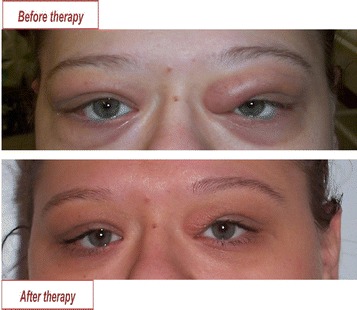
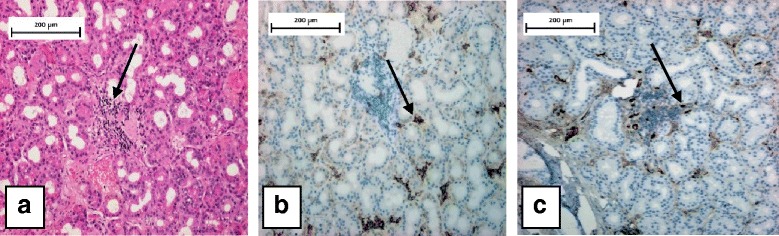
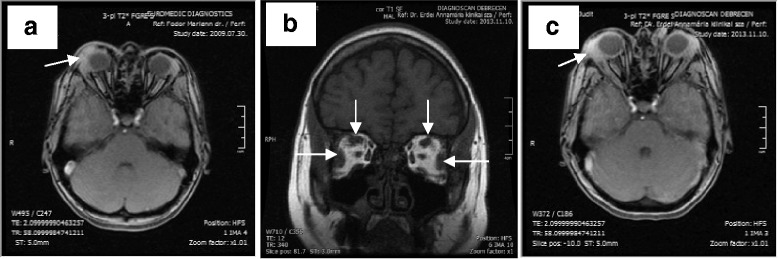
A 25-year-old woman has been referred to the endocrinology clinic, 4 months after delivery, with suspected Graves' orbitopathy. She has had bronchial asthma and recurrent skin rashes of unknown aetiology for the last 10 years and was treated for dacryoadenitis with steroid containing eye drops 5 years ago. During pregnancy she developed eyelid swelling. After delivery, eyelid redness and retrobulbar pain evolved. Proptosis was demonstrated by Hertel's exophthalmometry. Orbital magnetic resonance imaging showed enlarged lateral and superior rectus muscles in both orbits. Thyroid function tests were in the normal range and no thyroid stimulating hormone (TSH) receptor autoantibodies were present. The eye muscle involvement pattern raised suspicion, and the high IgG4 level with positive histology of the lacrimal gland confirmed the diagnosis of immunoglobulin G4-related orbitopathy. Rapid improvement was observed following oral methylprednisolone.
IgG4-related orbitopathy may mimic Graves' orbitopathy. Euthyroid patients with no TSH receptor autoantibodies should be evaluated for immunoglobulin G4-related orbitopathy. Once IgG4-related orbitopathy is proven, other manifestations of IgG4-related disease have to be searched for; lifelong follow-up is warranted.
免疫球蛋白G4相关性疾病(IgG4-rd)的特征为淋巴细胞和浆细胞浸润以及组织纤维化。IgG4-rd的眼眶表现可能包括单侧或双侧眼球突出、瘢痕性眼外肌病、眼眶炎症和疼痛,这些表现可能类似Graves眼病。
一名25岁女性在分娩后4个月因疑似Graves眼眶病转诊至内分泌科门诊。她在过去10年中患有支气管哮喘和病因不明的复发性皮疹,5年前曾用含类固醇的眼药水治疗泪腺炎。怀孕期间她出现眼睑肿胀。分娩后,眼睑发红和球后疼痛逐渐出现。Hertel眼球突出计测量显示有眼球突出。眼眶磁共振成像显示双侧眼眶的外直肌和上直肌增粗。甲状腺功能检查在正常范围内,且不存在促甲状腺激素(TSH)受体自身抗体。眼肌受累模式引起怀疑,泪腺组织学检查IgG4水平升高且呈阳性,确诊为免疫球蛋白G4相关性眼眶病。口服甲泼尼龙后病情迅速改善。
IgG4相关性眼眶病可能类似Graves眼眶病。对于甲状腺功能正常且无TSH受体自身抗体的患者,应评估是否患有免疫球蛋白G4相关性眼眶病。一旦确诊为IgG4相关性眼眶病,必须查找IgG4相关疾病的其他表现;需要进行终身随访。