Breast Cancer Institute, Department of Breast Surgery, Cancer Hospital/Cancer Institute, Shanghai Medical College, Institutes of Biomedical Sciences, Fudan University, #270 Dong An Road, Shanghai, 200032, People's Republic of China.
BMC Cancer. 2018 Jan 12;18(1):74. doi: 10.1186/s12885-017-3930-0.
Emerging evidence suggests molecular and phenotypic association between treatment resistance and epithelial-mesenchymal transition (EMT) in cancer. Compared with the well-defined molecular events of miR-200a in EMT, the role of miR-200a in therapy resistance remains to be elucidated.
Breast cancer cells transfected with mimic or inhibitor for miR-200a was assayed for chemoresistance in vitro. miR-200a expression was assessed by quantitative real-time PCR (qRT-PCR) in breast cancer patients treated with preoperative chemotherapy. Luciferase assays, cell proliferation assay were performed to identify the targets of miR-200a and the mechanism by which it promotes treatment resistance. Survival analysis was used to evaluate the prognosis value of miR-200a.
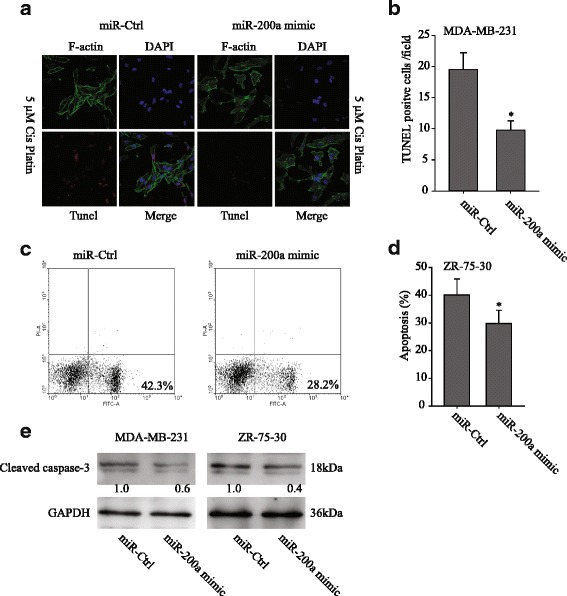
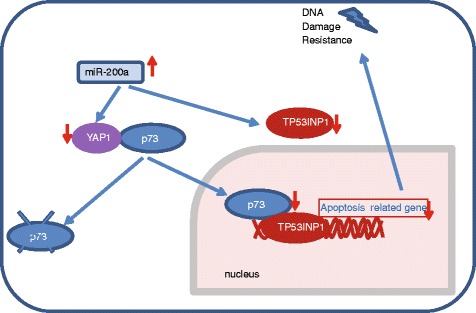
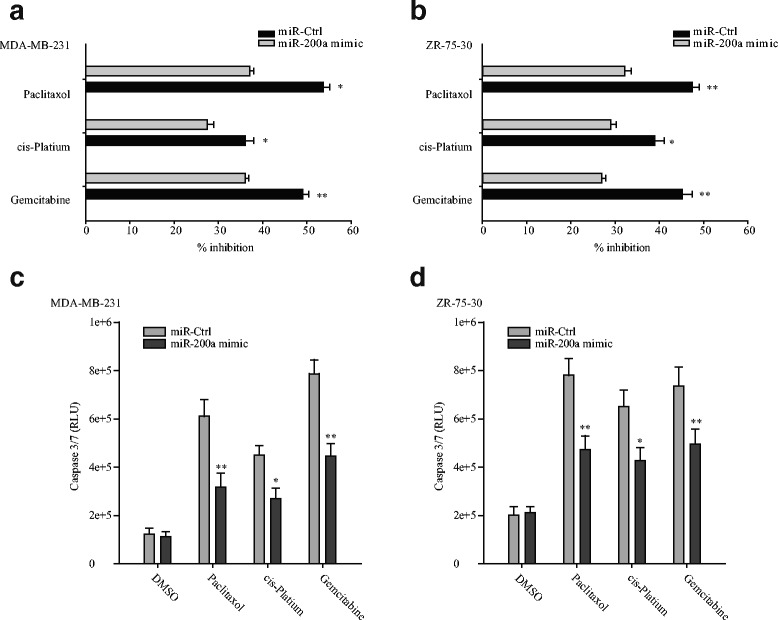
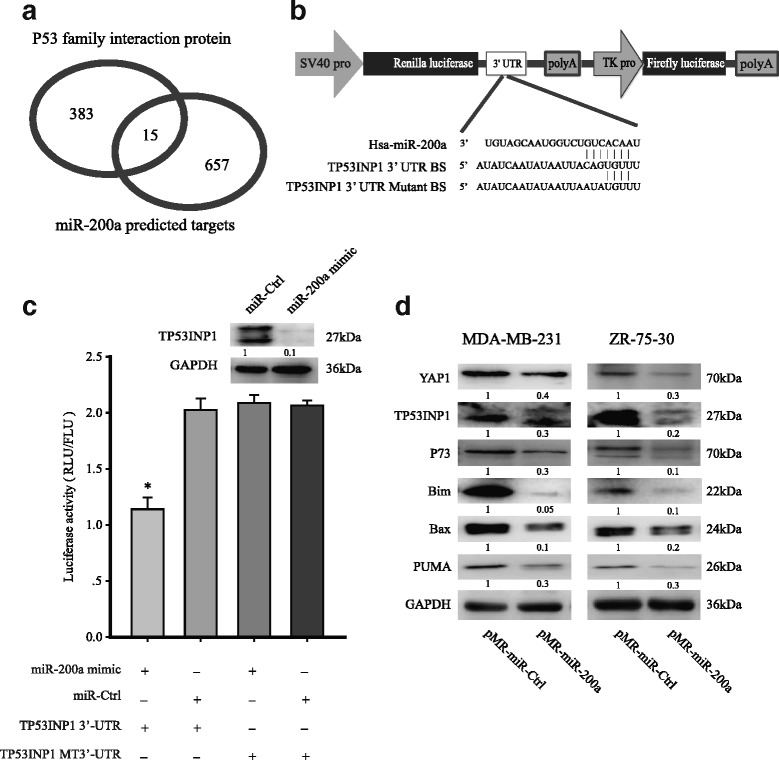
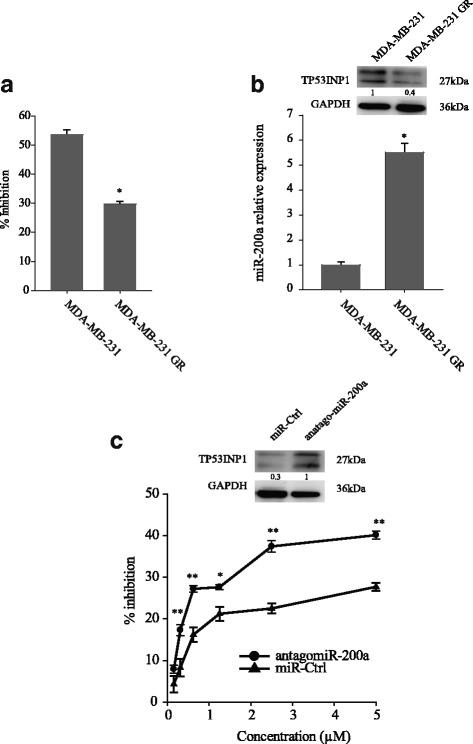
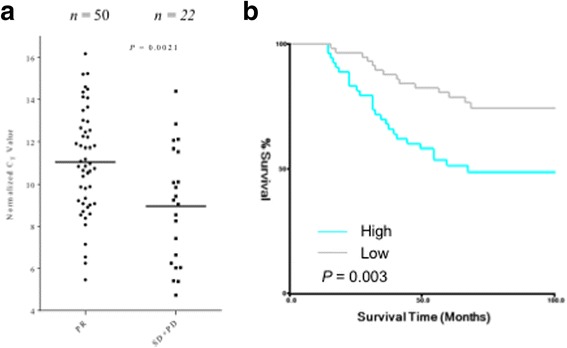
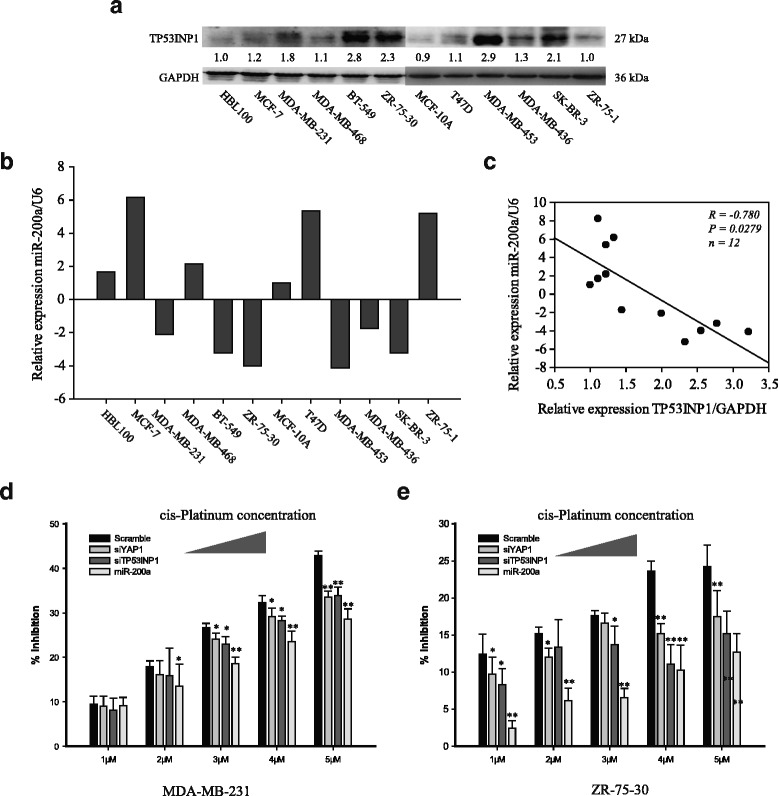
In this study, our results showed ectopic expression of miR-200a promotes chemoresistance in breast cancer cell lines to several chemotherapeutic agents, whereas inhibition of miR-200a enhances gemcitabine chemosensitivity in resistance cancer cells. We found overexpression of miR-200a was closely associated with poor response to preoperative chemotherapy and poor prognosis in breast cancer patients. Furthermore, knockdown of YAP1 and TP53INP1 phenocopied the effects of miR-200a overexpression, and confirmed that TP53INP1 is a novel target of miR-200a. Remarkably, TP53INP1 expression is inversely correlated with miR-200a expression in Breast cancer cell lines. Taken together, these clinical and experimental results demonstrate that miR-200a is a determinant of chemoresistance of breast cancer.
Upregulated miR-200a enhances treatment resistance via antagonizing TP53INP1 and YAP1 in breast cancer.
新出现的证据表明,癌症治疗耐药性与上皮-间充质转化(EMT)之间存在分子和表型关联。与 miR-200a 在 EMT 中的明确的分子事件相比,miR-200a 在治疗耐药性中的作用仍有待阐明。
用 miR-200a 的模拟物或抑制剂转染乳腺癌细胞,在体外检测其化疗耐药性。采用实时定量 PCR(qRT-PCR)检测接受术前化疗的乳腺癌患者中 miR-200a 的表达。进行荧光素酶测定和细胞增殖测定,以鉴定 miR-200a 的靶标及其促进治疗耐药性的机制。采用生存分析评估 miR-200a 的预后价值。
本研究结果表明,miR-200a 的异位表达可促进乳腺癌细胞系对几种化疗药物的耐药性,而抑制 miR-200a 可增强耐药性癌细胞对吉西他滨的化疗敏感性。我们发现 miR-200a 的过表达与乳腺癌患者对术前化疗的反应不良和预后不良密切相关。此外,YAP1 和 TP53INP1 的敲低可模拟 miR-200a 过表达的作用,并证实 TP53INP1 是 miR-200a 的一个新靶点。值得注意的是,在乳腺癌细胞系中,TP53INP1 的表达与 miR-200a 的表达呈负相关。总之,这些临床和实验结果表明,miR-200a 是乳腺癌化疗耐药性的决定因素。
上调的 miR-200a 通过拮抗乳腺癌中的 TP53INP1 和 YAP1 增强治疗耐药性。