Department of Clinical Therapeutics, National and Kapodistrian University of Athens, School of Medicine, Athens, Greece.
Blood Cancer J. 2018 Jan 12;8(1):7. doi: 10.1038/s41408-017-0037-4.
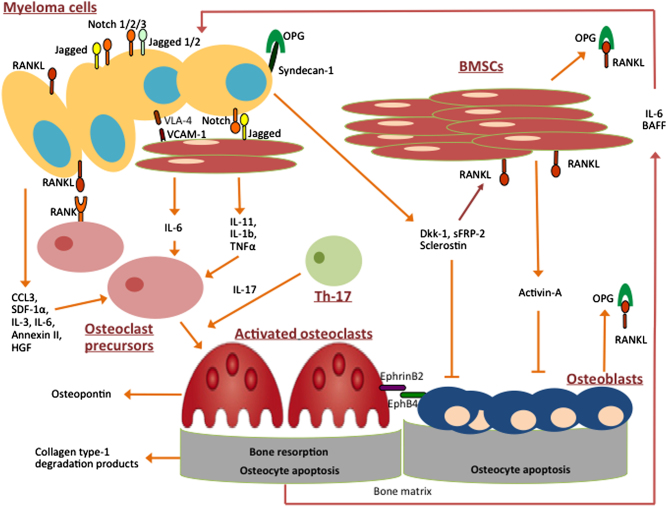
Osteolytic bone disease is the hallmark of multiple myeloma, which deteriorates the quality of life of myeloma patients, and it affects dramatically their morbidity and mortality. The basis of the pathogenesis of myeloma-related bone disease is the uncoupling of the bone-remodeling process. The interaction between myeloma cells and the bone microenvironment ultimately leads to the activation of osteoclasts and suppression of osteoblasts, resulting in bone loss. Several intracellular and intercellular signaling cascades, including RANK/RANKL/OPG, Notch, Wnt, and numerous chemokines and interleukins are implicated in this complex process. During the last years, osteocytes have emerged as key regulators of bone loss in myeloma through direct interactions with the myeloma cells. The myeloma-induced crosstalk among the molecular pathways establishes a positive feedback that sustains myeloma cell survival and continuous bone destruction, even when a plateau phase of the disease has been achieved. Targeted therapies, based on the better knowledge of the biology, constitute a promising approach in the management of myeloma-related bone disease and several novel agents are currently under investigation. Herein, we provide an insight into the underlying pathogenesis of bone disease and discuss possible directions for future studies.
溶骨性骨病是多发性骨髓瘤的标志,它降低了骨髓瘤患者的生活质量,并显著影响他们的发病率和死亡率。骨髓瘤相关骨病发病机制的基础是骨重塑过程的解偶联。骨髓瘤细胞与骨微环境的相互作用最终导致破骨细胞的激活和成骨细胞的抑制,导致骨丢失。几种细胞内和细胞间信号级联反应,包括 RANK/RANKL/OPG、Notch、Wnt 以及许多趋化因子和白细胞介素,都参与了这一复杂过程。在过去的几年中,成骨细胞通过与骨髓瘤细胞的直接相互作用,成为骨髓瘤导致骨丢失的关键调节因子。骨髓瘤诱导的分子途径之间的串扰建立了一个正反馈,维持骨髓瘤细胞的存活和持续的骨破坏,即使在疾病达到平台期时也是如此。基于对生物学的更好了解,靶向治疗构成了骨髓瘤相关骨病管理的一种有前途的方法,目前正在研究几种新型药物。在此,我们深入探讨了骨病的潜在发病机制,并讨论了未来研究的可能方向。