Delgado-Calle J, Anderson J, Cregor M D, Condon K W, Kuhstoss S A, Plotkin L I, Bellido T, Roodman G D
Department of Anatomy and Cell Biology, Indiana University, Indianapolis, IN, USA.
Roudebush Veterans Administration Medical Center, Indianapolis, IN, USA.
Leukemia. 2017 Dec;31(12):2686-2694. doi: 10.1038/leu.2017.152. Epub 2017 May 22.
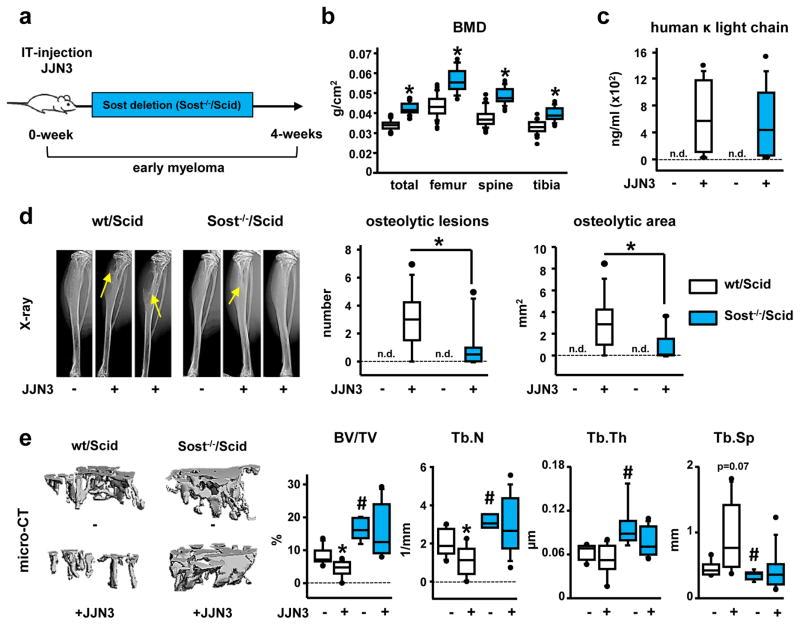
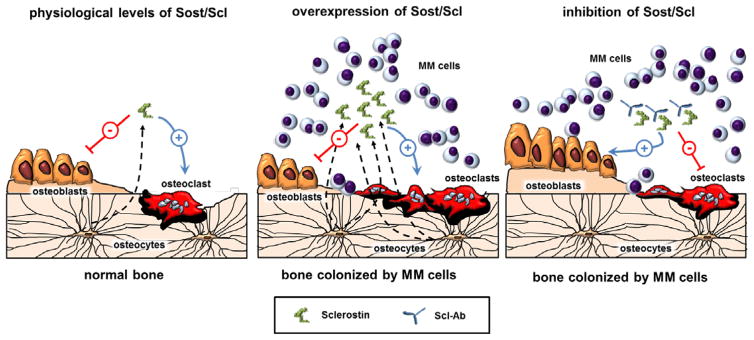
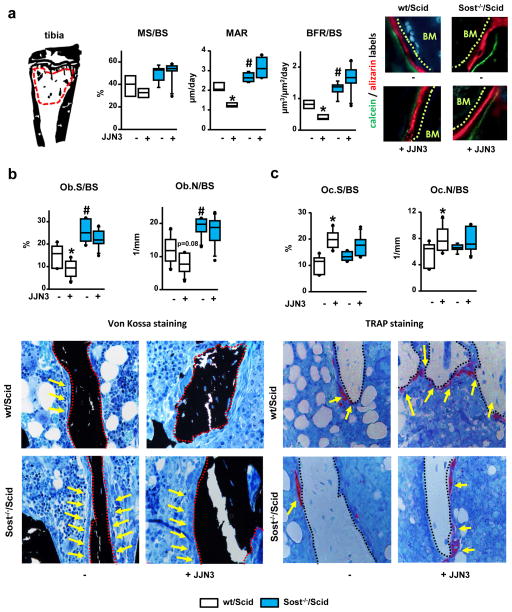
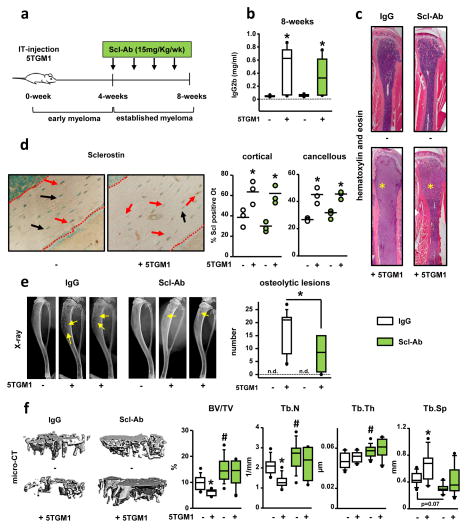
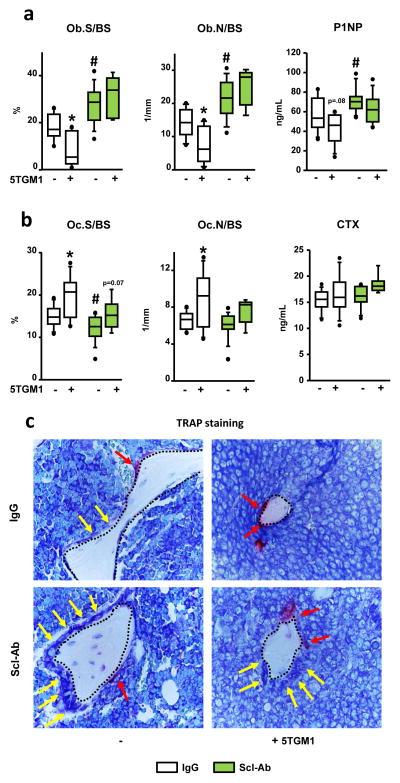
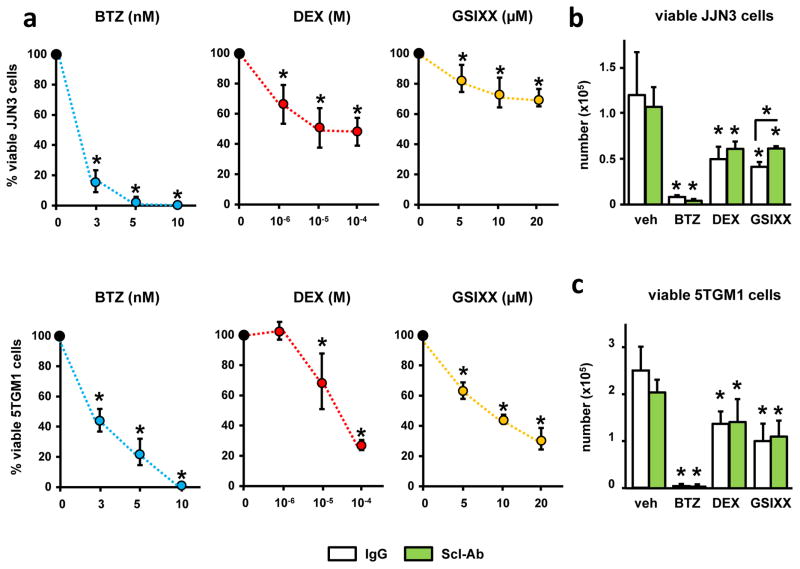
Multiple myeloma (MM) causes lytic bone lesions due to increased bone resorption and concomitant marked suppression of bone formation. Sclerostin (Scl), an osteocyte-derived inhibitor of Wnt/β-catenin signaling, is elevated in MM patient sera and increased in osteocytes in MM-bearing mice. We show here that genetic deletion of Sost, the gene encoding Scl, prevented MM-induced bone disease in an immune-deficient mouse model of early MM, and that administration of anti-Scl antibody (Scl-Ab) increased bone mass and decreases osteolysis in immune-competent mice with established MM. Sost/Scl inhibition increased osteoblast numbers, stimulated new bone formation and decreased osteoclast number in MM-colonized bone. Further, Sost/Scl inhibition did not affect tumor growth in vivo or anti-myeloma drug efficacy in vitro. These results identify the osteocyte as a major contributor to the deleterious effects of MM in bone and osteocyte-derived Scl as a promising target for the treatment of established MM-induced bone disease. Further, Scl did not interfere with efficacy of chemotherapy for MM, suggesting that combined treatment with anti-myeloma drugs and Scl-Ab should effectively control MM growth and bone disease, providing new avenues to effectively control MM and bone disease in patients with active MM.
多发性骨髓瘤(MM)由于骨吸收增加以及随之而来的骨形成显著受抑而导致溶骨性骨病变。骨硬化蛋白(Scl)是一种由骨细胞产生的Wnt/β-连环蛋白信号通路抑制剂,在MM患者血清中升高,并且在荷MM小鼠的骨细胞中增加。我们在此表明,编码Scl的基因Sost的基因缺失可预防早期MM免疫缺陷小鼠模型中MM诱导的骨病,并且在已建立MM的免疫活性小鼠中,给予抗Scl抗体(Scl-Ab)可增加骨量并减少骨溶解。Sost/Scl抑制增加了成骨细胞数量,刺激了新骨形成,并减少了MM定植骨中的破骨细胞数量。此外,Sost/Scl抑制在体内不影响肿瘤生长,在体外不影响抗骨髓瘤药物疗效。这些结果表明骨细胞是MM对骨产生有害作用的主要因素,并且骨细胞衍生的Scl是治疗已建立的MM诱导的骨病的一个有前景的靶点。此外,Scl不干扰MM化疗的疗效,这表明抗骨髓瘤药物与Scl-Ab联合治疗应能有效控制MM生长和骨病,为有效控制活动性MM患者的MM和骨病提供新途径。