The Department of Molecular Microbiology and Immunology, Johns Hopkins Bloomberg School of Public Health.
Bloomberg-Kimmel Institute for Cancer Immunotherapy, Johns Hopkins University School of Medicine, Baltimore, MD.
J Immunother. 2018 May;41(4):181-189. doi: 10.1097/CJI.0000000000000212.
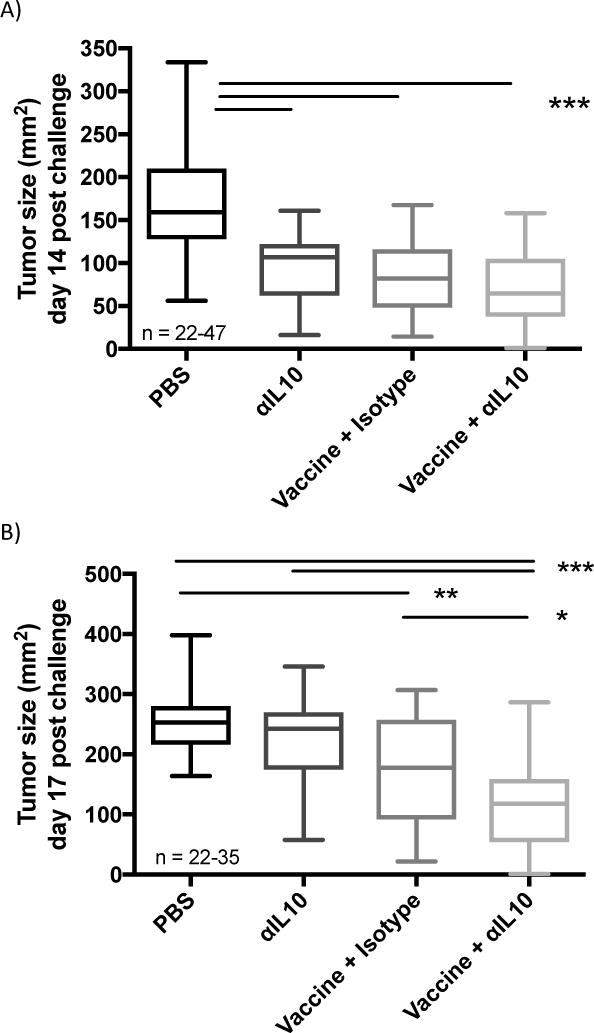
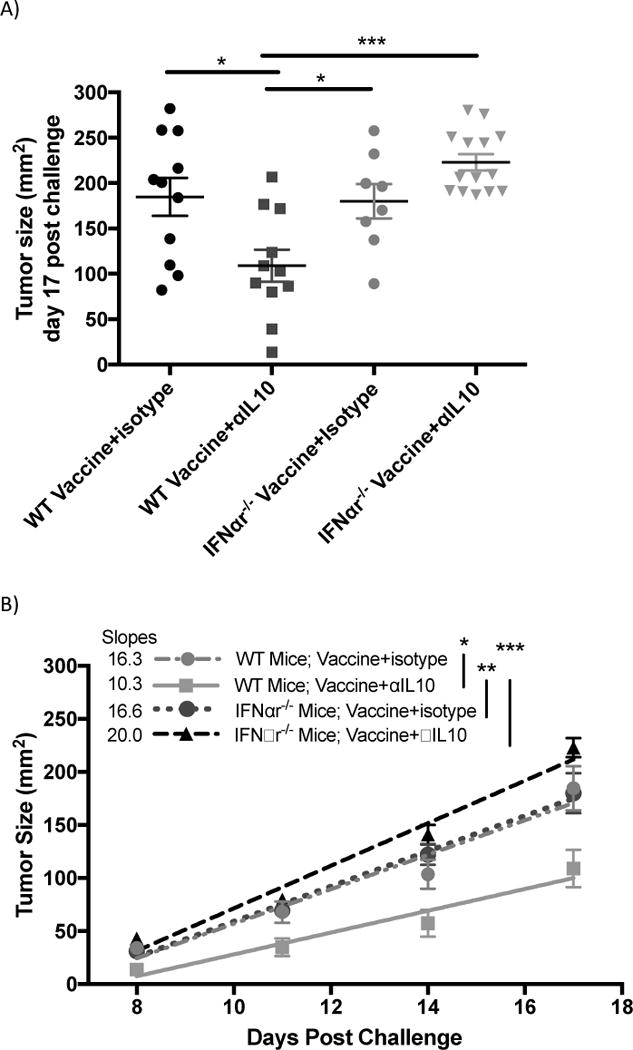
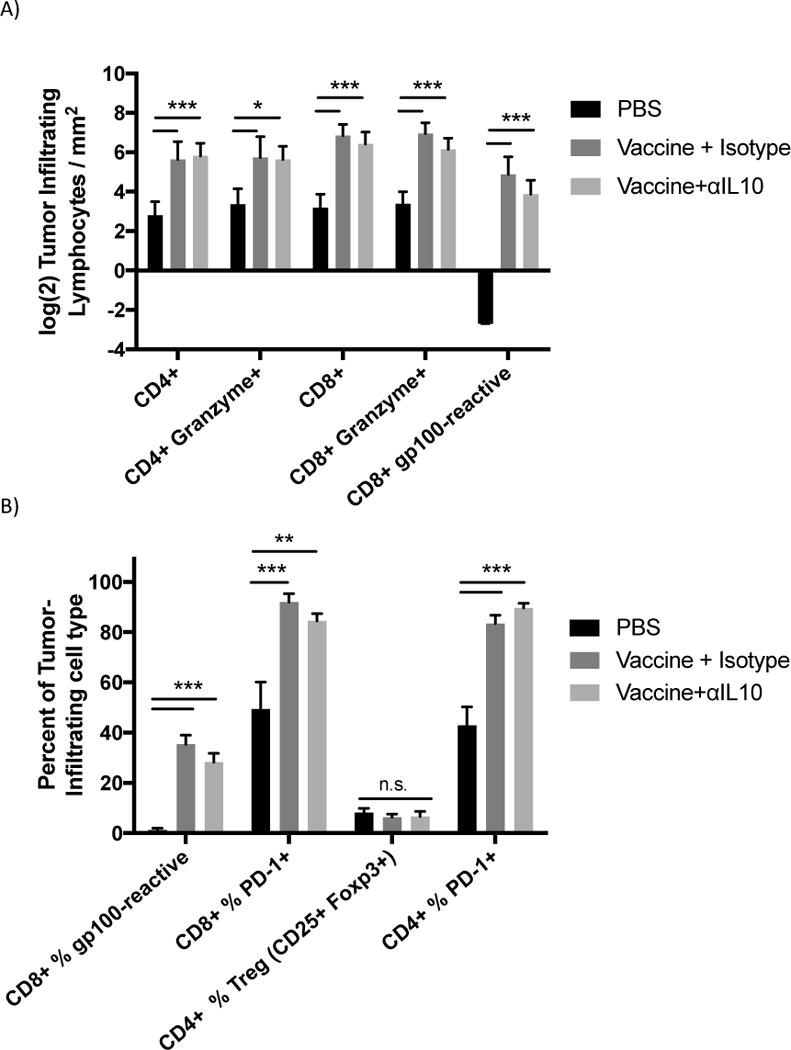
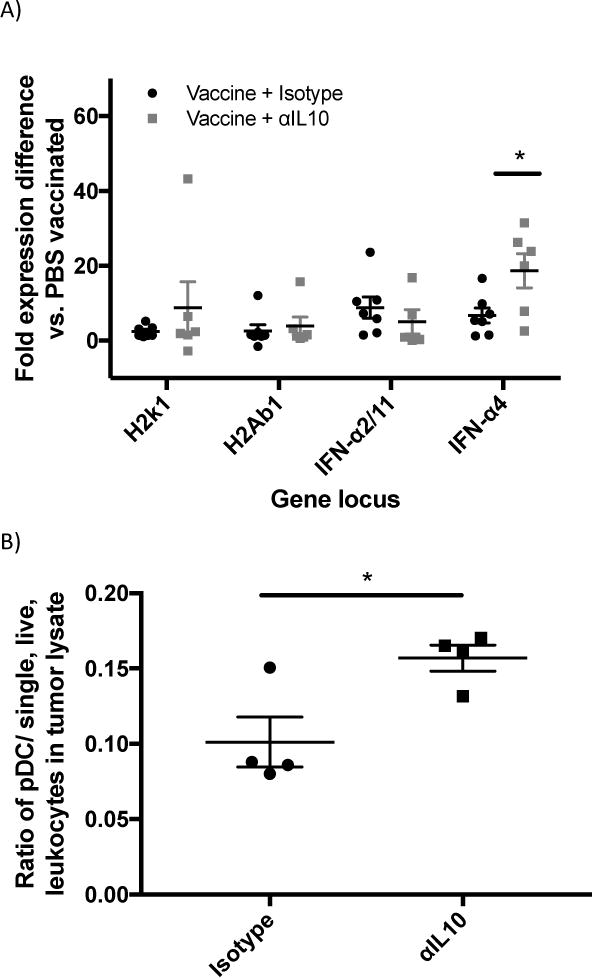
The chemokine MIP3α (CCL20) binds to CCR6 on immature dendritic cells. Vaccines fusing MIP3α to gp100 have been shown to be effective in therapeutically reducing melanoma tumor burden and prolonging survival in a mouse model. Other studies have provided evidence that interleukin-10 (IL-10) neutralizing antibodies (αIL-10) enhance immunologic melanoma therapies by modulating the tolerogenic tumor microenvironment. In the current study, we have utilized the B16F10 syngeneic mouse melanoma model to demonstrate for the first time that a therapy neutralizing IL-10 enhances the antitumor efficacy of a MIP3α-gp100 DNA vaccine, leading to significantly smaller tumors, slower growing tumors, and overall increases in mouse survival. The additive effects of αIL-10 were not shown to be correlated to vaccine-specific tumor-infiltrating lymphocytes (TILs), total TILs, or regulatory T cells. However, we discovered an upregulation of IFNα-4 transcripts in tumors and a correlation of increased plasmacytoid dendritic cell numbers with reduced tumor burden in αIL-10-treated mice. Interferon α receptor knockout (IFNαR1) mice received no benefit from αIL-10 treatment, demonstrating that the additional therapeutic value of αIL-10 is primarily mediated by type I IFNs. Efficient targeting of antigen to immature dendritic cells with a chemokine-fusion vaccine provides an effective anticancer therapeutic. Combining this approach with an IL-10 neutralizing antibody therapy enhances the antitumor efficacy of the therapy in a manner dependent upon the activity of type I IFNs. This combination of a vaccine and immunomodulatory agent provides direction for future optimization of a novel cancer vaccine therapy.
趋化因子 MIP3α(CCL20)与未成熟树突状细胞上的 CCR6 结合。已证明融合 MIP3α 与 gp100 的疫苗在治疗上可有效减少黑色素瘤肿瘤负担并延长小鼠模型中的存活时间。其他研究提供了证据表明,白细胞介素-10(IL-10)中和抗体(αIL-10)通过调节耐受肿瘤微环境来增强免疫黑色素瘤疗法。在本研究中,我们利用 B16F10 同源小鼠黑色素瘤模型首次证明,中和 IL-10 的治疗可增强 MIP3α-gp100 DNA 疫苗的抗肿瘤功效,导致肿瘤明显缩小、肿瘤生长缓慢,并且总体上提高了小鼠的存活率。αIL-10 的附加作用与疫苗特异性肿瘤浸润淋巴细胞(TIL)、总 TIL 或调节性 T 细胞无关。然而,我们发现肿瘤中 IFNα-4 转录物的上调与αIL-10 治疗小鼠中树突状细胞数量的增加与肿瘤负担的减少相关。干扰素-α受体敲除(IFNαR1)小鼠未从αIL-10 治疗中受益,表明αIL-10 的额外治疗价值主要由 I 型 IFNs 介导。用趋化因子融合疫苗将抗原有效靶向未成熟树突状细胞提供了有效的抗癌治疗方法。将这种方法与 IL-10 中和抗体治疗相结合,以依赖于 I 型 IFNs 活性的方式增强了治疗的抗肿瘤功效。这种疫苗和免疫调节剂的组合为未来优化新型癌症疫苗治疗提供了方向。