Domagala Marcin, Ysebaert Loïc, Ligat Laetitia, Lopez Frederic, Fournié Jean-Jacques, Laurent Camille, Poupot Mary
Centre de Recherches en Cancérologie de Toulouse, Inserm UMR1037, 31037 Toulouse, France.
Université Toulouse III Paul-Sabatier, 31400 Toulouse, France.
Cancers (Basel). 2021 Dec 21;14(1):16. doi: 10.3390/cancers14010016.
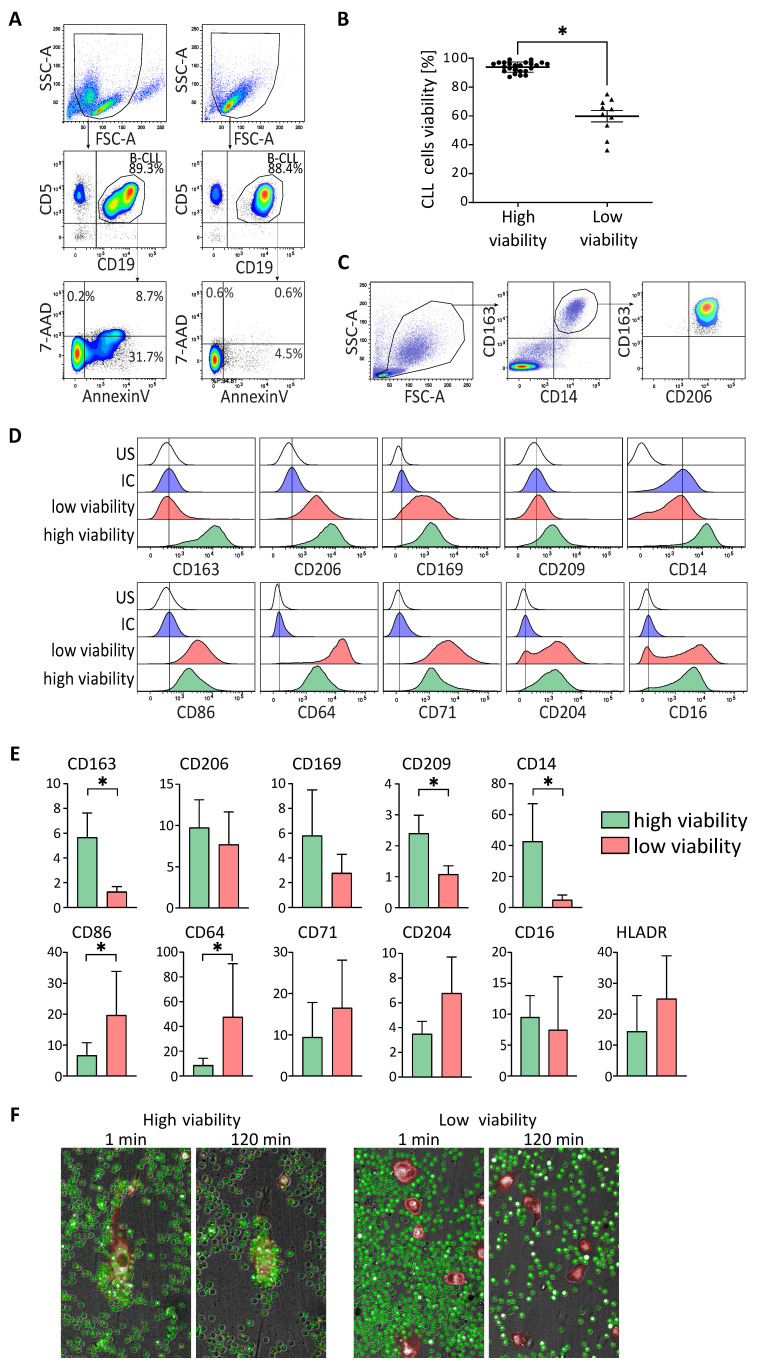
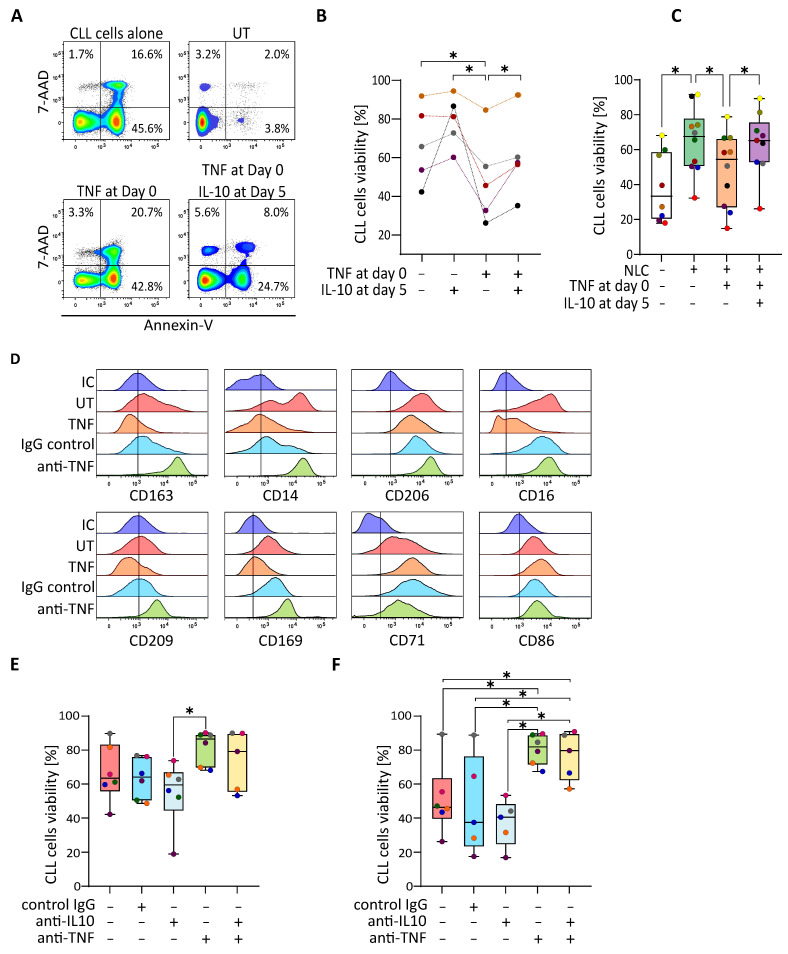
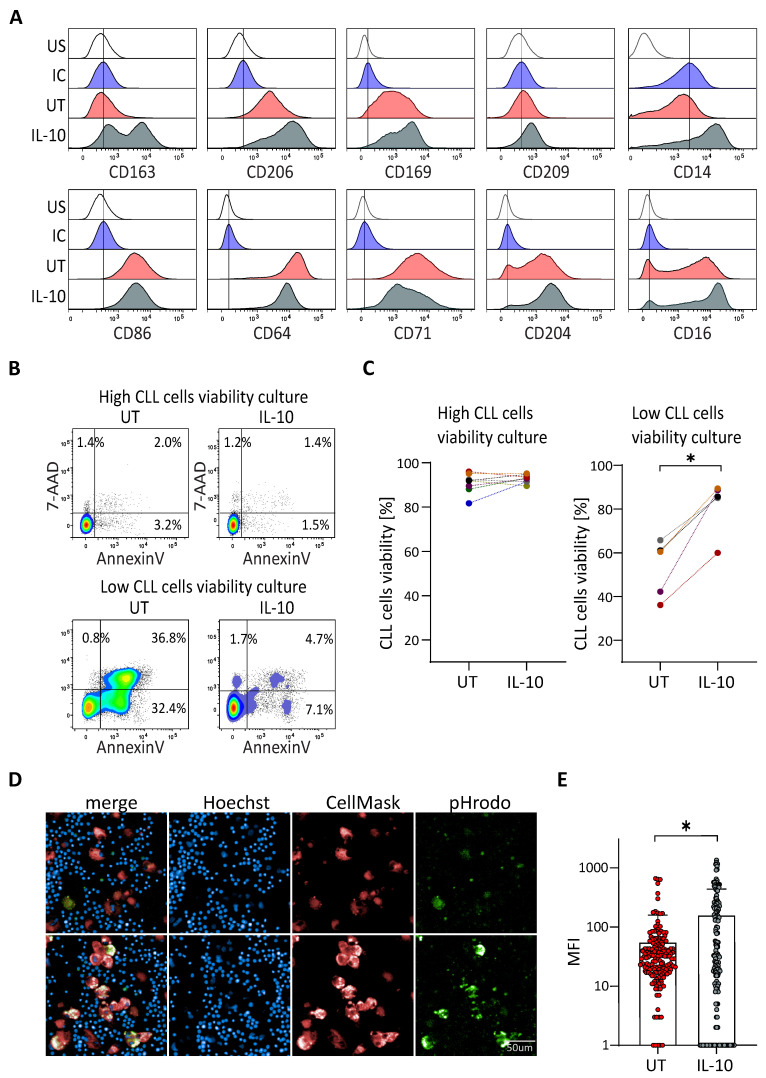
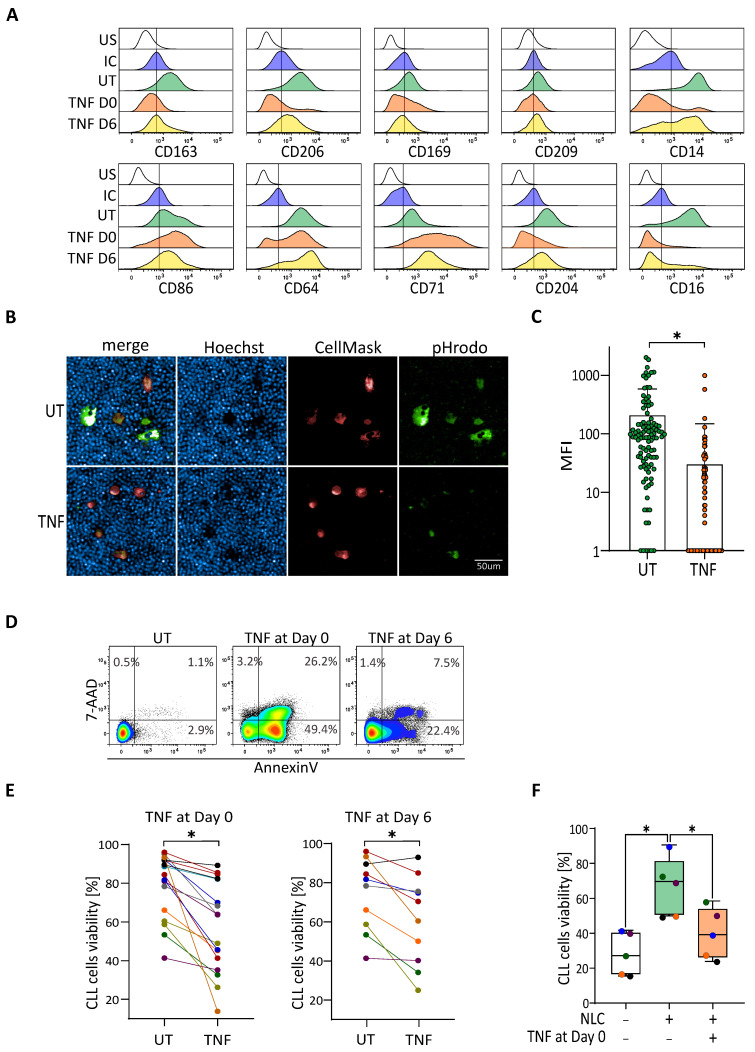
Tumor-associated macrophages (TAMs) in chronic lymphocytic leukemia (CLL) are also called nurse-like cells (NLC), and confer survival signals through the release of soluble factors and cellular contacts. While in most patient samples the presence of NLC in co-cultures guarantees high viability of leukemic cells in vitro, in some cases this protective effect is absent. These macrophages are characterized by an "M1-like phenotype". We show here that their reprogramming towards an M2-like phenotype (tumor-supportive) with IL-10 leads to an increase in leukemic cell survival. Inflammatory cytokines, such as TNF, are also able to depolarize M2-type protective NLC (decreasing CLL cell viability), an effect which is countered by IL-10 or blocking antibodies. Interestingly, both IL-10 and TNF are implied in the pathophysiology of CLL and their elevated level is associated with bad prognosis. We propose that the molecular balance between these two cytokines in CLL niches plays an important role in the maintenance of the protective phenotype of NLCs, and therefore in the survival of CLL cells.
慢性淋巴细胞白血病(CLL)中的肿瘤相关巨噬细胞(TAM)也被称为类护士细胞(NLC),它们通过释放可溶性因子和细胞接触来传递生存信号。虽然在大多数患者样本中,共培养体系中NLC的存在可确保白血病细胞在体外具有较高的活力,但在某些情况下,这种保护作用并不存在。这些巨噬细胞具有“M1样表型”。我们在此表明,用白细胞介素-10(IL-10)将它们重编程为M2样表型(肿瘤支持性)会导致白血病细胞存活率增加。炎性细胞因子,如肿瘤坏死因子(TNF),也能够使M2型保护性NLC去极化(降低CLL细胞活力),而IL-10或阻断抗体可对抗这种作用。有趣的是,IL-10和TNF都与CLL的病理生理学有关,它们水平的升高与不良预后相关。我们提出,CLL微环境中这两种细胞因子之间的分子平衡在维持NLC的保护表型中起重要作用,因此对CLL细胞的存活也很重要。