Department of Pediatrics, Division of Pediatric Emergency, Eskisehir Osmangazi University Faculty of Medicine, Eskisehir, Turkey.
Department of Histology, Eskisehir Osmangazi University Faculty of Medicine, Eskisehir, Turkey.
Med Sci Monit. 2018 Jan 15;24:305-316. doi: 10.12659/msm.905181.
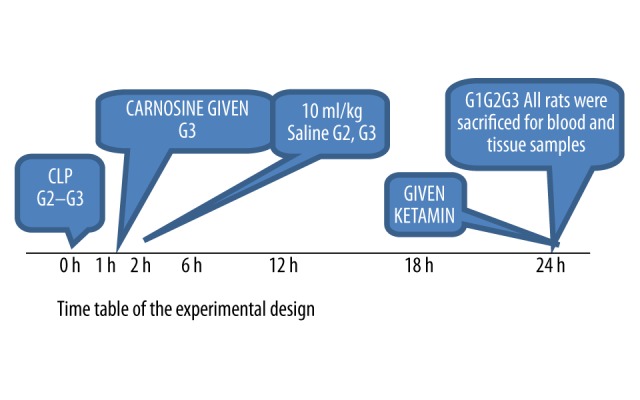
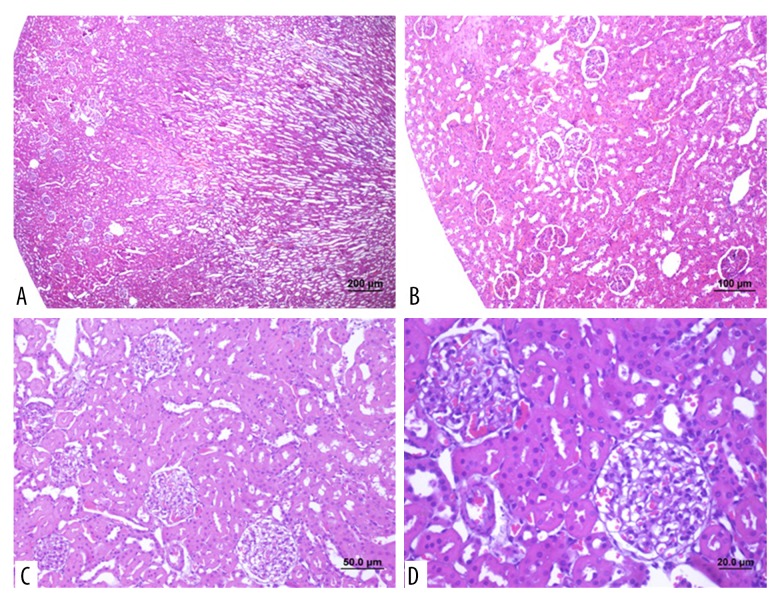
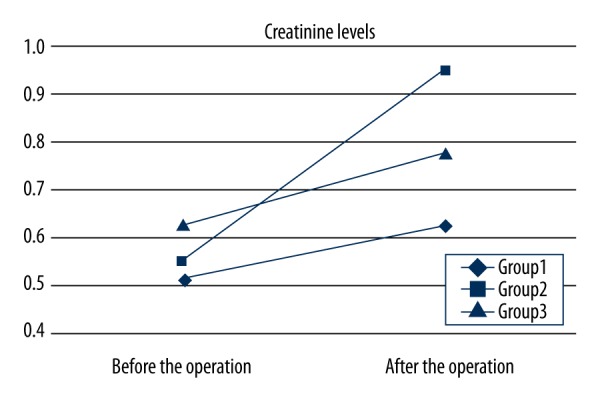
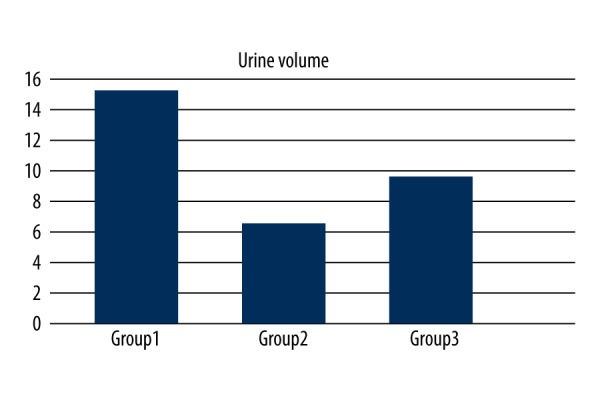
BACKGROUND Acute kidney injury (AKI) secondary to sepsis is a major cause of morbidity and mortality in the human intensive care unit (ICU). Kidney function and the histological findings of AKI were investigated in an experimental rat model with sepsis induced by cecal ligation and puncture (CLP) and compared with and without treatment with carnosine (beta-alanyl-L-histidine). MATERIAL AND METHODS Twenty-four Sprague-Dawley rats were randomly divided into three groups consisting eight rats in each: Group 1 - control; Group 2 - septic shock; and Group 3 - septic shock treated with carnosine. Femoral vein and artery catheterization were applied in all rats. Rats in Group 1 underwent laparotomy and catheterization. The other two groups with septic shock underwent laparotomy, CLP, catheterization, and bladder cannulation. Rats in Group 3 received an intraperitoneal (IP) injection of 250 mg/kg carnosine, 60 min following CLP. Rats were monitored for blood pressure, pulse rate, and body temperature to assess responses to postoperative sepsis, and 10 mL/kg saline replacement was administered. Twenty-four hours following CLP, rats were sacrificed, and blood and renal tissue samples were collected. RESULTS Statistically significant improvements were observed in kidney function, tissue and serum malondialdehyde levels, routine blood values, biochemical indices, and in histopathological findings in rats in Group 3 who were treated with carnosine, compared with Group 2 exposed to septic shock without carnosine treatment. CONCLUSIONS Carnosine (beta-alanyl-L-histidine) has been shown to have beneficial effects in reducing AKI due to septic shock in a rat model of septicemia.
脓毒症引起的急性肾损伤(AKI)是人类重症监护病房(ICU)发病率和死亡率的主要原因。本实验通过盲肠结扎穿孔(CLP)诱导脓毒症建立大鼠模型,研究其肾功能和 AKI 的组织学表现,并与未用β-丙氨酰-L-组氨酸(carnosine)治疗的大鼠进行比较。
24 只 Sprague-Dawley 大鼠随机分为 3 组,每组 8 只:第 1 组为对照组;第 2 组为脓毒性休克组;第 3 组为脓毒性休克用 carnosine 治疗组。所有大鼠均行股静脉和股动脉置管。第 1 组大鼠仅行剖腹术和置管术。其余两组大鼠行剖腹术、CLP、置管术和膀胱置管术。第 3 组大鼠在 CLP 后 60 分钟接受腹腔内(IP)注射 250mg/kg 的 carnosine。监测大鼠血压、脉搏率和体温,以评估其对术后脓毒症的反应,并给予 10ml/kg 的生理盐水替代治疗。CLP 后 24 小时,处死大鼠,收集血液和肾组织样本。
与未用 carnosine 治疗的脓毒性休克组(第 2 组)相比,用 carnosine 治疗的大鼠(第 3 组)肾功能、组织和血清丙二醛水平、常规血液值、生化指标和组织病理学发现均有显著改善。
β-丙氨酰-L-组氨酸(carnosine)在减轻脓毒症大鼠败血症模型中脓毒性休克引起的 AKI 方面具有有益作用。