College of Food Science and Technology, Shanghai Ocean University, Shanghai, China.
Present address: Archaea Center, Department of Biology, Copenhagen University, DK2000, Copenhagen, Denmark.
BMC Genomics. 2018 Jan 15;19(1):49. doi: 10.1186/s12864-018-4432-4.
Phycodnaviruses are widespread algae-infecting large dsDNA viruses and presently contain six genera: Chlorovirus, Prasinovirus, Prymnesiovirus, Phaeovirus, Coccolithovirus and Raphidovirus. The members in Prasinovirus are identified as marine viruses due to their marine algal hosts, while prasinovirus freshwater relatives remain rarely reported.
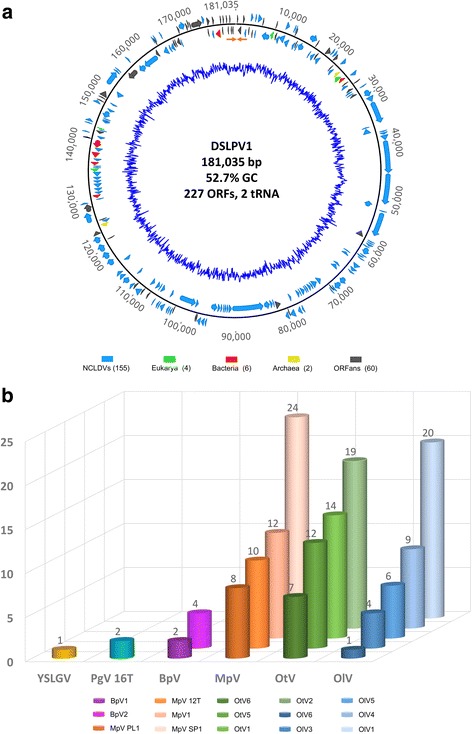
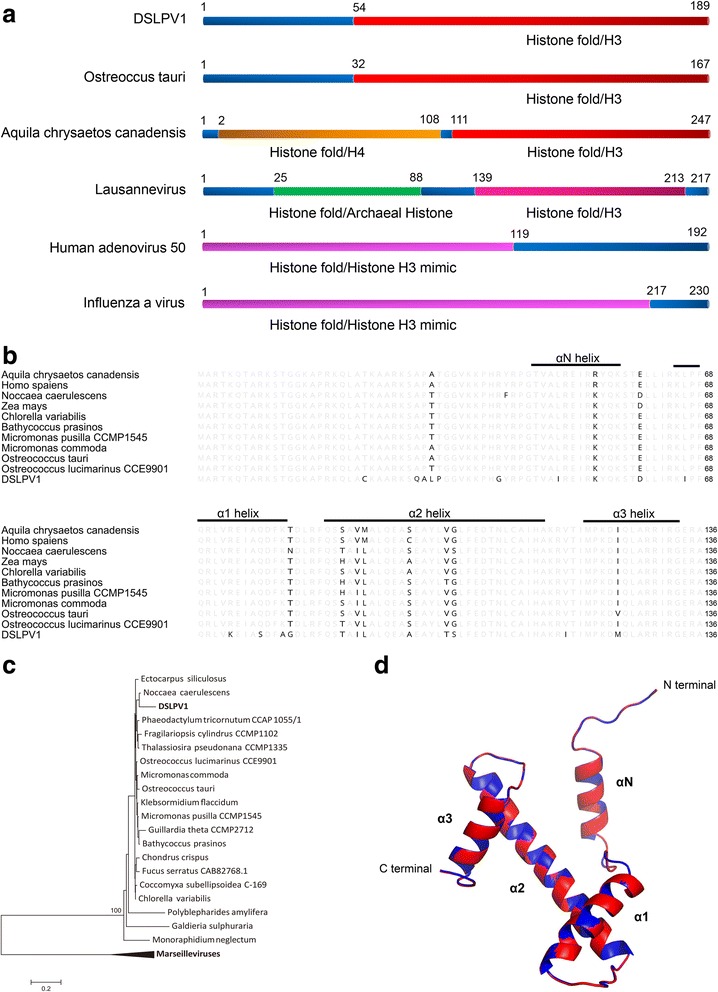
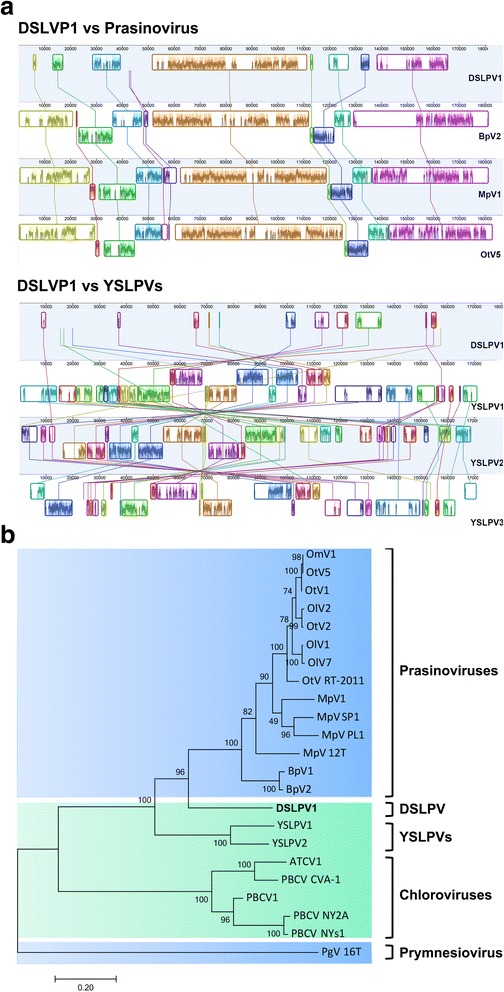
Here we present the complete genomic sequence of a novel phycodnavirus, Dishui Lake Phycodnavirus 1 (DSLPV1), which was assembled from Dishui Lake metagenomic datasets. DSLPV1 harbors a linear genome of 181,035 bp in length (G + C content: 52.7%), with 227 predicted genes and 2 tRNA encoding regions. Both comparative genomic and phylogenetic analyses indicate that the freshwater algal virus DSLPV1 is closely related to the members in Prasinovirus, a group of marine algae infecting viruses. In addition, a complete eukaryotic histone H3 variant was identified in the genome of DSLPV1, which is firstly detected in phycodnaviruses and contributes to understand the interaction between algal virus and its eukaryotic hosts.
It is in a freshwater ecosystem that a novel Prasinovirus-related viral complete genomic sequence is discovered, which sheds new light on the evolution and diversity of the algae infecting Phycodnaviridae.
噬藻体病毒是广泛存在的感染藻类的大型双链 DNA 病毒,目前包含六个属:Chlorovirus、Prasinovirus、Prymnesiovirus、Phaeovirus、Coccolithovirus 和 Raphidovirus。Prasinovirus 中的成员因其海洋藻类宿主而被鉴定为海洋病毒,而噬藻体病毒的淡水亲缘体仍然很少被报道。
在这里,我们展示了一种新型噬藻体病毒——淡水湖噬藻体 1(DSLPV1)的完整基因组序列,该病毒是从淡水湖宏基因组数据集组装而成的。DSLPV1 拥有一条线性基因组,长度为 181,035bp(G+C 含量:52.7%),预测有 227 个基因和 2 个 tRNA 编码区。比较基因组和系统发育分析均表明,淡水藻类病毒 DSLPV1 与海洋藻类感染病毒的成员——Prasinovirus 密切相关。此外,在 DSLPV1 的基因组中鉴定出了一个完整的真核组蛋白 H3 变体,这是首次在噬藻体病毒中检测到,有助于了解藻类病毒与其真核宿主之间的相互作用。
在淡水生态系统中发现了一种新型的与 Prasinovirus 相关的病毒完整基因组序列,这为噬藻体病毒科的藻类感染病毒的进化和多样性提供了新的认识。