Department of Medical Oncology, Fudan University Shanghai Cancer Center, Shanghai, 200032, China.
Department of Oncology, Shanghai Medical College, Fudan University, Shanghai, 200032, China.
J Hematol Oncol. 2018 Jan 15;11(1):9. doi: 10.1186/s13045-017-0547-3.
The influences of oncogenic Ezh2 on the progression and prognosis of gastric cancer (GC) and the underlying mechanisms are still poorly understood. Here, we aimed at investigating clinicopathological significance of Ezh2 in GC and the mechanisms underlying its function in GC development.
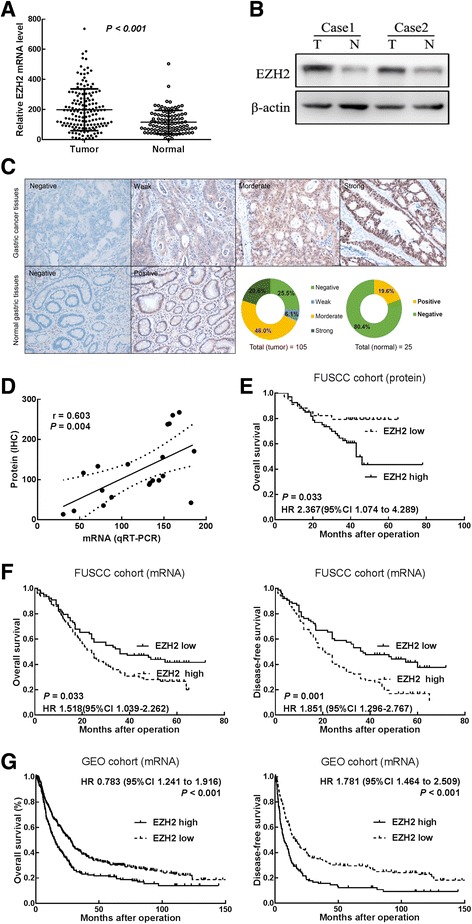
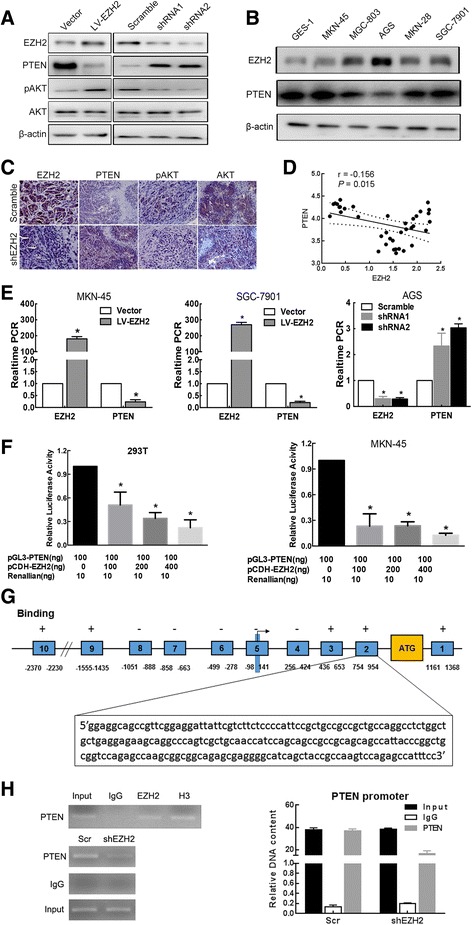
The expression level of Ezh2 was determined by qRT-PCR, immunoblot, and immunohistochemistry analysis in 156 pairs of GC tissues and adjacent normal gastric mucosa tissues. The biological functions of Ezh2 were assessed by in vitro and in vivo functional experiments. Chromatin immunoprecipitation (ChIP), luciferase, and Western blotting analyses were utilized to identify the relationship between Ezh2 and the PTEN/Akt signaling.
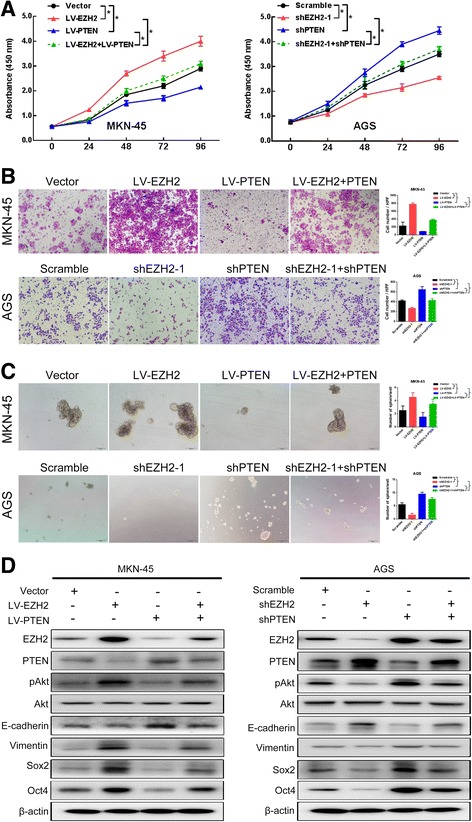
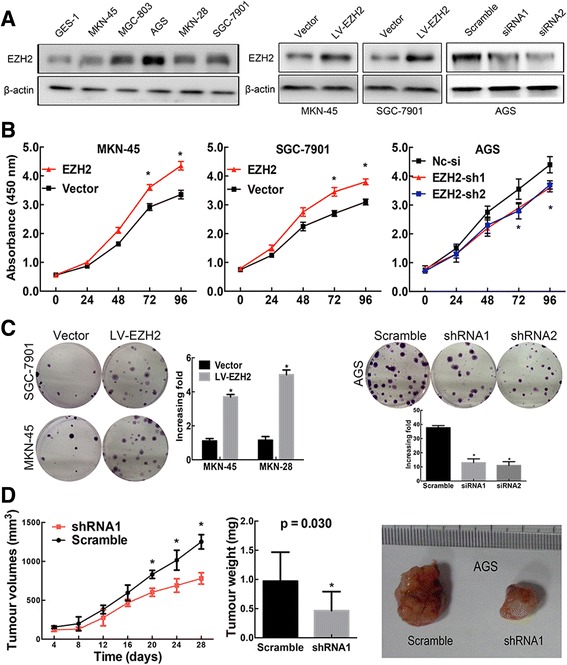
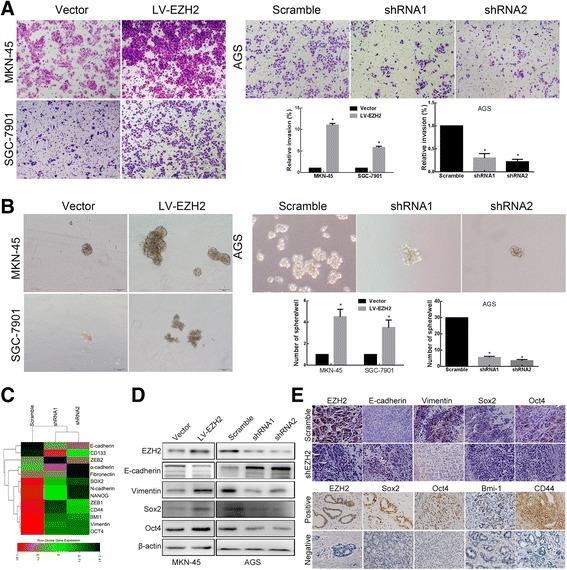
The expression of Ezh2 was higher in gastric cancer tissues in comparison with para-nontumorous epithelium. High expression of Ezh2 was associated with more aggressive biological behavior and poor prognosis in GC. In vitro studies indicated that Ezh2 promoted GC cells' proliferation and clonogenicity. Besides, Ezh2 led to the acquisition of epithelial-mesenchymal transition (EMT) phenotype of GC cells and enhanced GC cell migration and invasion capacity. In particular, Ezh2 strengthened sphere-forming capacity of GC cells, indicating its role in the enrichment of GC stem cells. Furthermore, we found that PTEN/Akt signaling contributed to the effects of Ezh2 on cancer stem cells (CSC) and EMT phenotype in GC cells, and blocking PTEN signaling significantly rescued the effects of Ezh2.
Taken together, Ezh2 has a central role in regulating diverse aspects of the pathogenesis of GC in part by involving PTEN/Akt signaling, indicating that it could be an independent prognostic factor and potential therapeutic target.
致癌基因 Ezh2 对胃癌(GC)的进展和预后的影响及其潜在机制仍知之甚少。在这里,我们旨在研究 Ezh2 在 GC 中的临床病理意义及其在 GC 发展中作用的潜在机制。
通过 qRT-PCR、免疫印迹和免疫组织化学分析,在 156 对 GC 组织和相邻正常胃黏膜组织中确定 Ezh2 的表达水平。通过体外和体内功能实验评估 Ezh2 的生物学功能。利用染色质免疫沉淀(ChIP)、荧光素酶和 Western blot 分析来鉴定 Ezh2 与 PTEN/Akt 信号之间的关系。
Ezh2 的表达在胃癌组织中高于非肿瘤上皮组织。Ezh2 的高表达与 GC 更具侵袭性的生物学行为和不良预后相关。体外研究表明,Ezh2 促进 GC 细胞的增殖和克隆形成能力。此外,Ezh2 导致 GC 细胞获得上皮-间充质转化(EMT)表型,并增强 GC 细胞的迁移和侵袭能力。特别是,Ezh2 增强了 GC 细胞的球体形成能力,表明其在 GC 干细胞的富集中发挥作用。此外,我们发现 PTEN/Akt 信号通路有助于 Ezh2 对 GC 细胞中的癌症干细胞(CSC)和 EMT 表型的影响,并且阻断 PTEN 信号通路显著挽救了 Ezh2 的作用。
综上所述,Ezh2 在调节 GC 发病机制的多个方面起着核心作用,部分原因是涉及 PTEN/Akt 信号通路,这表明它可能是一个独立的预后因素和潜在的治疗靶点。